“Because they use the church as their only measuring stick, Presbyterians and other mainline Protestant religions often have a sense of decline or a sense of defeat. But when you look at Presbyterian colleges and universities as brothers and sisters in mission, I think your readers would be amazed and delighted to see the ways that your tradition is shaping young people by the thousands.”
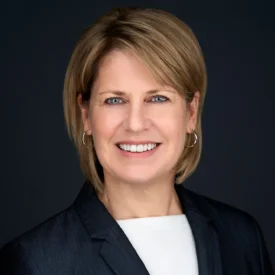
The Outlook interviewed Marjorie Hass, current president of the Council of Independent Colleges and former president of two Presbyterian Church-related colleges: Austin College in Sherman, Texas, and Rhodes College in Memphis, Tennessee. As a Jewish philosopher educated at large public research institutions, Hass never imagined she would build a career in Presbyterian church-related colleges. But she believes that the genius of American higher education lies in the diversity of its missions. Hass dedicated her career to the success and promotion of private, post-secondary institutions after witnessing the ways that they are able to teach to students’ whole selves – mind, body, spirit – in ways that public colleges cannot.
 What led you to go into higher education?
Like many college presidents, I started my career devoted to my academic field. I was enamored with philosophy as a discipline. My vision was to be a college professor and it led to a wonderful career. The move into academic leadership came because it was a moment when women’s leadership – or, at least, the presence of women on various committees – was being actively sought. I would often get asked to serve on important committees just because they needed a woman. But it also meant that very early in my career as a professor I got to see the holistic ways that an institution works — not just my program, not just my department, not just academic life, but the whole range of ways that institutions serve students. Then, while doing faculty committee work and serving as an interim dean, I discovered that I really liked being part of a team.
As a young Jewish woman, I really didn’t know there could be a home for me in private higher education, where many independent institutions have a church history and a church background. It wasn’t until I began working at Muhlenburg College, a Lutheran college, that I had the first inkling of the ways a church-related academic institution could support not only my intellectual growth but also my own spiritual development. By extension, of course, the same is true for students.
I came to learn this early on in my career when, as a new Jewish professor, I went to nervously tell my department chair that the High Holy Days were coming up and I wouldn’t be able to teach as I’d be in synagogue those days. My chair didn’t just reply, “Well, you have the right to take these days off.” He also suggested, “I hope you’ll talk with your students about what these holy days and your own religious traditions and experiences mean to you.”
That was liberating. Of course, I didn’t preach to students or substitute my own values and views for the academic study of philosophy, but I shared about my faith tradition, and this enabled me to be a whole person both inside and outside the classroom. Witnessing that sharing and acceptance can be a part of a collegiate learning environment was really exciting to me.
After serving Muhlenburg as a faculty member and then as provost, you accepted the position of president at Presbyterian-related Austin College in Texas. How were you received as the first female, Jewish president of Austin College?
When I was asked to consider the presidency of Austin College, it was a significant decision for both me and the board. The board was very aware that I would not only be the first woman president but the first Jewish one, too. They had conversations about what that would mean for the college’s very active commitment to the Presbyterian Church (U.S.A.). Ultimately, those conversations and our discernment led us to see what a beautiful partnership it could be.
Sara Bernice Moseley was the first woman moderator of the Presbyterian Church in the United States – the southern branch of what later became the Presbyterian Church (U.S.A.) – and the first lady emerita of Austin College. She became a good friend and mentor. When I met her she was already in her nineties, but she was lively, engaging and funny. Apparently when the college board’s leadership informed her they had hired me, she paused and then said, “A Jewish woman; how Presbyterian.” Moseley’s confidence that my role was not only something that was good for the college but that it was also good for broader Presbyterianism really shaped my presidency and the ways I felt I could engage in the Presbyterian aspect of it.
How does your Jewish faith inform or influence your work?
I can’t really separate my Judaism from my calling as a leader. Judaism provides me with a moral compass and a framework for how I talk about God, how I understand things that are bigger than me. Anytime you are leading you have to have a pretty firm set of boundaries and guideposts to help you make ethical decisions: a framework for discernment to help you lead with your values.
Because I am a member of a minority religion, modeling the ways I think and talk about Judaism in relationship to a larger culture also serves as a model to promote dialogue about differences in ways that are productive and positive. I try to be very open about what Judaism means to me in a way that invites others to be open about their commitments, their traditions and the ways that shapes their thinking.
Having now served at two Presbyterian-related institutions, what are some of the similarities and differences you’ve observed between Rhodes College and Austin College? How are they reflected through the experiences of the students being served?
Two beautiful things about Presbyterian higher education is its commitment to the flourishing of the whole student and the diversity of the students who are entrusted to our care.
Originally, Presbyterian colleges were founded with the focus on educating young white men either directly for the ministry or to serve as leaders in a Presbyterian community. But very quickly that mission began to expand. For me, what makes a college Presbyterian is not simply that it serves Presbyterian students, but that it brings a distinctively Presbyterian vision to how that service occurs. There’s a spirit of hospitality, a spirit of putting reason and faith in dialogue with each other rather than seeing them as opposed. There is also a tradition of evolutionary change in the direction of inclusion that seeps into the fabric of Presbyterian institutions. Each Presbyterian college is different in how it applies those spirits and traditions to its educational mandate, but the core values are deeply shared.
Is there still a role today for church-affiliated institutions in the higher education landscape?
Absolutely. There’s an incredibly vibrant and lively role for institutions with church-affiliated histories. These institutions measure success not by the education of an individual student but by the tools the institution can provide to students so that they can make a difference in the world. In the language of my Jewish tradition, we live in a world desperately in need of tikkun olam, repair and healing.
 The Presbyterian sense of vocation and service prepares students to have the heart to repair the world and equips them with skills to do so. You know, colleges are not churches. We are educational institutions committed first and foremost to outstanding education. Helping students develop the ability, the skills, the knowledge and the talent to make a positive difference is extremely important to us. If your readers visit the websites of Presbyterian colleges and look at what the institutions are doing, they will find unbelievably inspiring things happening.
Students have a lot of choices now when it comes to higher education, but finances and debt play an important role in making these decisions. What advice would you give a young person or a family considering college in today’s higher education market?
First, I would encourage every student to consider one of the many institutions within the Council for Independent Colleges because it is often much more affordable than you imagine. It is, in fact, sometimes more affordable than even a public institution because private philanthropy steps in to close that gap. Our institutions have need-based and merit aid available and if they believe that you are the right match for their campus, they will work very hard to make it possible for you to attend.
A lot of the conversation about student debt is confusing. Most of the student debt that you hear about – and certainly most of the stories of these big, big numbers – have to do with graduate student debt such as law school, medical school and MBAs. Undergraduate debt is typically more manageable and colleges in our sector in particular have become ever more responsible about helping students understand what it means to take on student loans.
At Austin and Rhodes, the average student debt during the time I was president was under $30,000 at the point of graduation. That is a significant amount of money, but many young people will go out and buy a car that costs more than that. And this investment in education allows students to move immediately into the world of professional work.
I also encourage families to thoughtfully consider their priorities and save money for college. It’s much better to save for the future than to spend money on private sports lessons that you think will somehow magically translate into college scholarships. Overall, there’s a lot more money available for academic scholarships than there is for athletic scholarships.
Families should look at the colleges they think are a good match for their child and consider what kinds of scholarship opportunities and financial aid are available.
Also, be sure that your child is a part of the conversation about how you will pay for college. Children should understand a family’s financial means; how much their family can contribute, where that money is coming from, what sort of decisions and sacrifices their parents are making. It really helps students to understand the value their family has placed on education and also to understand their own personal and financial responsibility.
How can Presbyterians support their colleges and universities?
The most important thing you can do to offer support to these institutes of higher learning is to get to know your Presbyterian colleges and universities. The strength of these colleges and the quality education they offer should be a real point of pride to the denomination.
Encourage young people in your congregations to consider a Presbyterian college, make sure they’re learning about the schools and that they understand what makes them unique. Consider setting up or contributing to a church fund that a student in need can use to visit a college or connect them to somebody at your alma mater.
Of course, the scholarship piece is very important. There’s no way quality education and depth of engagement is possible without private philanthropy. The kind of education that is deeply student centered – face-to-face, where classes are taught by highly trained professionals with a passion for undergraduate teaching and the hands-on kinds of experiences students have on our campuses where they’re doing research and learning by doing – is not inexpensive to provide. There’s an inherent cost to that kind of quality.
We should make it clear to your readers that there is no financial support on the part of the denomination to its colleges. Individual churches and individual members, however, provide a great deal of support in the form of scholarships. I’ve worked with many mission committees helping them create scholarship opportunities to assist Presbyterian students to access Presbyterian institutions. And I have also worked with many individuals who make it a priority to ensure this kind of education remains available to students now and in the future.
In a perfect world, every student is matched with the college that is the right environment for them. Private philanthropy dollars are what make that possible. And a little goes a long way. These don’t have to necessarily be full scholarships; they can just be enough funds to help close the gap between what a quality education costs and what students can afford.
Do you have any final thoughts you’d like to share with our readers?
I am deeply grateful that I had a chance to serve at both Austin College and Rhodes College. They were among the most significant experiences of my life. I received from those colleges as much or more than I was able to give to them, even though I gave them my all. It’s been an honor for me to be shaped by Presbyterian education.
Marjorie Hass became president of the Council of Independent Colleges in July 2021. She is the author of A Leadership Guide for Women in Higher Education.