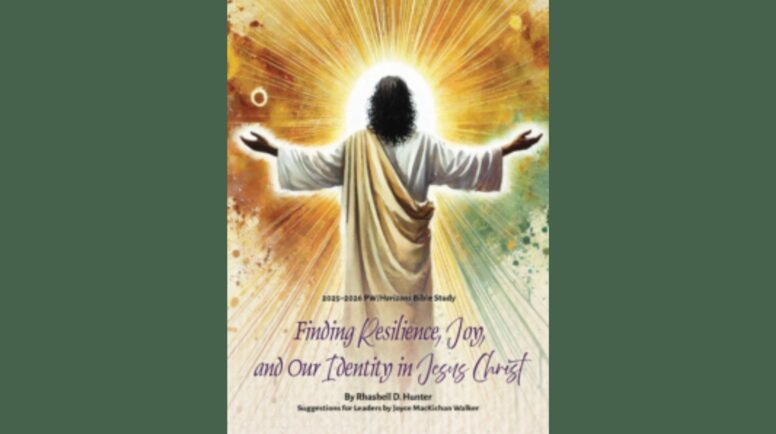
Finding Resilience, Joy, and Our Identity in Jesus Christ
Rhashell D. Hunter’s Horizons Bible Study
Lesson 1: Mary Magdalene, the Tower, John 11:17-27
Mary Magdalene: legends had it that she was a lady with loose morals or a prostitute, but nothing is further from the truth. We find in Scripture that Mary Magdalene, whom Jesus healed of mental illness, was one of the women who followed Jesus during his ministry and provided for him out of her own income. It has been assumed Mary was from Magdala, but there is no reference to such a town that is contemporary to Jesus’ time. “Magdalene” can be a nickname or a title, like Simon Peter, with Peter meaning “the rock.” The Aramaic word “Magdala” means “tower.” Therefore, it would appear that Mary is Mary the Tower.
What made Mary “the Tower?” In our current translations of Chapter 11 in the Gospel of John, there are three adult siblings in one family: Martha, Mary and Lazarus. The sisters appeal to Jesus to heal their brother, who is sick. Elizabeth Schrader in the Harvard Theological Review finds no mention of Martha in the oldest nearly complete Gospel of John until a scribe changed the text. Only Mary and Lazarus are in early church fathers’ earliest manuscripts and writings. In the early church, Mary Magdalene was said to be from Bethany. Therefore, Schrader theorizes that Mary Magdalene could be Lazarus’ sister.
If Mary Magdalene was present at Bethany, then she would be the one who says to Jesus, “Yes, Lord. I believe that you are the Messiah, the Son of God, the one coming into the world” (John 11:27). This declaration parallels Peter’s affirmation in the other Gospels when he says, “You are the Messiah, the Son of the living God.” Therefore, in the Gospel of John, Mary Magdalene could be the first person to proclaim that Jesus is the Son of God. It is a powerful and important Christological confession.
Through John 20, we know that Mary Magdalene was the first person at the tomb, where she finds the stone rolled away. She runs and tells Peter and John, and all three return, finding the tomb empty except for the grave clothes. The male disciples leave, but Mary remains weeping in the garden. Though the eyes of grief do not recognize Jesus when he appears to Mary, the resurrected Jesus speaks her name, and Mary knows him. Jesus then instructs Mary to tell the other disciples that he is risen.
Women have been fundamental to the spread of the Gospel. The first evangelist in the Gospel of John is the woman at the well who tells her town’s people that Jesus might be the Messiah. A woman is the first person to declare that Jesus is the Son of God. The first apostle (“one who is sent”) to share the good news is Mary Magdalene.
Our commission is to share the good news of Jesus, and one that we do poorly. I asked a Bible study class of about 14 people to talk about their faith over the week until the next class with one other person of their choosing. No one did. We don’t want to be pushy or identified with obnoxious Christians, so we can tend to say nothing. But I have met people who do it well.
An elementary school teacher, whom I will call Ann, shared with her colleagues that her church had elected her to be an elder and that she would be taking classes to prepare. As the elder-elect exams drew near, Ann became nervous. The exam consisted of sharing what they had learned and reading their personal faith statement. On Monday morning, Ann’s fellow teachers asked her how it went. “It was wonderful!” she said, “It was so meaningful to talk about our faith.” I would say that Ann was sharing the good news from her own experience in a way others received.
When I was new at a church, I had lunch with Bob and said, “Tell me about yourself.” He replied, “First, I am a Christian. Second, I am a husband and father. Thirdly, I am a banker.” I was impressed and startled because I had never heard anyone introduce her/himself this way.
When we lament the decline of church membership, I believe one reason for the lack of interest in faith is our failure to be authentic witnesses to what we hold dear.
You can purchase the PW/Horizons Bible study book through the PC(USA) Church Store.
Want to receive content like Patricia Tull’s Horizons Bible Study on climate change in your inbox? Sign up for our worship resources newsletter.