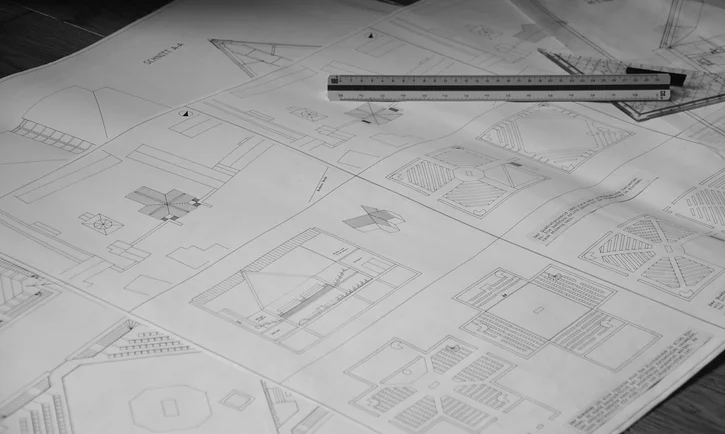
The question that keeps me up at night … is this: Twenty years from now when we look around our neighborhoods and realize that a third or more of our church properties are no longer churches, what will we have lost? Or gained? What will the impact be on the social fabric of our communities? And what will each of us have done to encourage good … when churches are gone?
— Mark Elsdon, Gone for Good? Negotiating the Coming Wave of Church Property Transition
Excess space
While the overall number of Christian congregations and adherents grew from 2002 to 2022, Presbyterian Church (U.S.A.) congregations and membership declined substantially, leaving many surviving congregations with an overabundance of space in their buildings and the attendant cost of upkeep.
According to data compiled by the Association of Religion Data Archives, Christian congregations in the United States grew from 268,254 in 2002 to more than 350,000 in 2020, primarily due to the growth of non-denominational churches. Adherents went from about 159,000,000 to about 161,000,000. (Although the percentage of the U.S. population who were members decreased from 55% to 48.6%.)
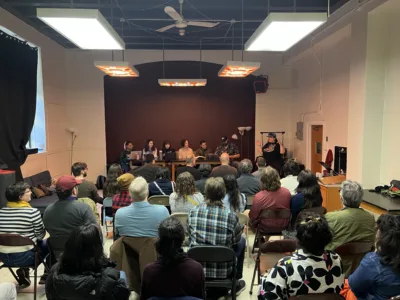
Comparable PC(USA) statistics reveal a decrease in congregations from 11,097 with 2.4 million members in 2002 to 8,705 congregations with 1.1 million members in 2022.
That’s a congregational decline of 21.6%, but a 54% membership drop. Those numbers indicate that still-existing PC(USA) congregations are left with excess space.
“We are at an important moment in the history of the Christian Church in America that has wide-ranging implications not only for people of faith but also for the social fabric of our communities.” — Mark Elsdon
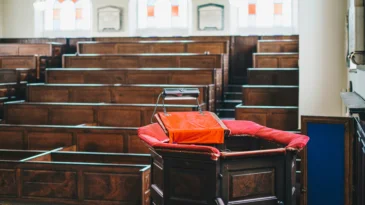
It might be the large downtown church that has dwindled from thousands of members to just a few hundred, the rural church that has seen its membership drop from 50 to 10 or fewer, or the suburban church, which may have added a large education wing in the 1970s for anticipated growth that never materialized.
The Spirit is still active
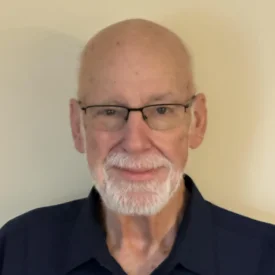
While those statistics may suggest a bleak future, that’s not necessarily a foregone conclusion, says Mark Elsdon, perhaps the most quoted consultant on how to help churches continue and even increase their mission through repurposing church space. Elsdon is a Presbyterian pastor who, for years, ran Pres House at the University of Wisconsin-Madison, an oft-cited example of a successful campus ministry. He left to co-found Rooted Good, which assists churches in generating new forms of income through reimagining the use of their buildings and land to fulfill their mission and purpose in their community.
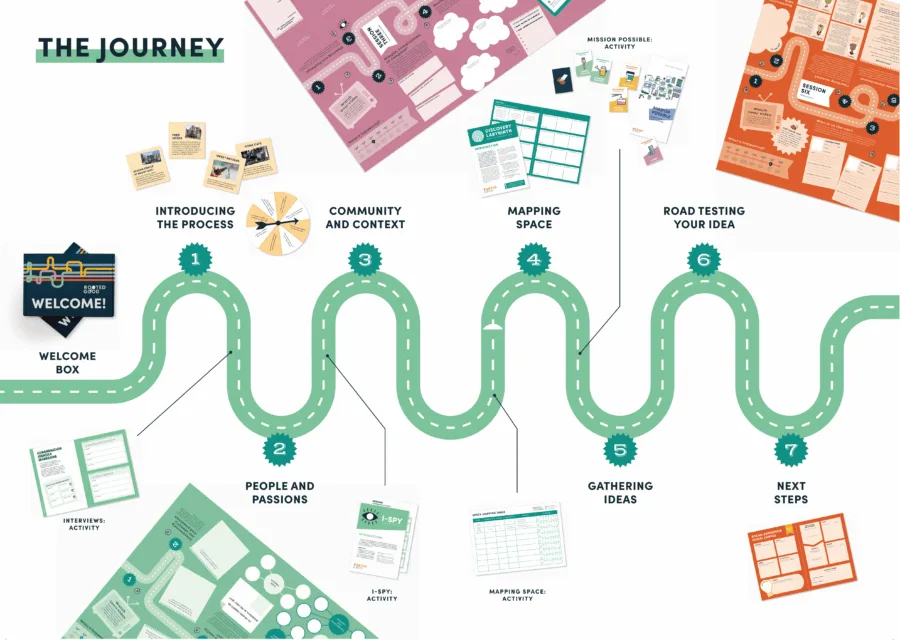
The secret, Elsdon says, is to “align money and mission.” Both The Presbyterian Foundation – through its Project Regeneration – and the PC(USA)’s Office of Innovation – via the Good Futures Accelerator, a customized version of a process from Rooted Good, are helping local congregations take proactive steps before they face major crises or irreversible decline.
“We really encourage congregations to connect with what’s going on in their community,” Elsdon said.
Rooted Good has offered the Good Futures Accelerator program at a discounted rate of $375 per church; this PC(USA)-specific version of the program has been sold 78 times.
Supporting small businesses
There are numerous ways churches can utilize their unused space, some of which can become a source of income, lessening reliance on the traditional method of members funding almost all church operations – a model Elsdon says is no longer viable or sustainable.
One such congregation is First Presbyterian Church of Gulf Shores, a 60-member church in the coastal Alabama town.
When First Gulf Shores was calling a new pastor back in 2020, the mission statement crafted for the denomination’s call system read in part:
“Our mission is … to perpetuate hope for our community and our world by being consistently mindful of the indescribable gifts God has bestowed upon us and to express gratitude for such…”
Crissy Ennen was drawn to that mission statement and was called to serve as the church’s pastor, beginning August 1, 2020. However, she “couldn’t get a good feel for what was happening with the finances.”
But in an example of God’s providence, she had come armed with an undergraduate degree in business, a master of business administration and bookkeeping experience in addition to a master of divinity and a master of leadership in ministry, so she took over the bookkeeping for three months, enabling her to realize, as she describes it, how “dire the circumstances” were.
“We really started talking about what we could do to help financially,” she said.
After some meditating and brainstorming in the church’s session, as well as lots of conversations with the community, “we found there were two needs in our community,” Ennen said, “One was affordable childcare and one was affordable office space.”
“There were two needs in our community…One was affordable childcare and one was affordable office space.” — Crissy Ennen, pastor at First Presbyterian Church of Gulf Shores
Classrooms in the unused education building made perfect locations for both, and now, two years later, it has become a fixture in the community with successes to build upon.
Its name describes its purpose: Hand-in-Hand Business Center.
 “One gal came in, and her business expanded so much she had to leave because she outgrew the space, which is what we want,” Ennen said.
While implementing the Good Futures Accelerator and following Elsdon’s advice to “align money with mission,” Ennen said, “We really discovered what we want is to support our community, and one of the ways you support community is by supporting small business, because small business is the lifeblood of a community.
“[Implementing the Good Futures Accelerator] also opened our eyes and our minds to other things,” she said. Now, there’s a preschool, a daycare is expanding, and all but one of the office spaces is leased. A raised-bed garden is also located outside the building, supplying fresh vegetables to a neighboring food pantry.
An important factor churches must consider is the potential tax implications, an area that sometimes gets overlooked and can lead to hefty fines.
For Gulf Shores, the same mission statement, with the language that drew Ennen to the church, also addressed that issue, as the ministries in place align with the stated mission of the church – a requirement for tax exemption.
However, Elsdon and all involved strongly advise that any congregation contemplating such a move should contact a local tax attorney, as laws vary widely depending on the area.
Investing in affordable housing
Among the many avenues churches have undertaken or are considering, perhaps the most common one is addressing the shortage of affordable housing in almost every community in the country.
One such place among many is Newell Presbyterian Church in Charlotte, North Carolina, which sits on about 4.5 acres of land.
“For generations, the church has asked, ‘How do we get beyond our walls?’” said Newell’s pastor, Matt Conner. “And COVID forced us outside our walls.”
“For generations, the church has asked, ‘How do we get beyond our walls?’ COVID forced us outside our walls.” —Matt Conner, pastor at Newell Presbyterian Church
As the pandemic wound down, the church became “hyper-focused on space.” At the same time, the church realized it was spending a third of its budget on maintenance.
In conversations and contemplation as the church considered life after COVID, it looked around the community, Connor said, and asked, “Is this the best stewardship of this space now? What does it mean to profess this we believe about the kingdom of God, and this we live in the here and now.”
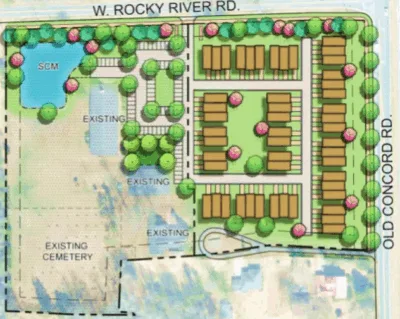
“You can’t live in Charlotte and not be aware of housing needs and affordability or lack thereof. We were just trying to pay attention to our community,” he said.
Under the tagline “Live, Work, Play and Pray Together,” the church is partnering with DreamKey Partners, a nonprofit affordable housing developer, to create 50 affordable dwellings with a mix of mostly rental townhomes and duplex cottages for those earning between 60%-80% of the area’s median income. The income from these rentals will supplement the congregation’s offerings.
Other churches are planning or contemplating sports fields, gardens, food services, campus ministry, and other initiatives. While many of these efforts tend to pop up in geographic clusters, probably from the attention created by early adopters in the region, there are hundreds of these initiatives around the country, from the Pacific Northwest to the Gulf Coast and points in between.
Creating a community hub
There is at least one Presbyterian church for which this approach to ministry is old hat. Edgewater Presbyterian Church, one of the oldest congregations on Chicago’s North Side, has taken this approach since around 1926, when the congregation built a four-story, 52,000-square-foot building to be known as the Edgewater Presbyterian Church New Community House. The building originally housed a theatrical auditorium, a gymnasium “complete with bleachers,” and the church manse on the top floor.
Edgewater Presbyterian Church originally planned to build an adjacent “traditional” church building next to the New Community House, but the 1929 market crash changed that. Current pastor Kristin Hutson said when the market crashed, New Community House was in danger of being foreclosed on, but members at the time mortgaged their houses and were able to save the structure. The auditorium was then converted into the sanctuary, and the congregation scrapped their plans for a second building.



Over the years, the church has housed multiple theater companies, various worshipping communities, a Montessori School, Head Start and more. Today, Hutson said, the building is almost completely full, with over 25 space sharers and only four vacant spaces. Among the current “space-sharers” are four theater companies, a dozen artists, musicians and writers, an after school program for refugee children, six not-for-profit social service organizations, and two communities of faith (Baptist and Quaker).
“This incredible facility is holding organizations and individuals who, together and individually, are trying to contribute to the possibility and capacity for human flourishing and human expression, and are building community with one another,” Hutson said.
“The congregation is one of many in the building doing this kind of work. It’s been such a privilege and honor to think that we can continue to express and embody the values and vision of our 130-year-old congregation which said we want to build a house for the community — the New Community House,” Hutson said.
“100 years later, we’re still supporting … how to connect and intersect and partner with folks in the community in ways that express and embody the gospel…” — Kristin Hutson, pastor at Edgewater Presbyterian Church
“And 100 years later, we’re still supporting the performing arts and supporting how to connect and intersect and partner with folks in the community in ways that express and embody the gospel and who we’re called to be as people of faith.
“It’s so exciting,” she said.
Elsdon, who was mentioned by everyone contacted for this article, edited the 2024 book Gone For Good? Negotiating the Coming Wave of Church Property Transition. He concludes the book writing:
“We are at an important moment in the history of the Christian Church in America that has wide-ranging implications not only for people of faith but also for the social fabric of our communities. There is significant risk that the wide scale transition of church property will leave us with less support for the most vulnerable, greater inequality, fewer spiritual resources, and other deep losses. But there is also a great opportunity to think about the mission of church in a more expansive manner, to make greater use of church property to serve our neighborhoods, and to extend the light of God’s grace in beautiful ways that are very, very good.”