Churches and food banks brace for rising hunger
As the federal government shutdown enters its 31st day, churches and food banks across the country are preparing for an increase in demand as families face growing food insecurity.
The U.S. Department of Agriculture (USDA) issued a warning that November benefits for the Supplemental Nutrition Assistance Program (SNAP) may not be issued — a first in the program’s history. On Friday, however, two federal judges ruled that the federal government must use emergency funds to continue “at least partially” November food stamp benefits, according to a story on CNN. That ruling does not ensure the prompt arrival of expected benefits. Benefits would normally be expected to arrive on the first day of the month.
“This is affecting the most vulnerable among us.” — Amy Miracle
“This is affecting the most vulnerable among us,” said Amy Miracle, pastor of Broad Street Presbyterian Church in Columbus, Ohio. “Food is central to our life as humans and as people of faith.”
“People are scared”: Communities feel the strain
According to the USDA, about 41.7 million Americans, including 16 million children, received SNAP benefits in a given month.
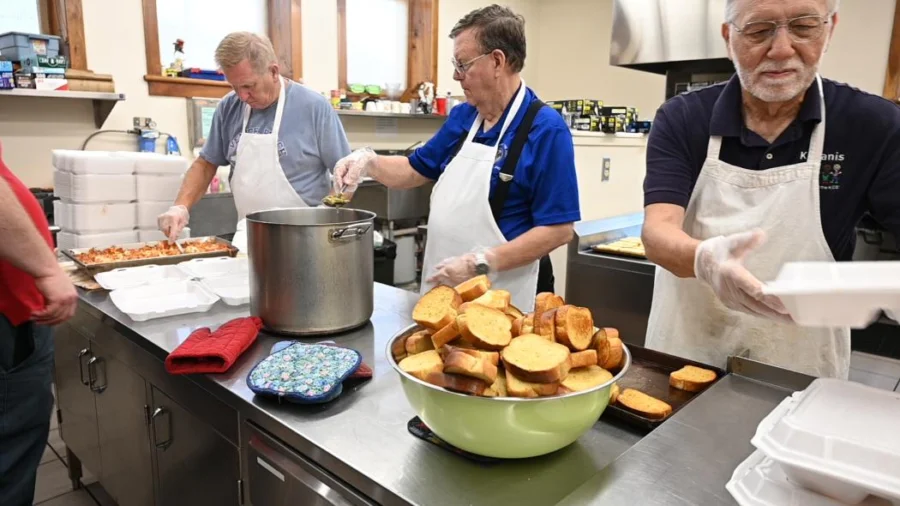
Broad Street has operated a food pantry five days a week for 45 years. Wednesday, October 29, 2025, was the pantry’s busiest single day in all its years. Broad Street’s food bank averaged 65 families a day in September, and they helped 106 families on Wednesday of this week.
“People are scared,” said Angela Johnson, pastor of Grace Hope Presbyterian in Louisville, Kentucky. Her church’s monthly mobile pantry ran out of food boxes this month.
“We are seeing the need increase greatly,” Johnson said.
“People are scared.” — Angela Johnson
The president of the Association of Community Ministries in Louisville, Linette Lowe, said that families are worried about inadequate food supplies in November.
Lowe said she was worried about this long-term “ripple effect” to families not having the funds for medicine, housing and other basic living needs.
“The need is so great right now,” said Sandra Grier, co-coordinator of the Mt. Olive Presbyterian Church Food Pantry in Charlotte, North Carolina. “We are trying to assist individuals experiencing food insecurity because of benefits being cut and federal employees being laid off.”
Related reading: “Food insecurity on campus: What churches can do to help college students flourish” by Eliza Smith DeBevoise, David Coffman, and Tim Drum
Nonprofits warn: churches can’t fill the gap
Mt. Olive has operated a food pantry in southwest Charlotte for the past 47 years. They have worked in partnership with a Charlotte food bank, Nourish Up, for the past two years.
Courtney Oates, marketing director at Nourish Up, said they’ve seen a 20% increase in traffic at their 40 food pantries, including Mt. Olive, in the last week. She hopes that the current food supply will last three weeks.
In the last week, Nourish Up food pantries have seen a 20% increase in traffic.
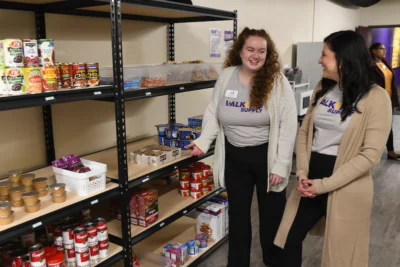
“Food pantries and philanthropy cannot make up that difference (of losing SNAP benefits). We will just focus on simply serving more families and giving out more food,” Miracle said.
Twenty-five states filed a lawsuit to force the government to continue SNAP payments, claiming that USDA has contingency funds to cover SNAP payments for most of November. Those contingency funds have allowed families to continue receiving benefits during previous shutdowns.
“The cutting off of SNAP benefits is just plain cruel and goes against all of our Christian values,” said Andrew Kang Bartlett, national associate for the Presbyterian Church (U.S.A.)’s Hunger Program.
Faith leaders urge advocacy and compassion
Bartlett called on congregations to advocate for the most vulnerable by writing to their senators and representatives. He also asked congregations to reach out to their local food and hunger relief groups to coordinate an emergency response plan.
“This is the time to connect and do better coordination with local food relief organizations,” Bartlett said.
“No child should go to bed hungry. No elderly person should feel faint from missing a meal. We need to do better.” — Linette Lowe
“No one should be hungry. No child should go to bed hungry. No elderly person should feel faint from missing a meal. We need to do better,” said Lowe.
Miracle said that on this Sunday at her church in Columbus, Ohio, “We will remember those who have fed us physically and spiritually. Like a grandparent who fed us a cookie to a teacher who fed our desire for knowledge. We will be recommitting ourselves to feeding people. This is the work we are called to at this time.”