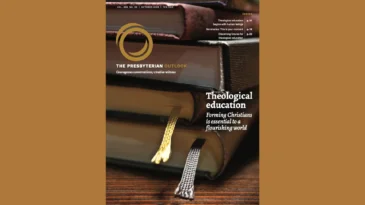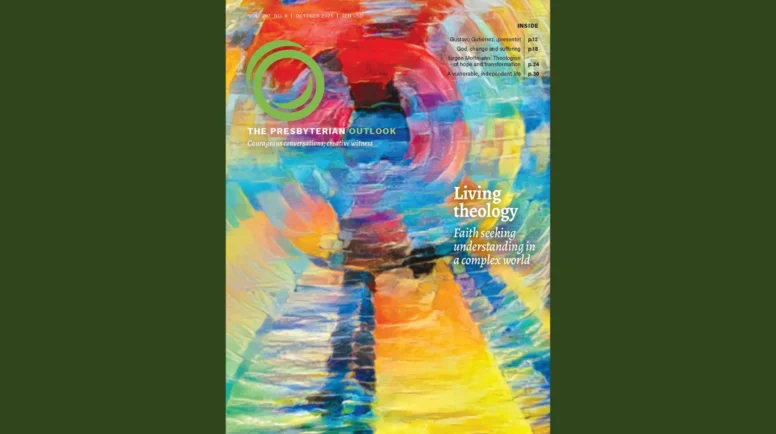
Theologian William Placher used to say that trying to be a Christian all by yourself is like trying to sit on your own lap. It can’t be done. You need other people to lean on, learn from, argue with. Being a Christian puts you in an enormous circle that is almost 2,000 years old and stretches across place, culture, language and traditions. Some of the folks in this circle are your contemporaries who speak your language and live in your part of the world. You will meet a few of them in the October 2025 issue of the Outlook, Living Theology. You will also meet two others, Jürgen Moltmann and Gustavo Gutiérrez, who spoke different languages, came from different places and faced different historical and cultural challenges. Their earthly lives ended last year, but their voices still speak into that huge circle of Christian faith, inspiring and challenging new generations.
All Christians, young and old, are called to theology in one way or another.
For some Christians, theology is their life’s vocation. But all Christians, young and old, are called to theology in one way or another. Think of theology as loving God with your mind. You join the theological circle at baptism, and you never leave it. Once my three-year-old asked me out of the blue, “Does God love robbers?” That was a theological question. Questions like that come up all the time in our lives, and we often need help answering them. As the Book of Proverbs says, “iron sharpens iron” (27:17). This proverb means that to follow Jesus, we will need some theological friends: people who have thought long and hard about what love of God and neighbor looks like and can offer us guidance. And just staying within the tight circle of theological friends we already have is not enough. We all speak theology with an accent, and often we learn the most from fellow Christians who speak the faith with accents we find unfamiliar. They may ask uncomfortable questions about social arrangements we have taken for granted or show us new ways to read familiar Bible passages.
We all speak theology with an accent, and often we learn the most from fellow Christians who speak the faith with accents we find unfamiliar.
I have been teaching theology at Louisville Presbyterian Seminary for 35 years. Each year in my theology classes, I see unlikely friendships form. A student from Korea meets Howard Thurman, a 20th-century African American pastor and theologian. A student from the African Methodist Episcopal tradition befriends Julian of Norwich, a 14th-century English anchoress. Across time, place, language and culture, friendships form that can last a lifetime. Even theological voices that puzzle or enrage my students often end up having a long-lasting impact, challenging them to reexamine theological stances they thought were unshakeable. Loving God with our minds puts us in the company of a huge host of fellow travelers and debate partners.
Loving God with our minds puts us in the company of a huge host of fellow travelers and debate partners.
Christian faith claims us body and soul, and so does the work of theology. Theology happens all the time, even when we don’t recognize it. Whenever we create a household budget, comfort someone who is grieving or protest an unjust law, we are engaging in theology. We are making a statement about what it looks like to love God and follow Jesus. Because theology is always taking on flesh in the world, doing it badly incurs high costs. Over the centuries, Christian theology has been used to foment hatred against outsiders, stigmatize the vulnerable and defend corrupt practices. Theology can challenge us to greater faithfulness, and it can also wound and traumatize us. Doing theology well is important because it can be a powerful force for both good and evil.
Doing theology well is important because it can be a powerful force for both good and evil.
Like reading the Bible and praying, the work of theology is an ongoing process. No theology can claim completeness. Our theology often deepens and shifts over time as we encounter new situations and follow the promptings of the Spirit. Furthermore, as theologian M. Shawn Copeland argues, every theology has its monsters under the bed. All our theological understandings have their weak spots, their gaps and problems. They offer us even more reason to join the wider theological conversation! In the October 2025 issue of the Presbyterian Outlook, we invite you to stretch your theological muscles by practicing a different accent, having a friendly argument, discovering a new friendship. What the Book of Hebrews calls “so great a cloud of witnesses” (12:1) needs your voice, too.