Recently on Substack, hospital chaplain J. S. Park wrote about his 5-year-old daughter losing her favorite doll, BobaTea, while their family was traveling in Korea. When she realized the doll was gone, she dissolved into tears and wailed. A well-meaning relative scolded: You should have kept better track of your toys. Park gently stopped them.
He knew what he was witnessing wasn’t immaturity or drama. It was grief.
So he invited his daughter to share her favorite memories of the adventures she and BobaTea had shared. She talked for nearly an hour while her father listened. He reassured her that she could tell him about BobaTea anytime the ache returned.
Park concluded, “It’s important that any and every loss, no matter how ‘big’ or ‘small,’ is embraced fully. Grief is a story that has to be heard.”
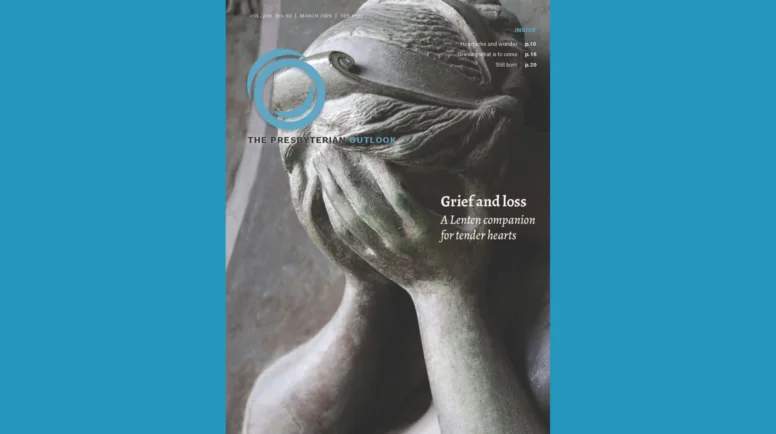
How seldom we witness grief given its proper due. Not as a problem to fix or manage or suppress, but as a painful reality of being human, needing to be honored and held with tenderness and patience.
Lent refuses the illusion that the world is “fine.” It tells the truth. The world is not as it should be.
As we journey with Jesus through Lent, we walk the terrain of grief. Lent refuses the illusion that the world is “fine.” It tells the truth. The world is not as it should be. Our lives are not as we wish they were. When we love people, places, communities, and creation, we will experience pain and suffering.
Grief is more than our response to death. It is our response to painful realities we wish were not true. Like the psalmist in Psalm 42, whose soul is “cast down” and “disquieted,” who thirsts for God and repeatedly asks why, we, too, carry our laments, large and small:
I grieve families torn apart by immigration raids; college students abducted for protesting; people disappearing into detention centers without due process.
I grieve our shrinking capacity for moral courage. Our loss of civility and kindness. I grieve how we’ve traded the patient work of understanding for the quick satisfaction of contempt.
I grieve the bloodshed: political rallies turned deadly; sanctuaries, synagogues and mosques desecrated by hate; classrooms turned to crime scenes; wars that terrorize and extinguish lives made in God’s image.
I grieve the times I’ve chosen safety over courage, comfort over compassion, and distance over presence. I regret those moments when my unacknowledged pain leaked out as irritability or a stinging, snarky comment. I grieve evenings lost to mindless scrolling when I could have been nourishing myself with poetry or the joy of time spent with loved ones.
“Deep calls to deep,” the psalmist says (v. 7). To find our way to healing and hope, we must be willing to go deep. Wounds do not heal unless they are touched. And no, despite our best attempts, they are not healed by distraction or denial or retail therapy (Believe me, I’ve done the field research!).
Deep pain needs deep grace. Deep listening. Deep love.
Lent brings companionship in sorrow. We follow a Savior who did not bypass suffering. Jesus knew betrayal, loneliness, injustice, and fear. He knew the grief of friends who could not stay awake and crowds who turned away. On the cross, he cried out the ancient lament: My God, my God, why have you forsaken me?
The God we meet in Lent is not embarrassed by our grief.
In Christ, God sits with us the way Park sat with his daughter. Not shaming. Not silencing. Inviting us to speak our loss and promising to keep listening as long as it takes.
Yes, Lent leads us toward the cross and the ache of losing Jesus in death. But it also prepares us for the astonishing truth that death does not get the last word. Resurrection is not a shortcut around grief. It is God’s declaration that grief, fully felt and fully heard, can open into new life.
In this season, let us practice honoring grief. Let us tell the truth about what hurts. Let us weep when we must. Let us listen for the stories grief needs to speak. Because when grief is allowed to be heard, love is allowed to do its work. And love, thank God, is not finished with us yet.