Spoiler alert: This review discusses key plot points and the ending of “Project Hail Mary.”
“But ask the animals, and they will teach you,/ the birds of the air, and they will tell you;/ ask the plants of the earth and they will teach you,/ and the fish of the sea will declare to you./ Who among all these does not know/ that the hand of the Lord has done this? (Job 12:7-9)
Since the 1990s, scientists have discovered thousands of exoplanets, prompting renewed questions about life beyond Earth. For some futurists, these discoveries offer an escape hatch — a chance to leave behind a damaged planet rather than repair it.
“Project Hail Mary” pushes audiences in a different direction. Rather than imagining salvation among the stars, it asks what the cosmic exploration might teach us about our place within the universe — and about one another.
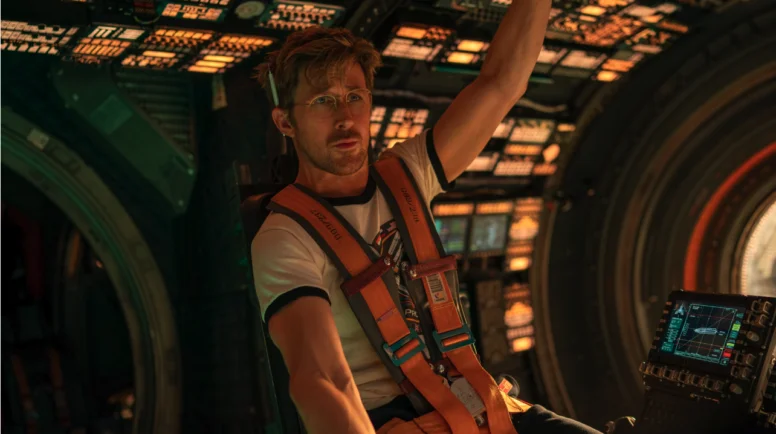
On the surface, the film follows a high-stakes premise: astrophage, an extraterrestrial microbe, is draining the sun’s energy, threatening extinction on Earth. Humanity’s best hope is a desperate, one-way mission to Tau Ceti, a nearby star where the microbe is present but doesn’t affect the star’s energy output. The mission ultimately falls to Ryland Grace, an untraditional scientist turned middle-school teacher who never intended to be humanity’s last hope.
But the film’s emotional center emerges elsewhere — in Grace’s encounter with Rocky, an alien who is, like him, the sole survivor of a mission to save his planet. What begins as cautious curiosity becomes collaboration, and then friendship, as the two learn to communicate and work together.
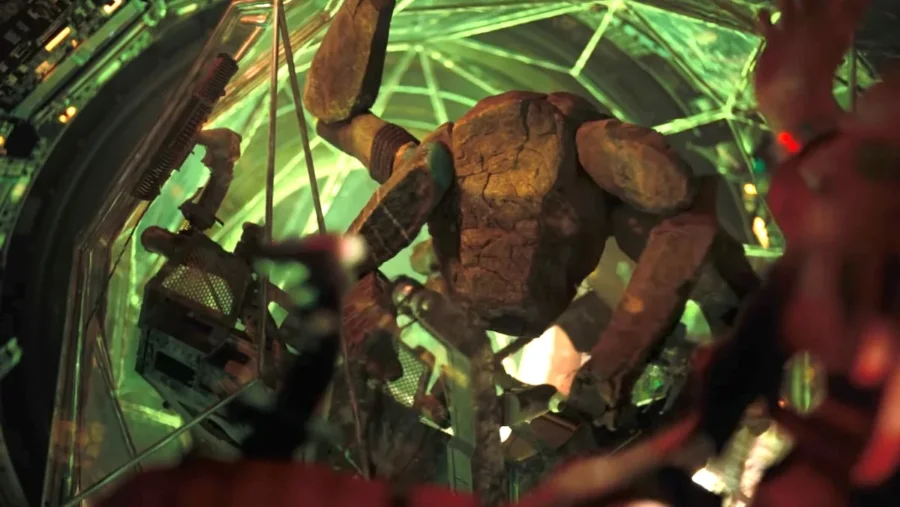
The turning point comes when Rocky realizes that Grace has no way home. Grace has made peace with that reality. Rocky has not.
“Rocky watch whole crew die. Could not fix,” he explains. “Grace say Grace will die. Rocky fix.”
In this moment, the film shifts from a survival story to a moral vision. A being utterly foreign to human experience embodies something deeply recognizable: a refusal to accept another’s suffering when action is possible. Rocky offers his own limited resources so Grace can return home, even at great cost to himself.
“Project Hail Mary” suggests that empathy is not merely a human virtue but something woven into the fabric of creation itself. Interdependence is not weakness — it is how God created the universe to function.
Interdependence is not weakness — it is how God created the universe to function.
That insight deepens in the film’s final act. After completing their mission, Grace sends the solution for astrophage back to Earth using probes and, thanks to fuel provided by Rocky, begins to make his way home. Early into the journey, he discovers that a flaw in their solution will doom Rocky on his voyage. Faced with a choice — return to Earth or turn back and save his friend — Grace chooses the latter.
His decision is often framed as heroic, but the film is more interested in its origins. Grace’s act is not isolated; it is formed. It is, in many ways, a response to Rocky’s earlier compassion. Love generates love. Empathy begets empathy. The film even plays with this idea metaphorically. The astrophage threatens life by consuming energy, but empathy operates like a different kind of contagion — spreading outward, multiplying through acts of care, sacrifice and solidarity.

For Christian viewers, this resonates deeply. Grace’s choice echoes a familiar pattern: love received becomes love enacted. The gift of grace does not end with assurance; it extends into transformation. We are not only recipients of love but participants in it.
“Project Hail Mary” ultimately resists the escapism often associated with space narratives. It does not imagine a better world “out there.” Instead, it reflects back a vision of what is possible here — a world sustained not by independence, but by relationship.
In a cultural moment marked by those in power fueling a fear of the “other,” the film offers a quiet but compelling counter-witness. The stranger is not a threat but a teacher. The foreign is not something to fear but a place where grace might be revealed.
Even across incomprehensible difference, mutual care is possible.
Grace and Rocky’s friendship becomes a kind of parable: even across incomprehensible difference, mutual care is possible. More than that, it is necessary.
The cosmos, the film suggests, is not pointing us away from Earth but back toward it — toward a deeper responsibility for one another and for the fragile world we share. And perhaps that is the film’s most surprising claim: that what will save us is not distance, but connection. Not escape, but empathy.