The Reformed Identity Around the World Committee recommended Wednesday that the 227th General Assembly call on the Presbyterian Church (U.S.A.)’s advocacy offices to press for an end to the U.S. embargo and sanctions on Cuba, expressing solidarity with the denomination’s long-time partner church there amid what Presbyterian Life & Witness (PL&W) staff described as a deepening humanitarian crisis.
RIW-11, a commissioner resolution submitted by Janira Colon, a ruling elder commissioner (REC) from Central Florida Presbytery, and Rut Garcia, a REC of Presbiterio del Noroeste, passed 54-4 as amended. All committee recommendations go to the full assembly for consideration in plenary next week in Milwaukee, where every item of business can be debated, amended and voted on again.
A partnership stretching back decades
The PC(USA) and the Iglesia Presbiteriana-Reformada en Cuba (IPRC) have been partners in mission since 1967, with combined mission ties stretching back to the turn of the 20th century. The 223rd General Assembly reaffirmed a mutual mission agreement between the two denominations in 2018.
RIW-11 came against a backdrop of mounting concern. In February 2026, more than a dozen faith-based organizations, including the PC(USA) and the Cuba Partners Network of the PC(USA), released a joint statement expressing alarm at the growing risk of military escalation and calling on policymakers to reduce barriers to food, medicine and basic necessities. In April, a U.S. Senate vote blocked a resolution that would have prevented the current administration from launching a military attack on Cuba.
Staff describe a crisis unlike anything before
PC(USA) staff told commissioners the situation on the ground had reached a new level of severity. Sue Rheem, the PC(USA)’s representative to the United Nations, described meeting with the moderator of the IPRC in May, who reported that most young people leave Cuba to find work, leaving the elderly and children behind, with churches doing everything they could to support members facing severe shortages of electricity and basic infrastructure.
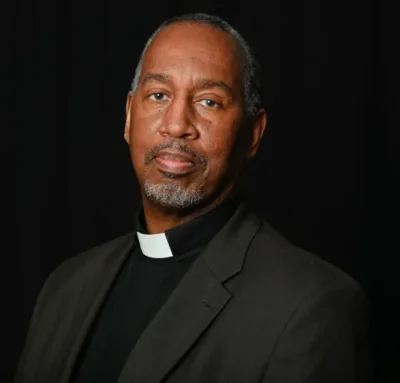
Jimmie Hawkins, the director of the PC(USA)’s advocacy offices, told commissioners he had visited Cuba in March – his third trip over 30 years – and described conditions unlike anything he had witnessed before. “We would walk down the streets of Havana, and there would be people begging on the streets,” he said. “Our Cuban friends, who were there escorting us, said it broke their hearts, because it was the first time that they had ever seen Cubans having to beg on the street for pennies and for food.”
Hawkins described the PC(USA)’s deep relational ties with Cuban Presbyterians and said passage of the overture would strengthen the denomination’s advocacy presence both in Washington and on the island.
Catherine Gordon, representative for international issues for the Office of Public Witness, told commissioners that a statement from the assembly recognizing the humanitarian crisis and calling for diplomatic rather than military engagement “would help our current work — and the work of our coalition.”
Jim Moran, a teaching elder commissioner (TEC) from the Presbytery of Middle Tennessee, spoke in support, recalling a visit to Cuban sister churches. “The hospitality was like going to my grandparents’ house,” he said. “The ministry and work and love they have down there as churches and Christians is a witness.”
Two amendments before final passage
The committee adopted two amendments before voting on the overture as a whole.
The first, recommended by the Racial Equity Advocacy Committee (REAC) and moved by Melanie Clarkson, a REC from Trinity Presbytery, redirected the overture’s advocacy directive. The original text called directly on the United States Congress and the president to act; the amendment instead directed PL&W’s Office of Public Witness and the PC(USA)’s Presbyterian Mission to the United Nations to advocate for relief. Clarkson explained the change simply: “We, as a denomination, can’t call on the president and Congress to do something. We have to go through proper channels and have our Washington, D.C., staff take care of it for us.” The amendment passed 52-4.
The second amendment, offered by José Luis Torres, a TEC from Seminario Evangelico de Puerto Rico, added a church-wide Sunday of Prayer with the IPRC and directed PC(USA) congregations to use existing Advisory Committee on Social Witness Policy (ACSWP) study resources to learn more about the IPRC and the humanitarian challenges facing the Cuban people. It passed 54-4.
The amended overture will go before the entire assembly when commissioners meet in person in Milwaukee from Sunday, June 28, through Thursday, July 2.
The committee’s full week of work
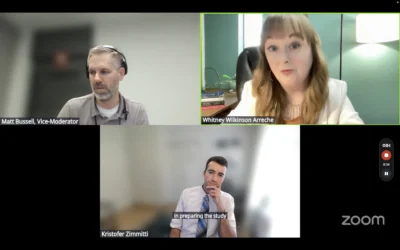
The Cuba resolution was the RIW Committee’s final item of business after a day that had already produced the assembly’s most anticipated vote. Earlier Wednesday, the committee recommended that the assembly declare the Israeli government’s actions in Gaza a violation of the international law prohibiting genocide, approving RIW-04 (55-4) as amended and answering a companion overture, RIW-06, unanimously. It also approved RIW-10 (51-5), affirming Kairos Palestine II, a statement issued by Palestinian Christians in November 2025. A full account of those votes is available in a previous Outlook article.
Over three days, the committee also acted on overtures covering nuclear disarmament, Syrian Christian persecution, a Korean historical tragedy and global mission accountability — including a recommendation to appoint a 17-member task force to investigate the closure of PC(USA) World Mission. That work is covered in an earlier Outlook article.