As much as I resist it, I am increasingly convinced that real forces of good and evil are at work in the world, contending for its very heart and soul. I believe in hell now, not as an abstraction, but because I have stood at its gates – in a town called Broadview – and I’ve watched heaven crash against those gates.
I first stood at 1930 Beach Street in Broadview, Illinois – the main ICE detention facility in the Chicago area – partly because I was curious and partly because a dear friend and colleague, one of the most faithful people I know, asked me to stand there.
Dressed in my clerical shirt and a sports coat, I looked at a building that could have stood in any ordinary industrial area in Chicago, Indiana, or really anywhere. At first glance, it looked unremarkable. I thought my biggest worry that day was whether I would overheat in that sports coat in the unseasonably warm weather.
Yes, the boarded-up windows seemed odd. But mostly the building looked normal. What I could not imagine was the humanitarian crisis unfolding inside. Federal litigation has now described how people who were detained there were held in overcrowded rooms without enough food, water or ventilation; were denied medical care; were prevented from contacting lawyers or family; and were coerced into signing deportation papers they could not read or understand. Lawmakers, journalists, clergy and family members were barred from entering, cutting off any accountability by U.S. Immigration and Customs Enforcement. The detention facility became, in the words of one attorney, a black hole — a place where people disappear from the light.
Yet as I stood there looking at this building that hides one of the ugliest truths of our nation, people were standing outside with me — ordinary people. They even had a table with food and drinks. It felt like a picnic. Looking back, I can’t help but think how innocent I was at that moment. I had been to protests before. I had even been trapped in downtown Chicago when George Floyd was murdered, so I have seen riots. But I had never experienced the pure brutality of what I saw that day — and that is not even the worst of what I’ve seen and survived at this point.
If they’ll do this in broad daylight, in front of cameras and ministers and all these people, what are they doing behind the locked doors no one is allowed to enter?
After I was there for about an hour, talking to some sisters whose father was detained inside, chatting with some of the protesters and even talking with the police outside, some men appeared on the roof. The gate on the street slid open, and about two dozen ICE officers rushed into the street, pushing, throwing and even beating people without warning, without hesitation, without any reason I could see. These confrontations started to happen periodically throughout the day — sometimes when they wanted to move vehicles in or out. But sometimes they seemed to be doing it just to be punitive, to keep us from peacefully exercising our First Amendment rights. By the afternoon, the encounters escalated with pepper balls, tear gas and rubber bullets being shot at us. I think the ICE agents were tired of us peacefully protesting there. They just wanted us to leave.
At one point, somebody shoved a disabled woman to the ground. When she couldn’t stand fast enough, they shot her with pepper balls. Again and again and again. Over and over. We dragged her back to safety and rinsed her eyes and skin as best we could, but we had to call an ambulance. As it drove off, I stood there horrified. If they’ll do this in broad daylight, in front of cameras and ministers and all these people, what are they doing behind the locked doors no one is allowed to enter? What’s happening to the people inside that building?
In that moment, my life narrowed to a single purpose: to help turn 1930 Beach Street into a place where the kingdom of heaven crashes against the gates of hell.
And for some reason – as my eyes, skin and lungs burned from tear gas and pepper spray and my fists clenched in a rage I’ve spent my life trying to tame – in that moment, my life narrowed to a single purpose: to help turn 1930 Beach Street into a place where the kingdom of heaven crashes against the gates of hell. It was as if God said, “Enough is enough. Stand up and do something.” And the words of the theologian Dietrich Bonhoeffer, who was executed in a Nazi concentration camp, poured into my heart: “When Christ calls a man, he bids him come and die.”
Empire vs. kingdom
I never expected to sound this hard-line. I’ve never been a binary thinker. But I do believe our faith confronts us with a choice: Do we serve the kingdom, or do we submit ourselves to empire?
This question is a loaded one, prone to misinterpretation and oversimplification. But I came to this question by honestly reading Scripture, paying attention to context, and allowing the text to interrogate my life rather than using my life to domesticate the text.
Do we serve the kingdom, or do we submit ourselves to empire?
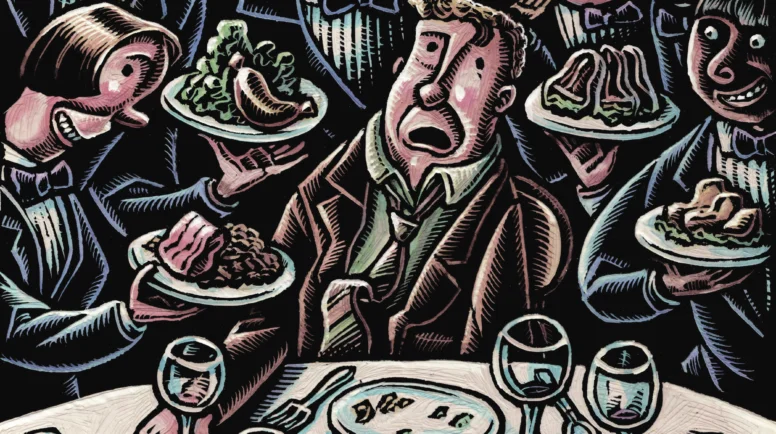
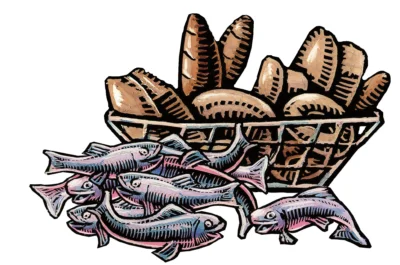
I was reading a passage in the Gospel of Mark when the image that now haunts me snapped into focus. It’s a story every Christian knows: Jesus teaches a crowd, there isn’t enough food, and somehow five loaves and two fish become enough to feed five thousand. I’ve come to call it the “banquet of the kingdom.” But Mark places the account immediately after another banquet: the one Herod throws, which ends when John the Baptist is beheaded and presented as entertainment for the powerful. I’ve come to call that one the “banquet of the empire.”
I believe Mark places these stories side by side for a reason. He wants us to compare them, to draw sharp distinctions between the empire of humanity and the kingdom of God — to understand not only the world Jesus lived in, but the world we live in now. Mark is telling us that there are always two tables being set. Two banquets. Two ways of being human. Two ways of ordering life.Mark is telling us that there are always two tables being set. Two banquets. Two ways of being human. Two ways of ordering life.
We might think the question is about which table we prefer. But the real question is about which table we will actually sit at. Which banquet will we participate in and support? Which one will shape our imagination, form our loyalties and teach us what kind of world we are willing to help create?
Mark is telling us that there are always two tables being set. Two banquets. Two ways of being human. Two ways of ordering life.
The banquet of human empire
Herod’s banquet is the banquet of empire.
It is an exclusive, invite-only world where insiders celebrate being insiders. Excess is performed as virtue. Power congratulates itself for being power. Status gathers, influence toasts itself and the room hums with the same lie: dominance is normal; this is order; this is simply how reality works.
And this empire is built on extraction. The vulnerability of the many purchases the comfort of the few. A small group feasts because a larger group serves. Empire requires everyone else to bear the cost so those at the top can pretend it does not exist.
Herod’s banquet is not just a meal; it is a liturgy. It teaches everyone who enters what kind of world this is. It dictates who matters and who does not. It defines which lives are expendable. It teaches what kind of truth is permitted — and what truth will cost if it is spoken without permission. That is why John has to die.
John is not killed for holding a private religious opinion. He is killed because his faith has public consequences. He dares to speak God’s truth to the face of the king. He refuses to bless a world where power gets to redefine what is good. He names harm. He tells the truth.
Empire cannot tolerate a truth it does not control because truth – especially truth rooted in God – makes people dangerous.
Empire cannot tolerate a truth it does not control because truth – especially truth rooted in God – makes people dangerous.
This point is where many of us misunderstand what “empire” really is. We imagine something ancient or far away: marble columns, palaces and arenas. We picture dictators or regimes. Because we imagine an empire that way, we assume we will recognize it easily. We think we will know it when we see it.
But empire is rarely that honest.
Empire is less a political arrangement than a spiritual formation project.
Empire is less a political arrangement than a spiritual formation project. It disciplines people into the habits of domination. It organizes life so that cruelty becomes normal and compassion becomes naive. It trains imaginations by teaching us what to fear, what to desire, what to tolerate and what we are allowed to call “realistic.” Empire does not only punish dissent; it produces consent.
It produces consent through threat and temptation. It carries a sword, but it also offers a reward: comfort for those who stay quiet, belonging for those who don’t ask questions, the illusion of safety for those willing to accept that some people must be sacrificed so the rest of us can feel secure. Empire does not only crush. It seduces.
Empire always tells a story to justify itself. It never says, “We are here to dehumanize.” It says, “We are here to keep order. To enforce the law. To protect.” Empire never calls itself “empire.” Empire calls itself “necessity.” Sometimes it even sounds like wisdom. Like maturity. Like realism. Empire says, “It’s complicated.” “You don’t know the whole story.” “What do you expect us to do?” “If we don’t do this, it will be worse.” It is the voice of inevitability. When something feels inevitable, resistance feels pointless. And when resistance feels pointless, compliance starts to feel like common sense.
That is how empire colonizes imagination. It shrinks the horizon of what we believe is possible until the only world we can picture is the one we already have. It trains us to confuse cynicism with intelligence, resignation with wisdom. Eventually, empire doesn’t have to wield the baton as often. People do its work for it. They shame truth-tellers into silence. They dismiss compassion as naive — because if it is naive, it can be ignored.
Empire wraps violence in professionalism so brutality can look like duty.
Empire also survives through euphemism. It teaches us to speak about people without seeing them. Lives become categories. Suffering becomes policy, procedure, protocol, enforcement, and security. People can be disappeared and called “processed,” can be injured and called “controlled.” Communities can be broken and called “managed.” If the words sound clean, the conscience can stay clean.
Empire always tells a story to justify itself. It never says, “We are here to dehumanize.” It says, “We are here to keep order. To enforce the law. To protect.” Empire never calls itself “empire.”
Empire silences truth not only with force but with spectacle. Herod’s banquet is power performing itself, teaching everyone the lesson. This is who runs the world; this is who decides what matters; this is who lives without consequences. Empire wraps violence in professionalism so brutality can look like duty. Once cruelty becomes routine, it becomes invisible. And what is invisible is rarely resisted.
The banquet of God’s kingdom
But Mark will not let Herod’s banquet have the last word. Right beside it, he places another table. Jesus feeds people in the wilderness — not the insiders or the powerful, but the hungry. And if Herod’s banquet is a liturgy of dominance, Jesus’ banquet is a liturgy of mercy.
At the kingdom’s table, worth is not scarce. Belonging is not conditional. People are not problems to be managed, but neighbors to be fed.
The kingdom’s table is not built on extraction. It does not require an underclass. It does not survive by hiding the cost. It is built on the shocking premise that God does not ration dignity.
At the kingdom’s table, worth is not scarce. Belonging is not conditional. People are not problems to be managed, but neighbors to be fed. And the miracle is not only that there is enough. The miracle is that the logic flips. In empire, the many serve the few. In the kingdom, leadership becomes service, power becomes provision, authority becomes care.
We often spiritualize the kingdom into something private or safely distant. But Jesus does not preach the kingdom as sentiment. He preaches it as arrival — a claim on the world. That is why empire felt threatened by him: not because Jesus was religious, but because his faith had public consequences. You do not execute someone for their private spirituality. You execute someone because their life disrupts the order.
At Jesus’ table, the lie gets exposed: the lie that says scarcity is ultimate; the lie that says some people are disposable; the lie that says the world can only be held together by fear.
The kingdom is not merely an alternative opinion about the world. It is an alternative way of being human in the world. It refuses to accept the logic of empire as inevitable. It insists – practices, embodies and lives – that another world is possible because God is real.
This is why the kingdom so often appears as a table.
Tables make loyalties visible. They reveal who belongs, what we value and what kind of world we believe is normal. At Jesus’ table, the lie gets exposed: the lie that says scarcity is ultimate; the lie that says some people are disposable; the lie that says the world can only be held together by fear. Jesus sets a table in the wilderness like a public declaration: Empire isn’t the only party in town.
Now we can finally say the quiet part out loud: if the kingdom is real, it cannot remain private. If the kingdom is real, it demands something of our bodies, our calendars, our wallets, our courage, our speech, our relationships and our public lives. The kingdom is not just something we believe. It’s something we practice. And the central prayer of the Christian life – thy kingdom come – isn’t a passive wish. It’s a revolutionary declaration.
“Thy kingdom come” is a plea for God’s reign to interrupt every other reign. It is a refusal to accept the banquet of empire as normal. It is a surrender of allegiance to every lesser loyalty that asks us to make peace with dehumanization.
At the kingdom’s table, worth is not scarce. Belonging is not conditional. People are not problems to be managed, but neighbors to be fed.
All of this means that our protest against empire in any form becomes prayer.
Not because protest is always righteous. Not because every cause is holy. Not because the people in the street are pure. We aren’t. But because standing in public and refusing the logic of empire is the most honest way we have of praying: No. Your empire isn’t ultimate. God’s kingdom is.
When we show up for the threatened, we’re praying, “Thy kingdom come.” When we make room for the rejected, we’re praying, “Thy kingdom come.” When we tell the truth that empire tries to silence or control, we’re praying, “Thy kingdom come.” When we refuse to let human beings be disappeared, discarded, exploited, we’re praying, “Thy kingdom come.”
That is protest at its best: practiced theology. Public discipleship. A lived refusal to consent. An embodied prayer claiming allegiance to Christ’s kingdom above every other claim.
Choosing kingdom through faithful protest
But the Gospel presses further. Jesus doesn’t only confront empire “out there.” He confronts it “in here.”
In Gethsemane, Jesus tells his disciples, “Pray that you won’t fall into temptation.” Not “pray that you win.” Not “pray that you come out on top.” But “pray that you won’t fall into temptation.” That instruction tells us something: The threat isn’t only what happens to us. The threat is what empire can make of us.
If our resistance costs us our capacity to love, then it’s costing us too much.
The arresting crowd arrives, violence flares and Jesus says, “Enough,” and heals the wounded man, even as he is caught in the machinery coming to crush him. He refuses to let violence, even justified violence, shape his spirit. He names the darkness without letting the darkness set the terms of his response.
That is the line that faithful protest has to walk.
If our resistance costs us our capacity to love, then it’s costing us too much.
Protest becomes prayer in its deepest sense not only when it challenges empire, but when it refuses to let empire reproduce itself inside us. Protest resists oppression without becoming oppressive. It tells the truth without becoming the lie. It rejects dehumanization without surrendering our own humanity.
Protest becomes prayer when it’s the public form of “thy kingdom come” — when we sit at the kingdom table in the open and invite others to sit down, too. Mark sets two banquets side by side because he wants to corner us with a question we would rather keep abstract: Which table are we at? He is not asking which table we admire, which table we wish existed, or which table we post about.
Which table is forming us?
A banquet is a place of participation. We don’t just analyze it. We attend it. We eat there. We are shaped there. By our presence, our compliance, our silence or our courage, we decide what kind of world we are willing to help sustain.
So yes, life is complicated. Motives are mixed. Outcomes are uncertain. But in the end, the choice is not between two viewpoints. It is between two allegiances. Two loyalties. Two ways of being human.
And if we truly pray, “Thy kingdom come,” the questions become unavoidable:
What would it look like for that prayer to take flesh?
What would it look like for that prayer to show up?
What would it look like for that prayer to stand at the gates of hell and refuse to move — not because we believe we are heroes, but because we believe the risen Christ is real, and therefore no empire gets to claim ultimacy?