I write this post while at Austin Presbyterian Theological Seminary for the second installment of a conference called “Shelter from the storm.” Seminary president Ted Wardlaw and Lynn Hargrove, the stated clerk of my presbytery (New Covenant), envisioned these two conferences as places of retreat for pastors in areas affected by Hurricane Harvey. Ted Wardlaw anecdotally observed that in 2005 and 2006, many Presbyterian pastors left churches in the New Orleans area within a year after Hurricane Katrina. The pressures and demands put upon pastors after disasters can easily lead to burn out.
So as to prevent a similar exodus in the Presbytery of New Covenant, the seminary generously has provided us these conferences free of charge (thanks to financial support from the Board of Pensions and the Texas Presbyterian Foundation). Presbyterian Disaster Assistance (PDA) offered seminars on compassion fatigue and how to shepherd a church system in the aftermath of a disaster. A clinical psychologist from Port Aransas (an area decimated by the hurricane) offered deep wisdom on building resilience in oneself and in one’s churches following a hurricane. I have been impressed and blessed by these conferences. Good pastoral conferences provide great fodder for writing, teaching and preaching.
Borrowing from Buddhist philosophy, the conference affirmed the value of recognizing the impermanence of all things as a way to build resilience. I am not an expert in Buddhism, so I offer all this third hand, and I may get it wrong. I simply want to write about what I took away from the learning. If attachment to things is what causes suffering, then letting go of our attachments is a way not only to survive this difficult life but thrive in it. Life is impermanent. Whether good or bad, our lives will change over time. We will lose things: material things, relationships, experiences, even people we love. Accepting this can free us to embrace the loss and grief when it comes, rather than rail against it.
I’m reminded of Lin-Manuel Miranda’s “sonnet” acceptance speech at the Tony Awards in 2016. In response to the horrifying mass shooting in Orlando, Florida, he remarked, “Nothing is promised here, not one day.” But, he then went on to affirm one thing of permanence: love. “Love is love is love cannot be killed or swept aside,” he said. Jesus tells us not to store up our treasures on earth where “moth and rust [and flood waters, in the words of a pastor colleague] destroy” but to “store up treasures in heaven” (Matthew 6:19-20). I dare say the one thing that doesn’t rust is love. Love woke us up to muck out homes; love compels us to help in the rebuild; love stirs us when we get tired, discouraged or apathetic.
I hope this wisdom helps me look at my “stuff” differently — the material stuff scattered around my home, the stuff of my writing (I’ve kept nearly everything I’ve ever written), the stuff of my relationships and especially the stuff of my circumstances. Can I embrace the whole of my life without relying on the good to pull me up or fearing the bad will pull me down? I suspect the grace of impermanence is where resilience following a disaster is found.
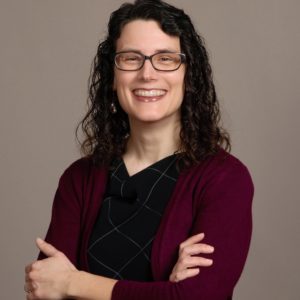
 RACHEL YOUNG is the associate pastor of spiritual formation at Clear Lake Presbyterian Church, in Houston, Texas. She is married to Josh, who also serves on staff at Clear Lake Presbyterian as the director of contemporary worship and media.