BALTIMORE – So Big Tent 2019 is meeting Aug. 1-3 in Baltimore, a city that President Donald Trump recently decried in a tweet as a “disgusting, rat and rodent infested mess.”
This is city where the next General Assembly will meet June 20-27 – and a place that Tom Hay, director of assembly operations for the Office of the General Assembly, described in the opening Big Tent plenary as this “precious in God’s sight city.”
The presenters spoke in that session about visible divisions in this city and in many others in this country; about the Native American history of this place and the understanding of indigenous cultures that “everything is interrelated”; about a Christian faith built on lamentation and prayer rather than sense that the Western church has all the answers.
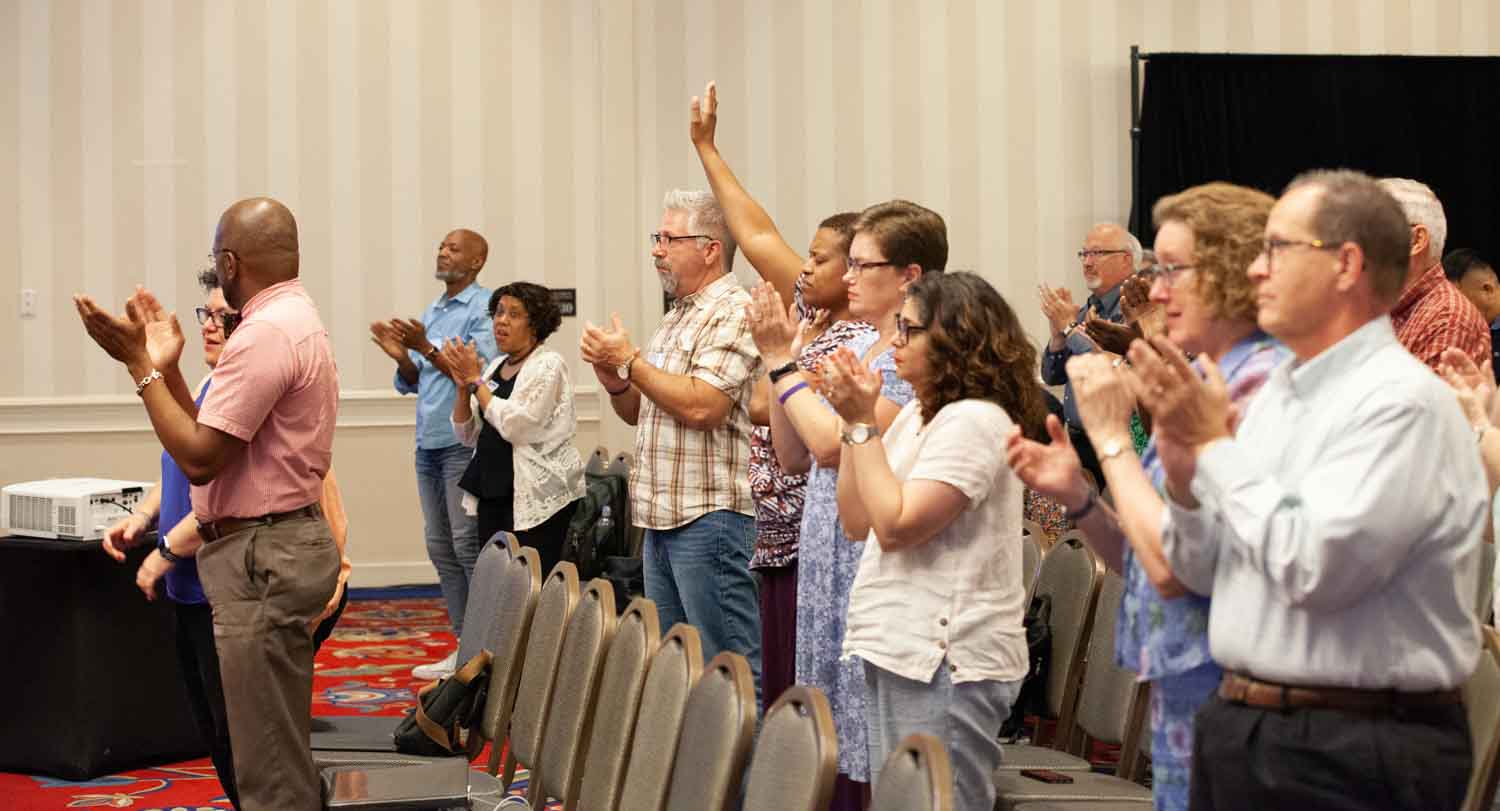
“Welcome to Big Tent,” said J. Herbert Nelson, stated clerk of the Presbyterian Church (U.S.A.), in welcoming the 794 people who have registered for this conference (that number includes staff from the six denominational agencies). Big Tent is meeting in “a place damned and demeaned by people in high places,” Nelson prayed, but with Presbyterians who’ve come here convinced that redemption is possible “because we are your people. … We know you, and your infinite mercy and power.”
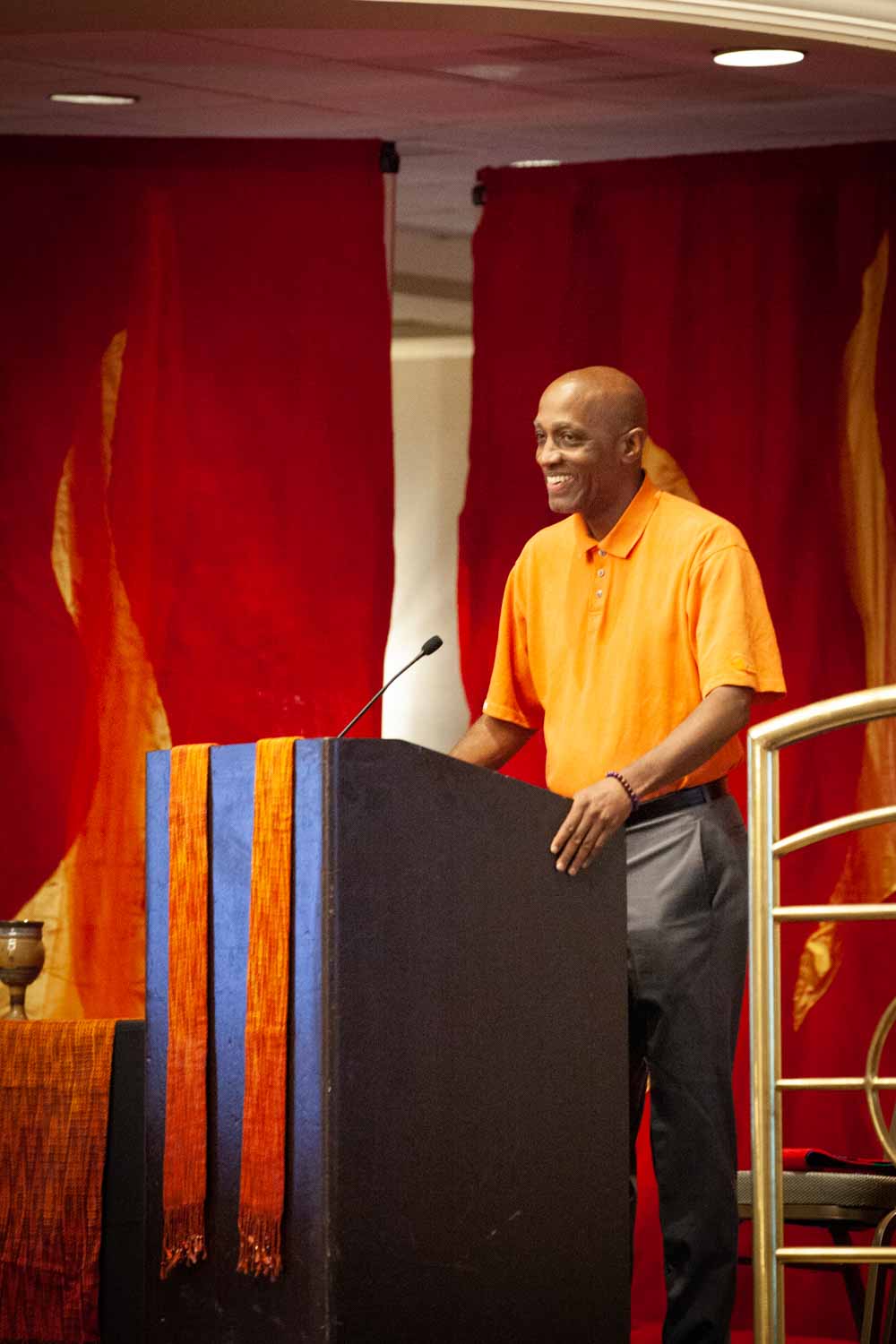
Elona Street-Stewart, synod executive of the Synod of Lakes and Prairies, offered acknowledgement that “this place where we’re meeting was the homeland for many indigenous tribes,” who lived on the bounty of the tidelands and wooded areas, and who “sang the first song here.”
Today, “we are still here,” Street-Stewart said. “We are not white, we are not Western, we are not seen, we are not immigrants, we are not Hollywood actors, we are not sports mascots. … We are still here. And our story is not finished.”
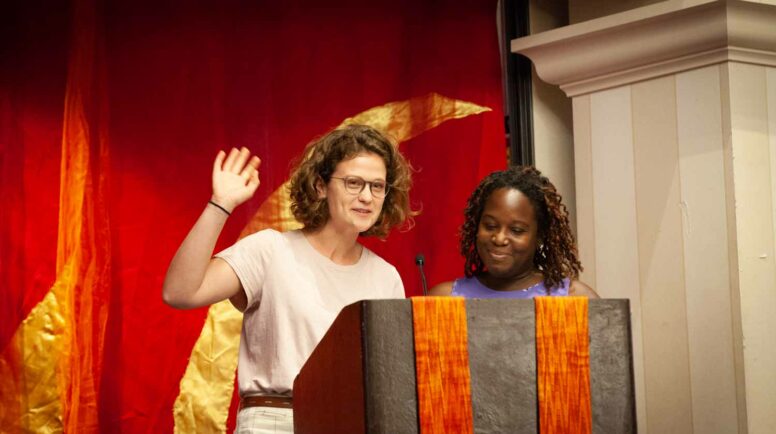
Melva Lowry and Liv Thomas, young adults who have spent the past 10 months working as Hands and Feet Fellows at The Center, a ministry of the Presbytery of Baltimore, told a little of what they’ve seen and experienced in this city.
Lowry described a city of contrasts and divisions – of well-kept tourist areas and trees growing through the roofs of abandoned houses. The city of Baltimore is considered a place of exile to Maryland and the surrounding areas, she said, and that reality serves as “a warning to the rest of American cities. Do not ignore the weeping, the wailing, the shouts of injustice and the dead silence. Can you see it? Are you paying attention?”
Thomas has seen both destruction and hope. “Baltimore does have rats, you know,” she said. “Really big, well-fed rats” – she accidentally picked up a plump frozen one while gathering up trash. Not all the Baltimore children who participate in the Center’s programs “enjoy that rat level of food access,” she said. Some camp programs provide children lunch and snacks, and before the kids leave “often pockets are stuffed with granola bars and Pop Tart packets for later.”
These Hands and Feet workers also talked about hope. Thomas has helped to cultivate a garden across the street from a methadone treatment center, where earlier this week clients walked over to say what they’d like to see planted next – peach trees and pear trees. This is a place of resurrection, where carrots and cherry tomatoes grow in a field that used to be filled with cinder blocks.
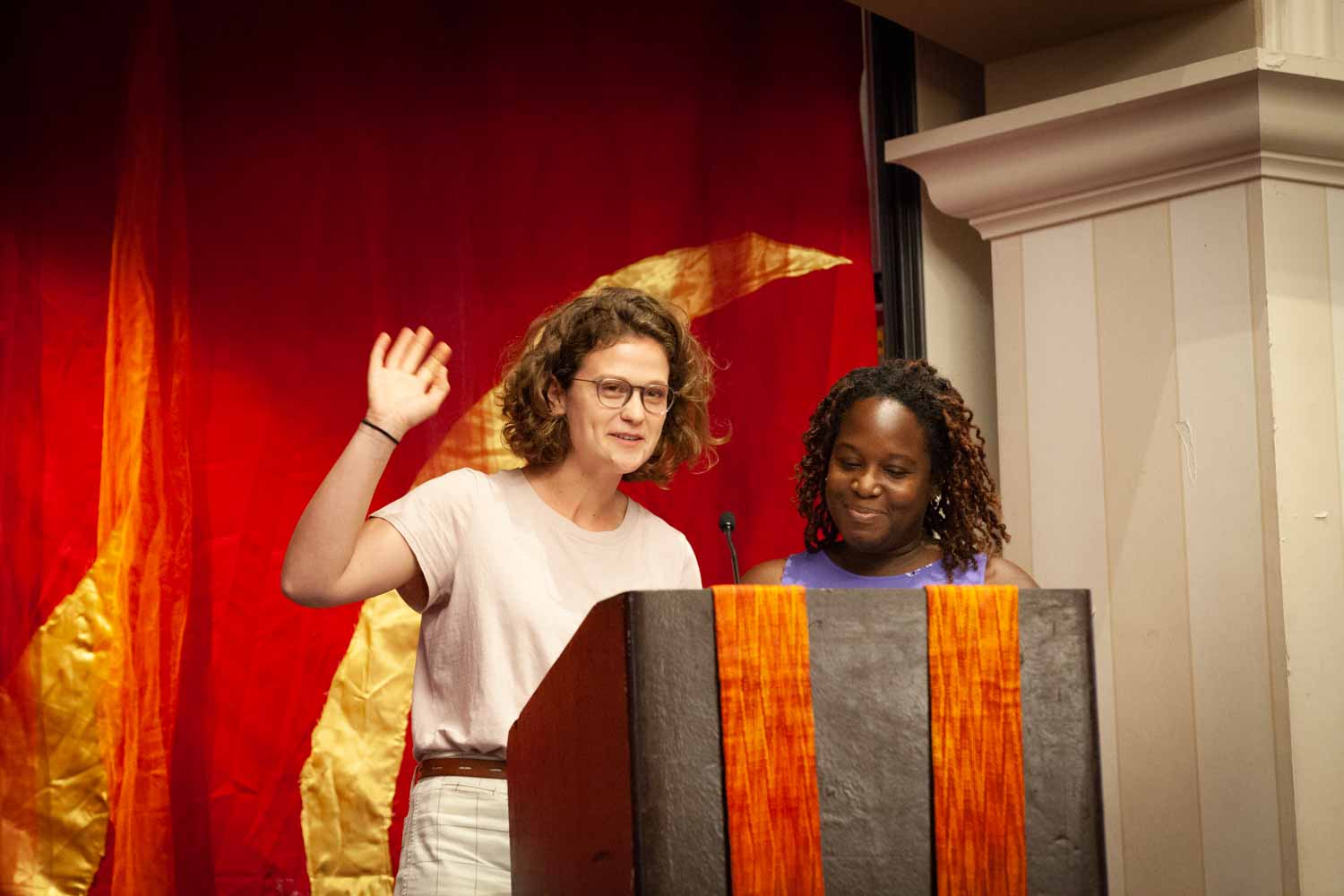
Lowry and Thomas described Baltimore as a city of polarities – with some blocks pock-marked by violence, hunger, vacant buildings, desperation, discarded needle caps.
They also see neighborhoods with “new life, a deep sense of pride, creativity born of necessity, kids playing, folks sitting on the front stoops checking on each other,” Lowry said.
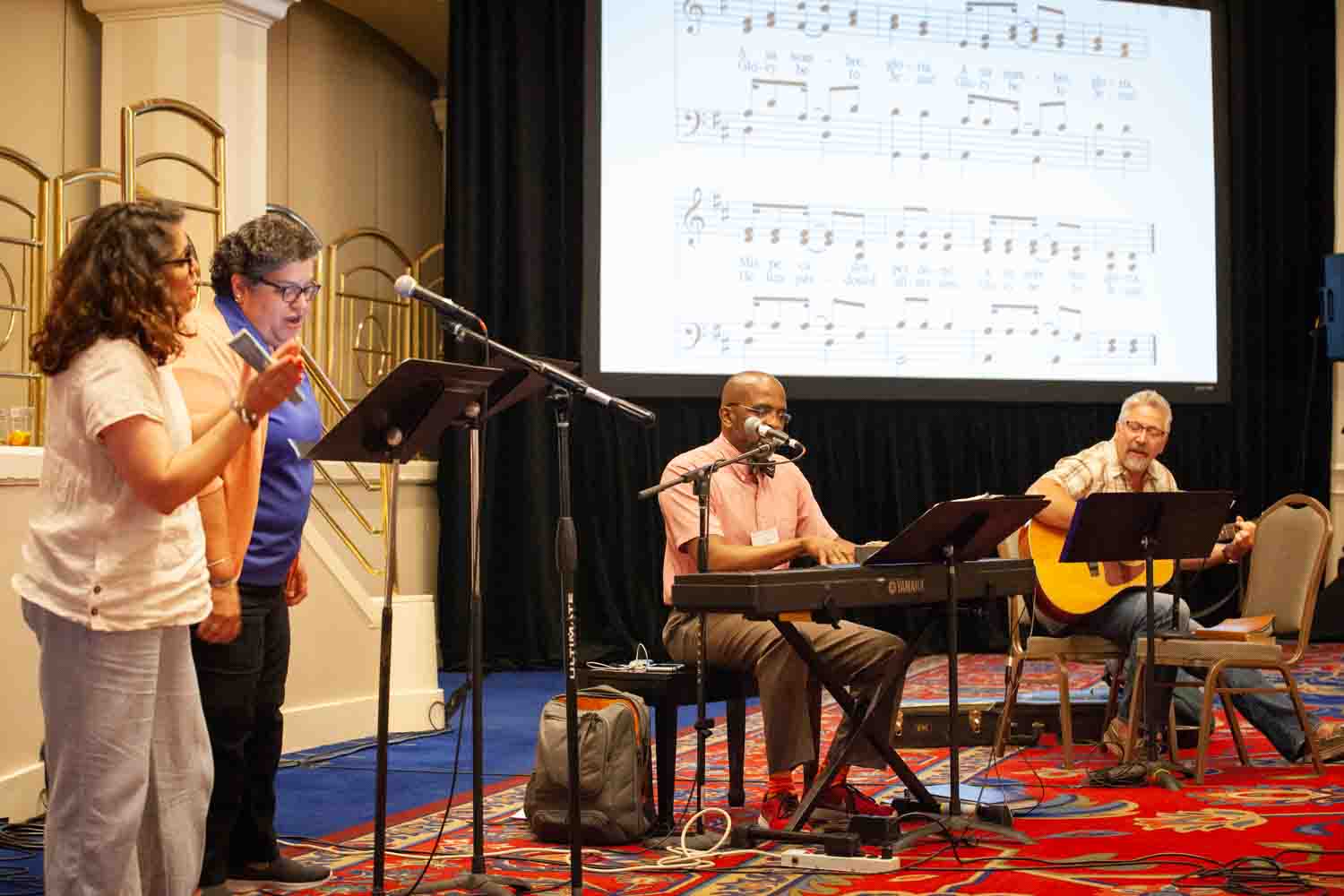
Pay attention, these young women said. See the divisions in the places where you live – the results of voter suppression, redlining, racism, inequity. The divisions evident in Baltimore – “we are in your city,” Thomas said. “We are in your town.”
The plenary speaker, Soong-Chan Rah, a professor of church growth and evangelism at North Park Theological Seminary in Chicago, lamented the dearth of lament in American churches and the obsession instead with success, victory, triumph. “Dealing with pain and suffering is so often left out of the liturgy of the American church,” Rah said. Instead, Christians in the U.S. are fond of short-term mission trips, convinced that “we can go out there and fix the problems of the world.”
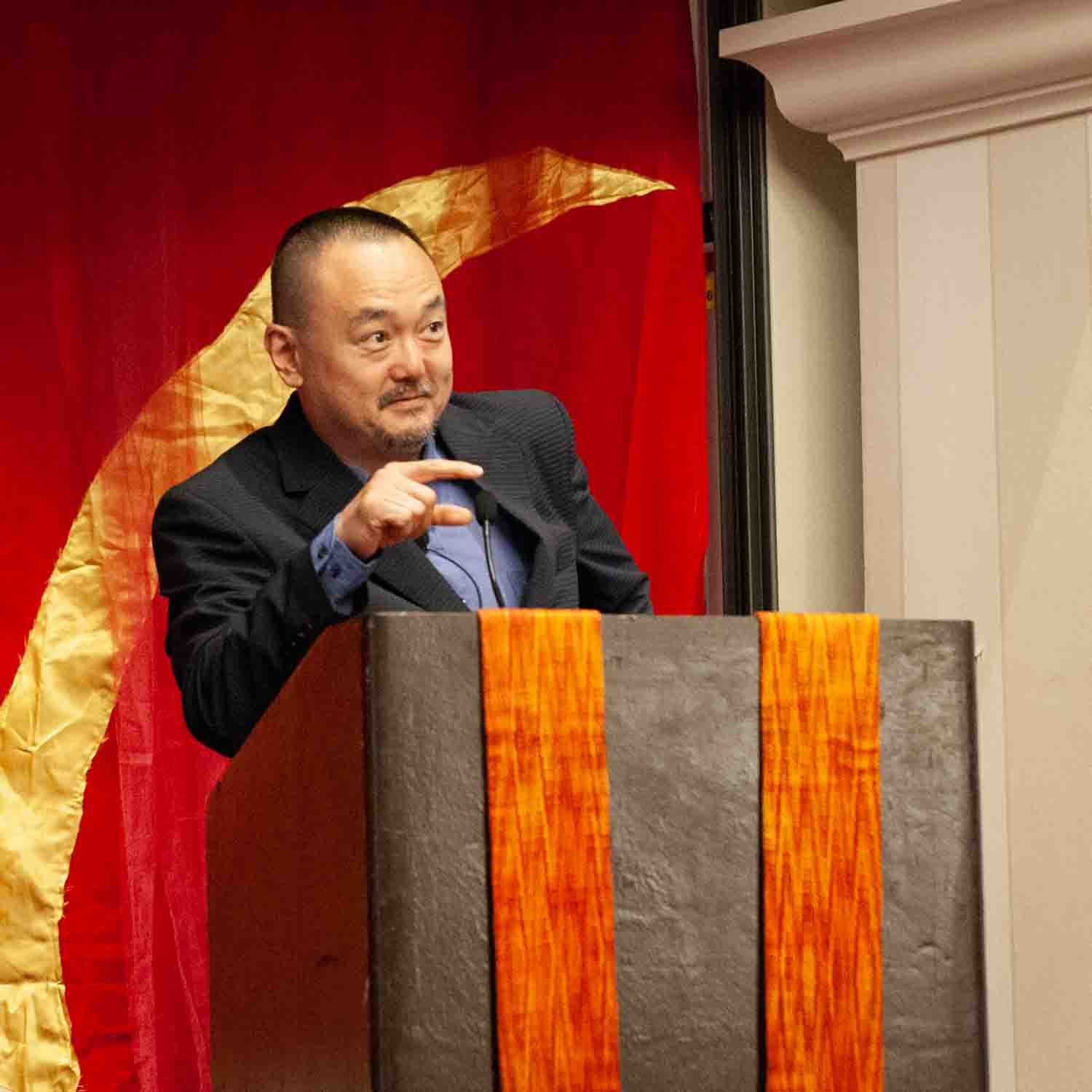
Rah grew up in Baltimore, raised by a single mom who worked 12 hours a day six days a week at a carryout restaurant with bulletproof glass, following that with a night shift at a nursing home. Altogether she worked 20 hours a day, slept for two, trying to raise four children on minimum wage, spending every Sunday in church. It still wasn’t enough, Rah said. “I grew up on food stamps. I grew up on government assistance. I grew up with government cheese in the freezer,” which Koreans didn’t really know what to do with.
His mother, now in her 80s, has dementia and today lives in a nursing home about a half hour away from the waterfront hotels where Big Tent has convened. Her kneecaps have cracked because of the hours she spent praying on her knees on hard floors.
Don’t pray for bigger buildings, more churches or members, Rah told the Presbyterians. “Pray for broken knees before God, and lament.”
(Here’s more on what Rah has to say about lament, racism, evangelism and changing demographics in the U.S., from a 2016 presentation at the DisGrace conference at the Montreat Conference Center.)
And he asked whether Presbyterians are willing to listen, to make room for the voices of the oppressed and the marginalized. “That’s what a Big Tent looks like,” Rah said, “when you can be together and hear the voices of the most oppressed and the most marginalized. Will the very least of our brothers and sisters be the face of Jesus to you?”