
Advertisement
Everything you need to prep for General Assembly in one place
The Presbyterian Outlook

The Presbyterian Outlook

Creating and curating trustworthy resources for the church, the Presbyterian Outlook connects disciples of Jesus Christ through compelling and committed conversation for the proclamation of the Gospel.

More Stories from this Author

Water, water and more waater

The water that overwhelmed Indonesia, Sri Lanka, parts of India and Thailand, and killed thousands of people caught the attention of the world. The immensity of the tragedy was difficult to comprehend. The power and strength and force of the water were overwhelming.

World v. God: God’s Defense

What have people been saying about God and the Indian Ocean tsunami?  I have seen quite a few “Why did you let this happen, God?” articles, from both inside and outside the church. There is, of course, nothing wrong with such pieces: such accusatory questions have precedent, even in the Scriptures. To ask this question of God in a time like this is not an impiety, but an understandable longing to see more clearly in the often-murky pool that is human existence.

Davidson College Proposal

Davidson College Trustee By-laws Proposed Revision
by The Ad Hoc Committee of the Davidson College Board of Trustees
September 21, 2004

ARTICLE I
Number, Election and Qualifications of Trustees

1.  The ownership, management and control of Davidson College are vested in the Trustees of the College, who shall be elected for a term of four years and in such manner that, as nearly as practicable, the Trustees will be composed of members elected as follows:

Angles of Approach

We may look at the contributions of Shirley Guthrie to the Presbyterian Church, to the church catholic, to his students and colleagues, and to his family and friends from many angles. In the appreciative articles honoring him and his work, the Outlook, with the advice of his colleagues at Columbia Seminary, has represented those angles of approach to this profound thinker and teacher of great simplicity, who by God's grace (he would most certainly say) had a beneficent and transforming effect upon multitudes. Wherever his students preach and teach, Shirley's influence is spread to people in the pews, who themselves begin their own theological reflection -- even if they are shy to call it that.

Remember Shirley Caperton Guthrie Jr.

“He taught us how to live and how to die.”
Charles Cousar


In early summer 2004, it became apparent to family and friends that Shirley Guthrie was not feeling well. He was having some digestive problems and had limited his eating to soup and light food in the hope that this would be of help.

Teacher to the end: A Student’s Remembrance of Shirley Guthrie

Those of us who entered seminary in the latter years of Shirley Guthrie’s career are grateful that this teacher never relinquished his passion for sharing his gift with the church. Already a professor emeritus by the time I entered Columbia Theological Seminary, Shirley gave little evidence that he had laid aside his calling to instruct.  Indeed, his beloved wife Vivian knew that, in many ways, the seminary classroom was his first home.

A tribute to Shirley C. Guthrie from a pastor and friend

In the fall of 1963, I entered Columbia Theological Seminary right after finishing Presbyterian College. Professor Felix Gear’s favorite phrase for us new students, “theological tadpoles,” was a compliment in my case.  Shirley Guthrie took me under his wing as he did for the other 100 new “tadpoles” who wanted to learn what it means to be a Reformed theologian.

Shirley Guthrie: Great theologian

Shirley Guthrie was, in my opinion, one of the great theologians produced by American Presbyterianism. He did not do the things that theologians often do to gain national and international fame. He did not, by saying things that had never been said before, found a “new school of theology” with its own distinctive label.

Barth and Guthrie

Professor Edward Dowey occasionally remarked that Karl Barth’s theology “is a secret known only to God and a few seminary professors.” Dowey attributed the comment to Leonard Trinterud, who, along with Dowey, served on the committee that wrote The Confession of 1967, and in part the comment may reflect the resistance they both encountered in the church to the Barthian perspective in the confession.

‘We Are Not Alone’: Church Life After A Disaster

After a hurricane, one of the first reactions is, "Look at this mess! Do something, fix it."  And a reaction that takes longer is, "I might not be able to fix this on my own after all."

In the months since Florida hit the four-fecta -- hammered by four hurricanes in just six weeks -- Presbyterians in the affected areas have learned some lessons. They have learned to measure progress by standing atop a highway overpass and counting how many blue tarps still are covering roofs. They understand what it means to an elderly church member when a Presbyterian comes knocking on the door -- if there is still a door -- to check on them and find out what they need.

Tsunami aftermath: God’s people respond

The news is shocking. Entire families swept away, villages devastated. One person surviving, the person standing a step away washed to sea. Parents feeling their children ripped from their arms by the force of the wave. Families with no certainty and no bodies to bury. A priest one minute distributing Communion during worship, the next telling parishioners to run.

And what lies ahead? Starvation, grief, homelessness, disease.

Tsunami: Humankind as Job

Harrowing images assail us; newspaper reports tell of mega death, miraculous rescue, fragile hope. The peoples of earth offer assistance to nations devastated by earthquake and wave. No one asks how such a thing could happen in a world created by God. 

We live with the uneasy assurance of science that unstable tectonic plates produced an earthquake eight times more powerful than the explosion of a hydrogen bomb.  Yet what do we say about the Creator of the rolling spheres, and of the roiling deadly seas.  

           Therefore we will not fear though the earth should change,
           Though the mountains shake in the heart of the sea;
           Though its waters roar and foam,
           Though the mountains tremble with its tumult. (Psalm 46:2 -- 3)

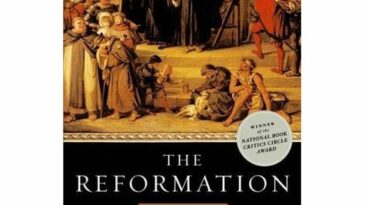
The Reformation: A History

The Reformation: A History, by Diarmaid MacCulloch, Viking, 2003. 700 pages

When I picked up McCulloch's magisterial history of the Reformation, I thought perhaps I would spend a couple of hours dipping into it. I was in for a surprise. This large work of nearly 700 pages became almost an obsession for me as I engaged in a dialogue with this British theologian who has given us a passionate and opinion-filled discussion of the events we call the Reformation.

When Lightning Strikes

Local television and radio stations across the width of New York State issued warnings of a series of rolling thunderstorms approaching the area. Some of them might be severe, the announcers said, possibly with tornado force gales. Just after 8 p.m. lightning hit the walls of the sanctuary of First Church of Pittsford, producing a blast like a freight train driving full speed into a depot at the end of the line.

Dr. King and The Outlook

It is fitting for The Presbyterian Outlook to salute the Martin Luther King Jr. holiday by remembering what tireless advocates Dr. E. T. Thompson and Rev. Aubrey Brown were for racial integration and justice.  (Thompson was the Outlook's first editor and professor of church history at Union Seminary in Virginia; Brown was editor from the 1940's to the 1970's.)  This paper stood tall on these matters when such beliefs were dangerous to espouse.  

When Thompson was tried for heresy in Mecklenburg (now Charlotte) Presbytery, everyone understood that the sub-texts of that trial, ostensibly about the faithful interpretation of Scripture, were his positions on integration and ethics. Because of the malign interweaving of biblical inerrancy with segregation in the South, people who agreed with Thompson and Brown were labeled communists by fundamentalist Presbyterians.

ACSWP, PC(USA) “reconciling letters” on Hezbollah trip

After keeping silent since their return from a controversial trip to the Middle East this fall, some members of the Advisory Committee on Social Witness Policy have released a letter -- and, in turn, received one from top leaders of the Presbyterian Church (U.S.A.).

The exchange of letters -- and of a summary of "highlights" from the October 14-31 fact-finding trip, which included a meeting with the leaders of Hezbollah, a group the U.S. State Department has identified as a terrorist organization -- includes both an explanation for the Hezbollah meeting and some acknowledgment of regrets.

Reconciliation in Middle East and in denomination; letters report review ACSWP trip

Several weeks of intense dialogue between Presbyterian Church (U.S.A.) leaders and members of an Advisory Committee on Social Witness Policy (ACSWP)-led delegation that held a controversial mid-October meeting with Hezbollah officials in southern Lebanon has culminated in an exchange of letters.

A joint statement to the Presbyterian News Service on in mid-December included the two letters and a brief report of the delegation's Oct. 14--31 visit, which included stops in Lebanon, Syria, Jordan, Israel/Palestine and Egypt. The Oct. 17 meeting between the Middle East "fact-finding" delegation and leaders of Hezbollah -- which is on the U.S. government's list of terrorist organizations -- created a deluge of protests from numerous Jewish groups and Presbyterians around the country. The meeting was widely televised on Arab networks.

What have we done for Brown?

The 50th anniversary celebration of the landmark 1954 Brown v. Board of Education Supreme Court decision was a necessary spotlight on that ruling’s profound contribution to goodness in this nation. With the commemoration over, that spotlight becomes a searchlight, seeking us out in the darkness where in an audience we sit, comfortably, when it is our turn to take the stage.

Time and Eternity

"What time is it?" is one of the most frequently asked questions, and no one wearing a watch has difficulty answering it. But change the wording slightly and mystery abounds. "What is time?" has been pondered through the ages and we think about it especially at the coming of a new year. Time is elusive--you can't smell, taste, hear, or see it even though you may have a lot of it on your hands!

What the New Year Holds

Two quotes I saved from a piece in the New York Times called "The New Designer Despair," take issue with a destructive tolerance that leaves souls shriveled and minds tired. The subject was education in moral judgment. The writer quotes the principal of his daughter's school: "We encourage our children by telling them that there are no bad ideas." He also references Modern Times by the English, Roman Catholic historian, Paul Johnson: "the church is the last place in the world where we make the distinction between good and bad ideas." 

If the biggest, baddest, and best story of 2004 is religion, religion in politics and public life, then the designer despair generated by too much tolerance is gone. There are scores of religious people who tell us what is good or bad. The presidential election was shamelessly religious. Jerry Falwell ran a partisan voter registration campaign in countless congregations, and Democrats cast their usual nets into African-American churches.

PCCJR challenges divestment effort

Presbyterians Concerned for Christian & Jewish Relations, a group of Presbyterians troubled by the stand the Presbyterian Church (U.S.A.) has taken regarding divestment in certain companies doing business in Israel, is asking Presbyterians to join together and work to get that policy changed.

At issue is a 431-62 vote taken last June by the General Assembly authorizing selective, phased divestment in some companies doing business in Israel in protest over the Israeli government's treatment of the Palestinians. Before any divestiture happened, the PC(USA) first would try to negotiate with the companies involved and would consider filing shareholder resolutions to try to change the companies' actions.

Robert P. Baskin new OUTLOOK publisher

Robert P. Baskin, a Richmond, Va. financial and business executive and active Presbyterian layman, has been named publisher of "The Presbyterian Outlook" effective January 3, according to a recent announcement of the Presbyterian Outlook Foundation.

For the past two years, Baskin has been director of corporate services for EMC, a mechanical contractor in Richmond. He provided operational and financial support to a company that covers the East Coast, with responsibilities that include risk management, safety, training, and special projects.

Defend God?

The morning routine at our house calls for reading the letters to the editor of the New York Times. Since the election, that’s become something of a trial. More often than not, the letters have to do with the role of “religion” in politics. Many letter-writers see the nation divided between the devout, who are concerned for “moral values,” and the secular, who are presumably interested in issues that have nothing to do with “morality,” such as war and peace, and the obligations of the rich toward the poor.

An American Holy Day Sermon: Sufficiency

Scripture Readings: Deuteronomy 8:1-3, 6-10, 17-20; Psalm 65:9-14; James 1:12-18, 21-27; Matthew 6:25-33

”You crown the year with goodness, O God, and your paths overflow with plenty.  Amen.

How long do you suppose it has been since we have talked about – or even allowed ourselves to feel – a sufficiency of anything?

Advertisement