



Artificial intelligence is as common as cell phones, but understanding it – even while using it – is another story, writes Dartinia Hull.

When writing for the Outlook's March 2024 issue, Eric Nolin struggled to find women leaders in the Christian world working with AI. What does that say about the tech world? About the Christian world?

Eric Nolin speaks to people in ministry who are finding innovative ways to use AI faithfully in the Christian world.

AI is integrated into the work done in any administrative, research, or social role — including ministry, writes Kate Ott.

Jacob Alan Cook asks: Can we train artificial intelligence to coach us into deeper honesty so we can help others — whose lives it might know more intimately than we do?

Scott Hagley suggests small congregations as places for cultivating communities of abundance and care, as common places for social healing and spiritual renewal.

Bobbi Kaye Jones writes the letter that she wishes someone had written to her.

Christ-centered, intentionally intergenerational, creative, hospitable and celebratory, this church isn’t easy, but it’s magnificent, writes Jenny McDevitt.

Is your church mostly blue, largely red or solidly purple? Whatever the case, pastoral theologian Eileen Campbell-Reed wants you to prioritize and ritualize your congregation’s grief to help you find your way in this new era of ministry.

Moving forward in the spirit of agape love can help allay dissonance and build the Beloved Community, Lesley Anne Earles and Debra J. Mumford write.
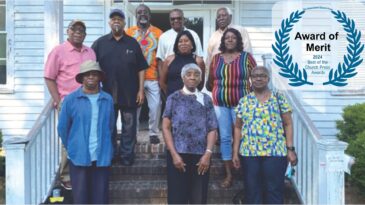
The school in Mayesville, South Carolina, once had a prominent space in the community’s heart. A group of alumni are working hard to renew its mission.

We asked you to write about small, beautiful moments in 250 words or less. Here are some of our favorite submissions.

Budgets and worship numbers matter — but they are not everything, Phil Blackburn believes.

A church can be viable without a pastor, writes Catherine Neelly Burton. Once we embrace this, churches can go about their work of being Christ’s body.

There is no sure-fire recipe guaranteed to produce faith, Ronald Byars writes. Maybe that’s why so many testify that their faith came as a gift.

Lydia Griffiths maintains there is rich diversity among Protestant religious thinkers when it comes to a transforming relationship with God.

In an unexpected casting of Drosselmeyer, Matt Rich finds – in life and in ministry – the role you think you are going to play might not be the role you get.

Rev. Lisle Gwynn Garrity recounts how a twirling vision became the ministry of A Sanctified Art, an arts collective creating resources for church leaders and spiritual seekers.

Marcia McFee helps faith leaders discover sensory-rich ways of being intentional for those at worship.
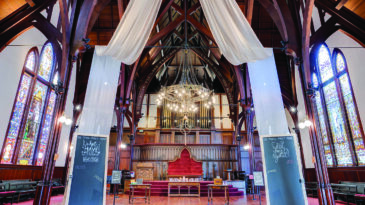
We are caretakers of a holy conversation sparked by a visual expression of God’s word, writes Theresa Cho.

"Before there is faithful preaching, there is faithful listening," writes Thomas G. Long.

Barbara Wheeler examines the critical and constructive project led by Ted Smith of Candler School of Theology that predicts professional models of ministry, denominations and congregations will not survive in their current form.

Leading in our changing world, especially in the face of resistance, says Tod Bolsinger, requires resilience.

To fully appreciate how JCSTS has shaped leaders in both the past and the present, recall the history of education in this country for those who were formerly enslaved and for their descendants, writes Paul Roberts.

As we seek and follow God’s will, we are drawn deeper into the partnership with God, writes Joan Gray.
© Copyright 2026 The Presbyterian Outlook. All Rights Reserved. Privacy Statement. Website by Web Publisher PRO