
Order of worship — May 7, 2023
You are welcome to use this liturgy in your online worship services and distribute it to your congregation.


You are welcome to use this liturgy in your online worship services and distribute it to your congregation.
The Outlook received eight awards, including honors for their editorial staff, website and news coverage.
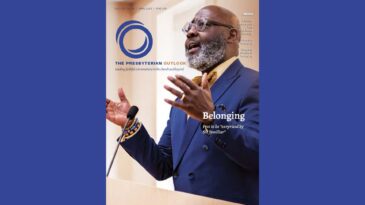
In each issue of the Outlook, we include a discussion guide to further reflect on the issue. We recommend using this guide in your Bible study, small group or book club. It's our invitation into a faithful conversation.

"I belonged to her. She belonged to me. Over the years, she belonged to others: students, her poetry pals, our family. But we remained a constellation of two stars."
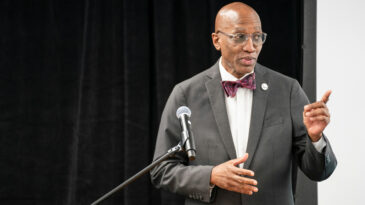
“This was not an easy decision, but I feel it is the right one to make for my family and the church in this time of change.”
Work continues to unite the Office of the General Assembly and the Presbyterian Mission Agency.

A poem by Kathryn Lester-Bacon.

Young people, youth pastors say, are pushing the church to be more willing to talk about mental health.

Grief has a way of pushing everyone away, writes Angela Williams Gorrell. But it’s when you are grieving that you need belonging the most.

Using public funds to support students at private religious schools is one thing, but establishing faith-based institutions within public districts is another.

The University of Dubuque Theological Seminary (UDTS) is excited to announce its new master of arts in Reformed theology and master of arts in ministry.

"Missional confirmation inspires a missional identity and commissions young people to a missional way of life," writes Mark D. Hinds.

“Even in a room full of exhaustion, there is hope.” Shani McIlwain shares her experience at the Katie Geneva Cannon Center for Womanist Leadership’s spring conference.

For some, fear-saturated stories about the rapture can generate lifelong panic, paranoia and anxiety.

'(I) grew up in the moral movement with Rev. Barber and the Poor People's Campaign,' said Rep. Justin Jones.
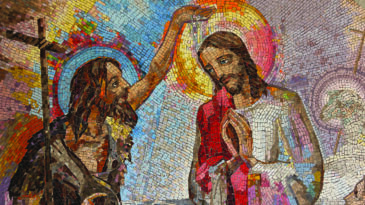
In the Korean Presbyterian church of her childhood, Mihee Kim-Kort learned the necessity of belonging.

Kristen Guest reflects on how her community cultivates belonging. Both online and in-person, their doors are always open to everyone — even after worship begins!

Dispelling long-held myths about the experiences and expectations of ancient women, Hylen provides ample evidence that women were impactful, vocal and a powerful social force in the time of Jesus.

Phillip Blackburn offers two tips for thinking about church vitality in rural settings.

Multiple faith groups object to Judge Matthew J. Kacsmaryk’s ruling on mifepristone, saying it is motivated by a sectarian version of Christianity that tramples over their beliefs.

In this children's message, Sara Pantazes explores what it means to feel complete.
A lesson for April 30, 2023, about Acts 1 and waiting.
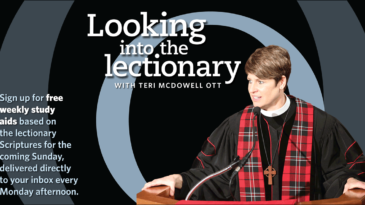
In this lectionary reflection, editor Teri McDowell Ott reflects on the meaning of awe and the day-by-day pace it sets for the early Christian community.

In this lesson, children will explore Acts’ description of early groups of worshipers, noticing how they chose to demonstrate their faith and build community.
You are welcome to use this liturgy in your online worship services and distribute it to your congregation.
© Copyright 2026 The Presbyterian Outlook. All Rights Reserved. Privacy Statement. Website by Web Publisher PRO