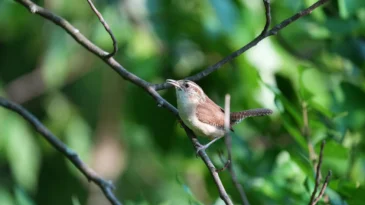
When MacLeod lays hands on the young man’s head and says a short prayer, he feels a certain vibrancy. Suddenly, three white doves flutter up into the air. John is startled. He explains that on the night he first went to Polmont, he said a prayer to himself that borstal would do him good and not harm. When he did so, three white doves fluttered up into the air.
To break the tension, MacLeod clears his throat and says: “Don’t you know that we have three white doves that constantly commute between Polmont and Iona?”
“Ach,” says John, “ye’re an awful blether.”
Fast forward. The year is 2010. The place, Addiewell Prison, Scotland’s newest jail. Sitting in a semi-circle are 11 men, many of whom are serving sentences for crimes of violence. The walls of the room are covered in A3 sheets. On them are words such as Queen, Pope, Protestant, Catholic, Celtic, Rangers, Orangemen, IRA. A young woman invites the inmates to discuss the religious divide that scars parts of Scotland. Then each prisoner is asked to argue a case from the point of view of someone holding the opposite opinion to their own. There’s no shortage of talk.
What is the connection between these two events, separated by more than 60 years? Both are part of the ongoing work of the Iona Community among young offenders.
In 1938 George MacLeod, a charismatic preacher in Govan, left his Church of Scotland parish to lead the rebuilding of the ruins of the living quarters of the historic Iona Abbey, and to train ministers to work in tough areas.
In his ministry in Govan in the 1930s, the aristocratic MacLeod would go to court to speak up for young offenders. He knew the circumstances in which some of them had grown up. The only difference between them and us, he would say, is that they have been found out. To cope with the increasing numbers of young people coming to the islands, MacLeod rented a salmon fishing station at Camas on Mull. (He became a licensed fishmonger.)
Polmont borstal began sending young people to Camas. As well as engaging in robust outdoor activities, the boys were invited to reflect on their own lives; many were influenced for the better.
As Lucy Adams pointed out in her exclusive piece for The (Glasgow) Herald, the course at Addiewell Prison … is part of a six-week government-funded pilot scheme run by the Iona Community. It helps prisoners identify issues they will confront when they leave prison. It is led by the remarkable Helen Wass O’Donnell, the Iona Community’s youth development coordinator. An experienced facilitator, she is also leader of the Jacob Project for ex-young offenders, which is coordinated in Scotland by the Iona Community. The project, which is strongly linked to Polmont Young Offenders’ Institution under its inspiring lead chaplain, Donald Scott, trains volunteer befrienders as mentors for young men and women leaving prison. The results of the experiment thus far are promising.
What impresses me about the Iona Community is its ability over the years to re-envision its core tasks. Now made up of men and women, lay and ordained, Protestant and Catholic, it maintains its strong commitment to the psychologically slain. What the Church of Scotland needs is not more committees, but more George MacLeods and more Helen Wass O’Donnells.
And more fluttering doves.