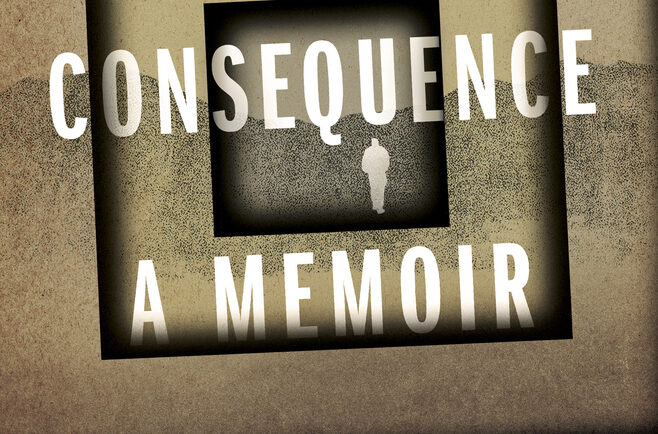
 by Eric Fair
Henry Holt and Co., New York. 256 pages
REVIEWED BY RICHARD R. CROCKER
Eric Fair’s memoir is of great interest to all who want to understand the terrible moral quagmires of our wars in Iraq, and it is of special interest to Presbyterians. Eric Fair is a cradle Presbyterian, the grandson of a Presbyterian minister, son of Presbyterian elders and, himself, a seriously devoted Presbyterian who once aspired to become a minister, even to the extent of spending a year at Princeton Seminary. Unfortunately, his faith, which inspired in him a sense of duty to his country, foundered on the rocks of the actions that he took as a soldier, a military contractor and an employee of the National Security Agency. This is not a happy story.
Eric Fair grew up in Bethlehem, Pennsylvania, where the First Presbyterian Church was a center of his spiritual and social growth. He was particularly influenced by his youth pastor, who has continued to be an important spiritual mentor. Fair was a traditional Presbyterian who preferred traditional worship (choir, organ, no projectors, no clapping) to the more contemporary youth services. He always took his faith seriously, and his ambition to become a law enforcement officer was a product of his faith. After college, he enrolled in the army, where he was selected for language training in Arabic – a language that he did not use at all in his five years of military service. Only soon after the events of 9/11 did his Arabic skills become relevant. Caught up in the fervor of the invasion of Iraq, he became first an employee of the National Security Agency and then of a private contracting company, where he was assigned to interrogate prisoners, first at Abu Ghraib and then in Fallujah.
Fair undertook these assignments in good faith. His memoir describes the destruction of that faith, as he both witnessed and participated in actions that seemed, at first, merely repulsive, but that he came to see as torture. If you have ever wondered how a good person, a person of faith,a Christian, a devoted Presbyterian could find ways to rationalize interrogations methods that, even though many were permitted by the decisions of the U.S. command, have come to be seen as torture, this book will show you. It is a story of the effect of torture on both its victims and its perpetrators. Indeed, he despairs of redemption. He found himself, his faith, his health and his family broken and almost destroyed. At any point, he realizes, he could have refused to participate in the interrogations that he conducted. Finally, after months, he resigned and returned home. He had himself become a tortured man.
Even a year at Princeton Seminary, where he obviously struggled with post-traumatic stress disorder, did not bring him the redemption he sought. His attempts to reconnect with the church were failures; he felt exiled even from his home church in Bethlehem, especially after disagreements about issues of sexuality.
Fair does not ask his readers for sympathy or forgiveness. Rather, he strives through his writing simply to be honest. Earlier essays have brought him both praise and condemnation. Both reactions are immaterial. He has found that any possibility of redemption (from the God whom he fears has abandoned him) depends upon his simply telling the truth.
RICHARD R. CROCKER is an honorably retired teaching elder and college chaplain emeritus of Dartmouth College. He lives in Lebanon, New Hampshire.