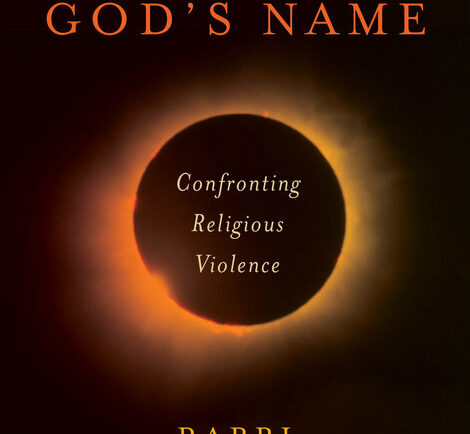
 by Jonathan Sacks
Schocken Books, New York. 305 pages
Reviewed by Donald Mead
In this important book, Rabbi Jonathan Sacks, for many years the chief rabbi of the United Hebrew Congregations of the British Commonwealth, examines the challenge of politicized religious extremism in the 21st century. He focuses on conflicts involving the three monotheistic religions that trace their roots back to Abraham: Judaism, Christianity and Islam.
The early stories about Abraham and his descendants provide theological grounding for our understanding of relationships between individuals and the groups of which they are a part, as well as relationship between each of these and God. Saturated as those stories are with complex interpersonal relationships involving love, deceit and strife, it is easy to see how they provide fertile ground for today’s violence and struggles between descendants of those offspring. The goal Sacks sets for himself is to “re-examine the theology that leads to violent conflict in the first place. If we do not do the theological work, we will face a continuation of the terror that has marked our century thus far, for it has no other natural end.”
His core answer to that challenge is in the second section of his book, where he examines four stories from the book of Genesis, each of which has at its heart a conflict between siblings. These include the relationship between Abraham’s two sons, Ishmael and Isaac; struggles between Isaac’s two sons, Esau and Jacob; the epic story of relations between Jacob and his children, especially between Joseph and his brothers; and relationships between the daughters of Laban: Rachel and Leah. Reading Sacks’ analysis of these stories upends traditional understanding of what God was doing and what the Scriptures say about God’s intentions for humankind. He concludes this section with these observations:
“Abrahamic monotheism is predicated on love for profound theological reasons. … We are here because God created us in love. God’s love is implicit in our very being. But love is not enough. … Every time love is mentioned [in the book of Genesis], it generates conflict. … You cannot build a family, let alone a society, on love alone. For that you need justice also. … Love is particular, for this person not that, but justice is for all.”
The final section of the book offers immensely important summary insights. He affirms:
“Monotheism allied to power fails.”
“You cannot enforce truth by force.”
“Violence is what happens when you try to resolve a religious dispute by means of force.”
“Religion can survive without power.”
“Religion acquires influence when it relinquishes power.”
“Religion is at its best when it relies on strength of argument and example. It is at its worst when it seeks to impose truth by force.”
Founded on Sacks’ profound grasp of Jewish theology and history, these insights are of great relevance to our current world, immersed as it is in conflicts that have religious roots. They need to be heard by faith leaders and political leaders who seek to guide nations in ways that rely on those faiths for inspiration, in each of the three great monotheistic Abrahamic religions: in the United States and other countries of the West; in Muslim countries in the Middle East and beyond; and in Sacks’ own Jewish faith community, across the globe, and especially in Israel.
Donald Mead is a Presbyterian ruling elder and retired professor of economics. He lives in Glen Arbor, Michigan.