 by Matt Gallagher
Atria Books, New York. 352 pages
Reviewed by Richard R. Crocker
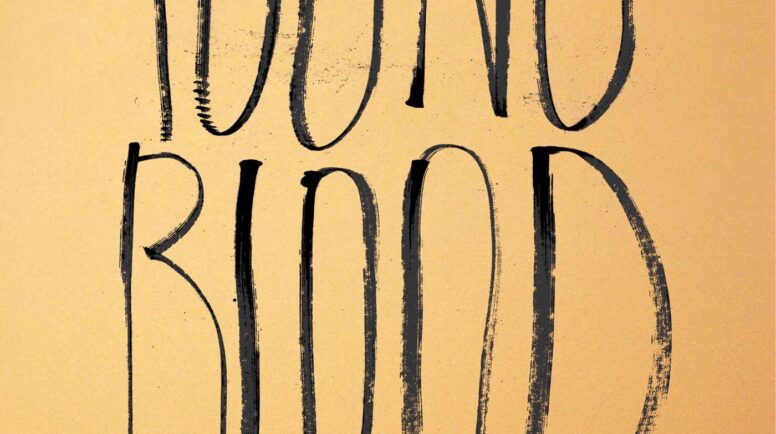
“Youngblood” is a novel about the latter stages of the Iraq war — after the insurgency had been put down and American troops were engaged in the mission of “clearing, holding and building.” Because it is written in the first person voice of Lieutenant Jack Porter, it appears to be a memoir, but it isn’t. (Matt Gallagher has written a memoir called “Kaboom,” which may be even more searing than his novel.)
The novel is searing enough. In it, Gallagher constructs a story that dramatizes the boredom, uncertainty, constant vigilance and violence seen through the eyes of an officer who agonizes about the moral ambiguities of the war. Jack is an admirable young man. A product of suburban California, he did ROTC in college and followed his straight-arrow older brother into the military, both prompted by an intelligent sense of duty to country. Jack constantly compares himself to his older brother, who became a noted war hero and who seems to have come to terms with the moral uncertainties that plague Jack.
Jack recognizes that his primary duty is to get the men of his platoon back home safely. While the insurgency has receded, road checks, avoiding road bombs, trying to maintain good relations with Iraqi soldiers and civilians whose loyalty to conflicting tribes and sheiks is constantly shifting makes danger inevitable and moral clarity impossible. The novel revolves around a conflict between Jack and his staff sergeant, Chambers, who seems to have fewer reservations about the mission, and who, Jack suspects, has been involved in killing Iraqi civilians. Chambers’ lack of scruples in some ways makes him a better soldier than his lieutenant — a fact that Jack is forced to confront. At the same time, Jack correctly believes that Chambers’ actions undermine any larger mission of earning Iraqi trust.
While Gallagher’s novel is a well-written and intensely interesting commentary on the painful ambiguities of the Iraqi war (and probably all other wars as well), it is of special interest to Presbyterians because (like Eric Fair’s memoir, “Consequence,” which you can read the Outlook review of here) Jack’s Presbyterianism is a large part of who he is.
Jack is the son of a Roman Catholic/Presbyterian marriage. He never specifies which parent belongs to which faith, and he refers to them both of them respectfully, but his Presbyterian grandmother is the symbol of his moral compass. “As children of a half-Catholic, half-Presbyterian divorce … Catholicism provided pomp and ceremony, which had its place, but the Presbyterians promised access, and who didn’t have something to yell into the ear of God?”
Jack had a lot to yell about. What he saw, experienced and did left him morally paralyzed. His simple desire in the war, and in his service, was to do good. Near the end of the story, he says, “I wanted to leave Iraq having done a good thing.” That good thing involved bribing an Iraqi “businessman” to smuggle a woman and her two children to Beirut. He used all his savings, borrowed from his brother and “appropriated” some army funds to pay the fee. The businessman proved unreliable. Jack never knew if his efforts to do a good thing resulted in the salvation or the death of those he was trying to save. It’s an anguishing question to which Christians, and Presbyterians in particular, can relate.
Richard R. Crocker is an honorably retired PC(USA) minister and college chaplain emeritus at Dartmouth College. He lives in Lebanon, New Hampshire.