 by Bromleigh McCleneghan
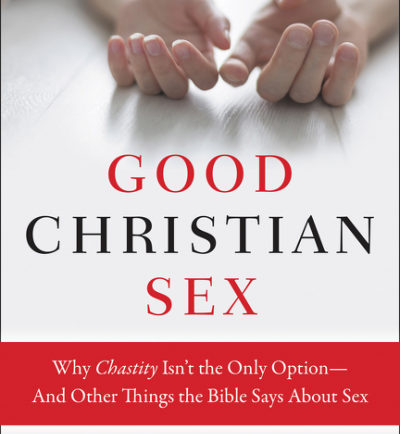
Harper One, San Francisco. 256 pages
Reviewed by Erica Schemper
As a young pastor, I worked primarily with youth, and I will confess that sex was always the third rail of my ministry. I occasionally mentioned sex from the pulpit: that it is a good gift of the Creator; that Christians are called to radical inclusion of people with a variety of sexual orientations. But I avoided formal youth group or classroom discussion about sex, telling myself that this was something parents should discuss with their children. In truth, this was my way to keep myself safe from the potentially dangerous electric current of controversy.
My avoidance of discussion about sex is part of a pattern. Future historians of the church will surely note that Christian discourse around human sexuality in contemporary North America focused narrowly on morality, not theology. We talk about what one may or may not do, with those on the conservative end of the spectrum arguing for restrictions, and those on the liberal end arguing against those prohibitions. But our discussions rarely go any deeper, particularly when those discussions are framed in a way that’s accessible to your average Christian in the pews. This is a sad state of things for a people whose holy text includes Song of Songs, a book that is both a celebration of human sexuality and an allegory for the love of God. If the biblical canon sees fit to include sexuality as a topic of juicy discussion with theological overtones, then the church surely should be talking about sex beyond what is and is not permissible, or simply resigning it to something private that’s none of anyone else’s business.
Bromleigh McCleneghan’s “Good Christian Sex: Why Chastity Isn’t the Only Option — And Other Things the Bible Says About Sex” is a springboard to a heartier discussion about the theology of sexuality. The book’s premise, to “lay out some of the theological and ethical questions that arise in your average, everyday experience of adult sexuality, and to walk readers through those discussions in a clear and engaging way,” makes this book a model of how Christians ought to be talking about sex.
McCleneghan’s chapters cover a range of human sexual experience: sexual pleasure and desire; sharing sex with another person; discerning and building relationships; vulnerability and intimacy in commitment. While appropriately open about her own sexual experiences, she surveyed others and uses their perspectives. Her ethical take on sexuality is liberal not just in its understanding of chastity, but also in its inclusivity of a variety of sexual preferences and gender identities.
Predictably, the book has been pilloried by those who do not agree with an inclusive ethic of sexuality, and by those with a conservative moral stance on the relationship between sex and marriage. Yet anyone who reads the book will quickly find that McCleneghan takes a strong moral stance on the importance of fidelity in committed sexual relationships. This book is an important read even for those who disagree with the author’s moral stances. As the church digs itself out of polarizing arguments, we would be well served to begin talking about sex with solid theology. It’s high time that those of us who are leaders in the church begin talking about sexuality as something to celebrate and discuss openly as a good gift of the Creator.
Erica Schemper is a PC(USA) teaching elder in the San Francisco Bay area.