 by C. Christopher Smith
IVP Books, Downers Grove, Ill. 179 pages
Reviewed by Leslie Klingensmith
It’s fun to look at your bookshelves and see all the things you’ve read. Books are my husband’s hobby too.” A visitor to my home said these words, and I’ve never forgotten them. I was happy to talk books with her, but there was a part of me that was thinking: “You don’t get it. Books are much more than a hobby. At least to me they are.” No disrespect to hobbies – they have a place in a fulfilling life. Several of my hobbies (hiking, biking, cooking) enhance my spiritual life as well. Almost any activity can become contemplative.
But reading and books have always had a different place in my hierarchy of heart. Reading is an essential spiritual practice that reconciles me to God and neighbor. Books are a type of spiritual oxygen. Whether the activities mentioned above (and countless others) are hobbies or practices may be a matter of individual preference. No doubt there are runners and knitters and painters that receive the same spiritual renewal from their chosen activity as so many of us get from reading. For readers, reading is an avocation that pervades all facets of our lives – from the way we earn a living to the way we parent our children to the way we choose to spend our discretionary time and money.
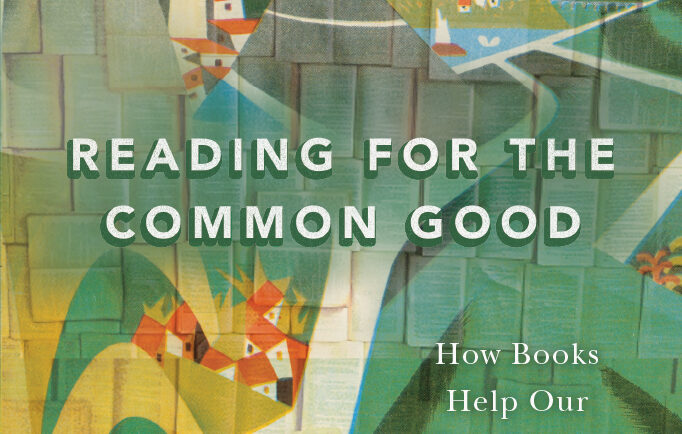
Naturally, reading Christopher Smith’s “Reading for the Common Good” was like finding a kindred spirit. I’ve known since childhood that reading is important, and as an adult have learned to articulate what it means to me. Smith’s book takes us further. He goes beyond what reading adds to the development of the individual and outlines the potential for reading to shape communities. His theological exploration of reading takes us beyond the book club to the possibility of transformation within our congregations, our neighborhoods, our nation and the world.
I was captivated by Smith’s advocacy for “slow reading.” There are so many things I want to read that I have gotten into a habit of reading quickly, in a hurry to move on to something else. Tying slow reading in with other slow movements (eating, sewing, etc.), Smith makes a persuasive case for reading meditatively, taking the time to internalize the words so that we retain them. This type of reading, especially of Scripture, allows us to continue contemplating what we have learned. His admonition to slow down is freeing. For those of us who love to read, there will never be enough time to read everything. We might as well savor what we do have time for!
I also loved Smith’s explication of how communities can read together, in depth, books on a wide range of subjects and can use the knowledge acquired in that practice to better their surroundings. Even when people are reading different things, if we are intentional about sharing our reading with those who are interested, we can all benefit from the range of reading taking place within our circle.
I would have liked more exploration of novels and their affect on our consciousness, but thoroughly enjoyed the book. “Reading for the Common Good” is a thoughtful book that will feel like homecoming to avid readers.
Leslie Klingensmith is the pastor of St. Matthew’s Presbyterian Church in Silver Spring, Maryland.