 Susan Cottrel
Westminster John Knox Press, Louisville, Ky. 184 pages
Reviewed by Andrew Walton
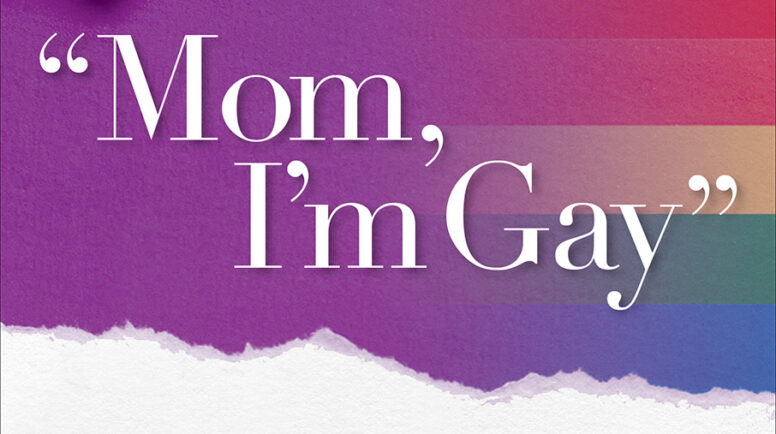
A good book title is supposed to do several things, chief among them is to grab your attention, then to illicit interest and finally to draw you into the book. “Mom, I’m Gay” succeeds on all three accounts. The title also makes me profoundly sad that such a book even needs to be written. As a parent of my amazing lesbian daughter, married to a wonderful woman, both of whom have a beautiful son (my grandson!), I can’t imagine ever not loving all of them. Another response was: Why not insert other things for “gay” and “LGBTQ” like brown-eyed, blond hair, short, tall, dark-skinned, or freckled-faced? To me it’s a no-brainer that I love my children, and all children, for who they are.
Now that I have that off of my chest, this book is needed because in our time of changing perspectives, attitudes and beliefs about human sexuality, some straight – yet kind – words need to be spoken to parents (and other relatives) who find themselves in conflict between loving and accepting their own children and their religion. Susan Cottrell accomplishes exactly this in her book. Cottrell does a good job of identifying the tension, leading us through it and offering various ways to relieve that tension. The five parts of the book (Coping With The Shock, Understanding Your Child’s Experience, Responding In Love, Working It Out With God and Finding A Community Of Support) are each divided into short, concise chapters. Each chapter ends with a question or suggested action to reflect on what you just read. The structure is excellent for classes or group discussions.
I wish Cottrell had spent more time with the “Clobber Passages” chapters. This is where she addresses the six biblical passages (yes there are only six) in both the Old and New Testaments used by many to condemn LGBTQ people. She does a somewhat adequate job of exposing the fallacy of traditional and literal interpretation of the passages, but doesn’t go quite far enough for me in exploring the language and historical context of the passages. But then again, she at least points us in that direction. A few more recommended biblical resources in the endnotes would have been helpful.
In the end, for a book that sadly needs to be written, I’m glad Cottrell has written it. As a pastor, I am already recommending it to some conflicted parents and relatives of LGBTQ people. I see it as an excellent resource for educating not just parents, but all Christians about letting go of fear and false righteousness concerning our LGBTQ sisters and brothers.
Andrew Walton is the pastor at Trinity Presbyterian Church in Clearwater, Florida, and is the author of “Hidden In His Own Story – Discovering Jesus in the Parables of the Gospels.”