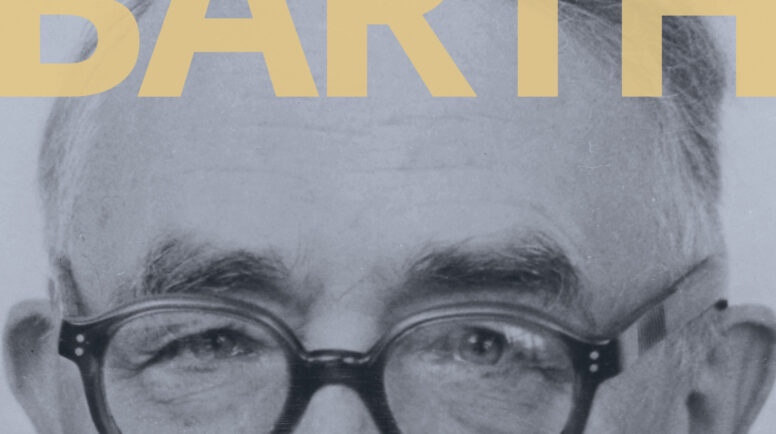
 Mark Galli
Eerdmans, 192 pages.
Reviewed by Andy Nagel
Mark Galli, editor-in-chief at Christianity Today, has written an engaging and readable portrait of a towering figure, showing how Barth’s voice and thought presents an incisive critique to the ways the Christian faith is perceived of and practiced in the United States today. Though it is aimed at encouraging evangelicals toward a more receptive posture to Barth, it is relevant to and raises questions for people across the theological spectrum.
Galli leads us through Barth’s pugnacious life from boyhood through his early pastorate in Safenwil and his theological reorientation away from liberalism after World War One. Two chapters are devoted to the Romans commentary, famously described as the “bombshell on the playground of the theologians.” These chapters and the account of Barth’s early academic life paint an arresting picture of Barth as “an unknown pastor [writing a] manuscript [that] went completely against the grain of the day’s theology.”
Galli takes us through Barth’s early academic life, noting some surprising insecurity and self-doubt, and then spends several chapters on Barth’s mature theological project in the massive “Church Dogmatics,” dwelling particularly on Barth’s doctrine of Scripture and his alleged universalism, seeking to interpret these topics for evangelical readers. He concludes that Barth’s doctrine of Scripture is functionally not far from a contemporary evangelical approach, while Barth’s universalizing tendency is something that can help inform and shape evangelical thought even if it is not fully embraced.
Galli’s book is most interesting in the parallels it draws between Barth’s cultural moment and the impulses of American Christianity. Galli is interested particularly in evangelicals, but progressives and liberals also would do well to take note of the way Barth stood against the prevailing cultural and theological winds of his day. When I read about the German Christian rejection of “the traditional doctrines of sin and human depravity” and “instead of working for the far-off kingdom of heaven, the faithful were to march with the nation in bringing about a paradise here and now,” I thought of both the evangelical megachurch as well as the progressive mainline church. Galli makes a persuasive case that whatever our theological label, we are all functionally unwitting disciples of Friedrich Schleiermacher, and thus Barth’s voice is a bracing corrective to us all. In fact, if this book has any inherent shortcomings, it is that its target audience is too small. Those who don’t consider themselves “evangelicals” might not notice the axe that Barth lays at the tree of liberalism as well.
There are moments when Galli is necessarily forced to move quickly past matters of great profundity and complexity. For example, after summarizing the universalistic direction of Barth’s doctrine of reconciliation, he curtly assesses: “Insofar as Barth’s doctrines of election and justification move in the direction of universalism, of course, evangelicals rightly reject his views. The Bible clearly demonstrates time and again the necessity of a full and free response of faith for us to be reconciled to God.” However, this is an introductory biography, and a helpful annotated bibliography points the reader to deeper waters. This volume is a great introduction to Barth’s life and thought for the beginner, but also invites those familiar with Barth to reconsider how his powerful “Nein” might be spoken to us and how his theology might explode on our ecclesial playgrounds today.
Andy Nagel is the associate pastor for discipleship and missions at Central Presbyterian Church in Baltimore.