 Predestination is a widely misunderstood term tossed around and utilized in odd ways today. So I thought I might offer to you some of my thoughts on predestination as well as some simple and basic information about it from the vantage point of a humble still-reforming pastor. And I do this in the old-school throwback way of the “three points and a poem.”
1. Predestination is about the end. People begin to talk about things that occur in our daily lives as being “predestined.” They say that they were “predestined” to meet their spouse or “predestined” to take that life-changing trip. This is an incorrect usage of the word. Please stop doing this.
Predestination is about what will happen in the very end. Christians believe the end has to do with Jesus’ return and that final day in which we all wake up, enjoy the great wedding banquet and watch as the mountains drip with sweet wine! Predestination has to do with what happens then, not now.
But God does also care about now and today. God very well might have had something to do with you meeting your spouse and deciding to go on that journey of your lifetime, but the correct term is to say that it was “providential,” not “predestined”. Providence is all about how God draws near to us and this world each and every day! Sometimes it helps to know the subtleties of the lingo.
2. Predestination is not the same as double predestination. A lot of people associate predestination with the idea that some people are going to spend forever with God, while some other people are going to spend forever without God. Some might hear the word predestination and immediately be jolted back into some “Left Behind” imagery as they try to picture the eternal realms of heaven and hell.
Predestination is about the end and predestination does have to do with eternal life, but it was John Calvin in the 16thcentury that seemed to make everyone afraid of this word. Calvin taught and proposed a specific understanding of “double predestination” in which he believed some would go to heaven and some would go to hell. (For the record, Calvin never liked this understanding of predestination but it is what he understood to be the teaching from Scripture. He often referenced the Jacob and Esau discussion as evidence – “I have loved Jacob, but I have hated Esau” from Romans 9:13.)
There are plenty of others in the Reformed tradition that would agree with Calvin in his understanding of “double predestination.” But there are also plenty of others in the Reformed tradition that would not agree with Calvin and would want you to remember that “double predestination” is only one of ways to understand predestination. Karl Barth in the 20thcentury said the only one accepted and the only one rejected in the end is Jesus Christ — the rest of us are all simply predestined to be with him.
3. Predestination is a confession, not an explanation. George Stroup, my theology professor from Columbia Theological Seminary, once told us: “Predestination is a confession, not an explanation.” He went on to to explain that predestination is a confession that says God is in control. It says that the God who created us, who claims us, and who provides for us is the same God who is with us in the very end of it all. Predestination is simply a confession that God is sovereign.
It is not an explanation. Too many people try to make it into an explanation. Saying that God is in control should be enough. We don’t need to know any more than that and that is all we need to know in order to have hope for all.
George Orwell wrote this in his now famous book “1984,” and I think it lends itself to our understanding of predestination as a confession about our understanding of the end through which the Spirit can transform us in the now:
“It was like swimming against a current
that swept you backwards however hard you struggled,
and then suddenly deciding to turn round
and go with the current instead of opposing it.
Nothing had changed except your own attitude:
the predestined thing happened in any case.”
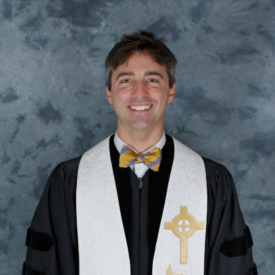
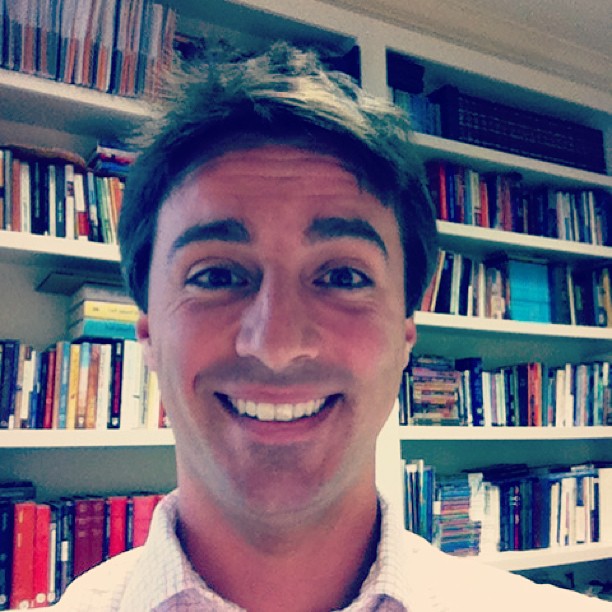 BRIAN CHRISTOPHER COULTER is pastor of First Presbyterian Church in Aiken, South Carolina. He is a husband, father, pastor, author, blogger and pingpong champion who is pretty good at sidewalk chalk.