This week we asked our bloggers to reflect on their ordinations. Here are their blogs.
I can’t really remember my ordination vows. Not off the top of my head. Is that bad? I know how to look them up in the Book of Order. I haven’t in a while, but I could. My solemn vows should be written on my heart to guide me but they aren’t. There’s Clash lyrics there instead, I think. Oops.
I worried over those questions a lot in the days leading up to my ordination day. Can I say yes to these? Can I REALLY say yes to these? Can I just say yes, even if I’m not 100 percent sure, and have faith that God will work it out? Or is that dishonest? Do I have theological scruples that I need to state? Am I actually an Episcopalian? Am I really ready to be a pastor? Am I even still a Christian? What is life?
All of the questions. Too many questions.
Well, actually just nine questions. With footnotes. I looked them up. These are familiar now that I’m looking at them. I remember being pretty comfortable with the early questions about the Trinity, Scripture, the confessions. That’s just regular life-of-faith stuff. The questions that still take me moment to come to terms with are the ones about the actual work of pastoring.
Do you promise to further the peace, unity and purity of the church?
I don’t think I know enough about peace and unity in myself yet to further them much for the church. Can we add a “try” in there? I can promise to try. The idea of the “purity of the church” makes me uneasy. Purity is about protecting from contamination. Excluding anything that isn’t exactly like what is already there. Sometimes I think the church is too pure. Too affluent. Too white. Too homogenous. Too in the center of power. Where is our vow to the diversity of our church? Our commitment to purity could become our own contamination.
I asked the wise cloud of witnesses on social media to help me with this concept of the purity of the church. Folks helped me realize that I was only focusing on the church’s relationship to culture. Most of my churchy friends saw purity in the church’s relationship to God, of course. Some talked about purity of seeing God clearly or purity of relationship and reliance on Jesus. Some equated purity with holiness, sanctification, purpose. Others talked about relational congruence as a form of church purity. Being the same God-created and God-driven people in all contexts. One posted a theologically unhelpful but entertaining clip from “Purple Rain” about purifying one’s self in Lake Minnetonka. Thanks, Prince. RIP. It still seems like this concept requires too much explaining to be easily useful for ordination. Maybe the usefulness is in the tension between peace, unity and purity. What do you think?
Will you pray for and seek to serve the people with energy, intelligence, imagination and love?
I’m glad it says “pray for.” I didn’t remember that was in there. Seeking to serve the people is hard. Really hard. Sometimes the best we can muster is to just pray for them and have hope. The hardest part about this question is that it makes me feel pretty inadequate. How can I commit to always having those four things in sufficient quantity to give to others? Five years out from my ordination, I deeply know that energy, intelligence, imagination and love often seem in short supply. That’s what we should pray for, really. It should be a prayer of thanks that we ourselves are not the sole source of energy, intelligence, imagination and love in this world. Those things, in their purest form, come from our God.
The truth is, I fretted over those vows and then the day finally came and I got swept up in the holy moment. I just said yes to everything without a bit of uncertainty. I wasn’t being rash. I wasn’t hurriedly saying yes to the expensive undercoating just to finish buying the new car. I said yes with the complete confidence that God had made room for my doubts in all of it. A lot of being faithful is not knowing and doing anyway. Faking it while God makes it.
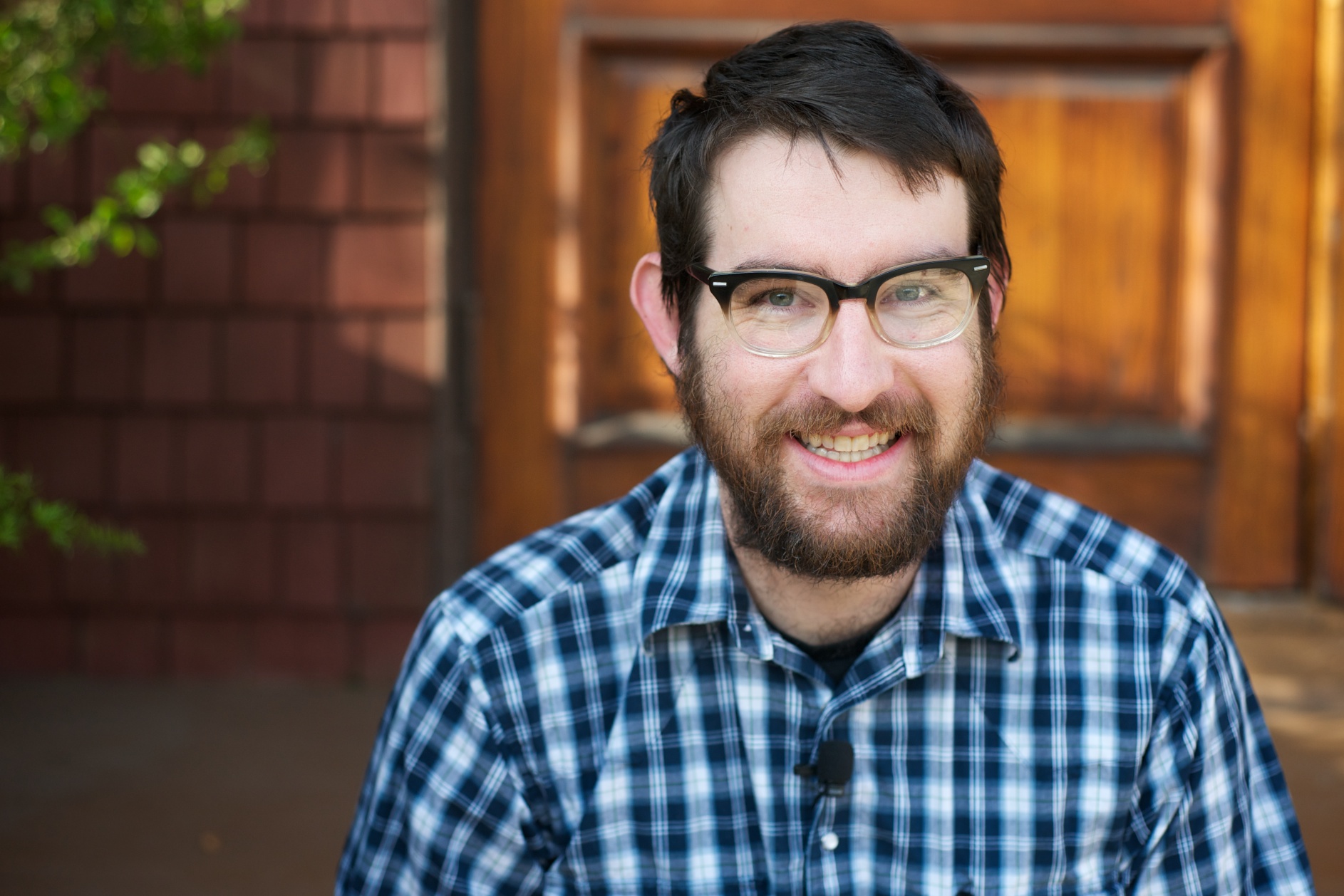 ALEX WIRTH is a father, writer and associate pastor for congregational care at Point Loma Community Presbyterian Church in San Diego. He types his prayers, sermons and stories on an old manual typewriter even though he was born in the 1980s. That should tell you a lot about him. Follow him on instagram and twitter @alexjrwirth