It’s easy for me to “remember back” to the PC(USA)’s decisions to ordain gay ministers and allow for the officiating of same-gender marriages (according to the conscience of pastor and session), because the first of these decisions happened during my first pastoral internship, and I moderated the voting on the second. I know there were a lot of mixed emotions around these decisions at the time, but as a “younger person,” I couldn’t help but be excited that these two more socially liberal changes for the church might be an olive branch to younger people who had left or had never been in the church. My generation (of 1980s kids) and those following tend to be socially liberal as a majority, and many resent the church for condemning those they love (or themselves) who didn’t fit inside the church at the time. Now, whatever your theological leaning on these “social issues,” I do think Jesus would have wanted the church to be a safe space for all. And, if our Presbyterian denomination is starting to get the reputation of “that church who will let anybody in” … well, I’m not so upset about that. Just the other day, in conversation at a bar with someone who had grown up evangelical, she looked at me incredulously when I told her that our church was open and affirming. “Really?” she gasped. “Which denomination are you a pastor in? I need to try out church again I think.” From the very beginning, I have looked at these changes in our denomination as an opportunity to expand our banner of love, welcoming back (or for the first time) those who have felt (and have been) excluded by the church in the past. While I know change can be hard, it can also be an opportunity to be more like Christ.
It has always been a great time to be Presbyterian, but in the wake of the devastating sexual scandals in the church (and the #MeToo and #ChurchToo movements), I believe the Presbyterian Church has a particularly unique opportunity to step in and minister because of our system of government. Corruption and evil can happen anywhere, but we are stronger together. Our Presbyterian system, where the pastors are not in control, but part of the decision-making board along with the other elected members of the session, makes for a system of checks and balances, specifically for the purpose of together following the Holy Spirit. If one person gets off track, it is less of a concern because it is the elected board and pastor together that seek to make leadership decisions for the church (and there is the further check and balance of the presbytery). We have seen churches fall short in the past because too much authority rested in one person. Church members are really hurting – more than hurting – they are utterly shocked and dismayed that sexual crimes have taken place under church authority. Our Presbyterian system isn’t perfect, but it is set up to prevent darkness and secrecy. We have been accused in the past of having too many rules, but I think we are uniquely positioned to provide people who have been hurt, by singular authority or collusion, with a secure environment to grow spiritually and rebuild confidence in church leadership. And, not only do we have an opportunity during this difficult time in the church, but a responsibility to do our best to protect one another. We are not, and will not be perfect, but we can all do better together.
Finally, our Reformed belief in the priesthood of all believers (the belief that all are called to ministry) is another 2018 opportunity for the Presbyterian Church to welcome younger people back to the church or to the church for the first time. I quite often hear the comment, “You seem so normal,” when people find out that I’m a pastor. When I first began in ministry, I thought this meant I was doing it wrong, or acting one way inside the church and a different way outside of the church. But as I grew, I started to view this comment differently. There has been a shift from the pastor of three or four decades ago who “always wore the robe,” claimed her pastoral authority, insisted on being called “reverend,” never wore jeans, etc. — essentially the high-church pastoral authority figure. Perhaps it was where I went to seminary (Denver Seminary, where the hipster pastor image seemed to be more embraced), but I have always been drawn more to the low-church pastor image: the pastor that is a lot like the person sitting next to you, the pastor who is your friend and your spiritual leader, wears jeans and even drinks a beer with you here and there.
Now, I think a lot of one’s image as a pastor is who God has uniquely created her to be. BUT, I like the idea of being “normal” to others, because if I’m normal, the call to ministry for all of us fits! If I’m a lot like the person I am talking to, then they can more easily get behind the truth that I wasn’t called to be a pastor because I’m more holy than he is, but because that is the way I am following God in this life. And then it tracks that he too has been called to follow God in a different, not lesser, capacity. The wonderful (but sometimes infuriating) truth about the Presbyterian Church is that pastors can’t get ministry done on their own; pastors need church members and church members need each other and their pastor. It is a powerful thing to embrace the minister in each of us, and live it out together. And if being “normal” facilitates that happening, I’m more than okay with it.
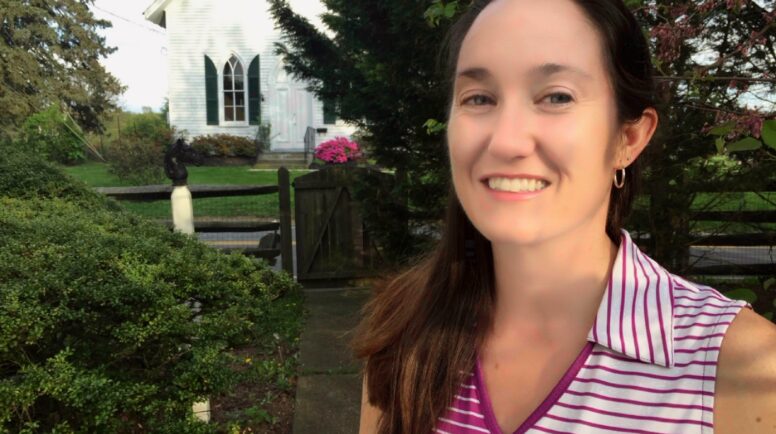
 JULIE RAFFETY serves as the pastor at First Presbyterian Church in Franklin, New Jersey. Julie is a violinist, aspiring writer, snowboarder, runner, identical twin and crazy about popcorn.