Guest commentary by Bruce Reyes-Chow
“For I was hungry and you gave me food, I was thirsty and you gave me drink, I was a stranger and you welcomed me.” (Matthew 25:35)
Do not neglect to show hospitality to strangers, for by doing that some have entertained angels without knowing it. (Hebrews 13:2)
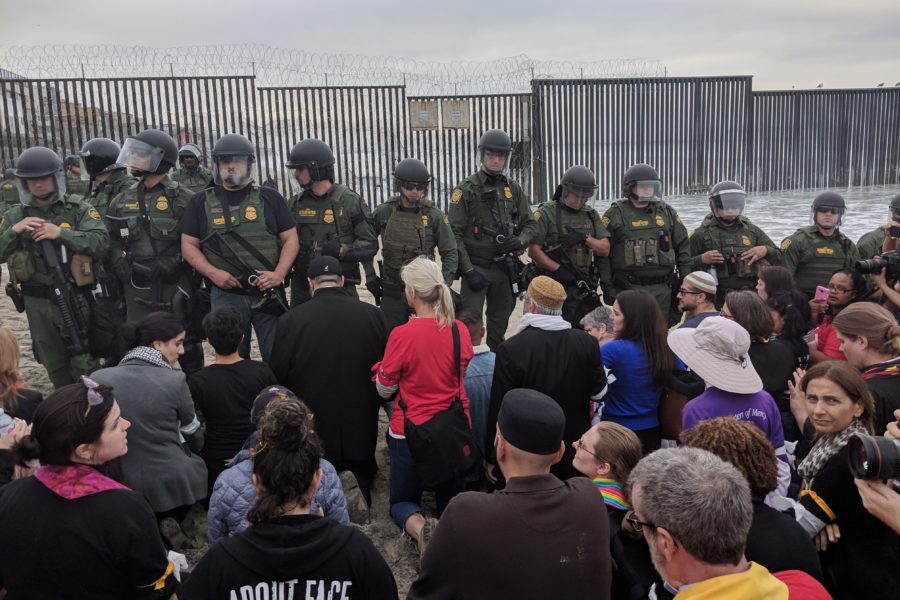
Face to face with a riot-geared border patrol agent.
My body inches away from rubber bullet rifles and tear gas canisters.
His baton raised and pushing, pushing, pushing at my chest.
The line of agents chanting and advancing with an eerie synchronicity —
“Move back!” Step. Push.
“Move back!” Step. Push.
“Move back!” Step. Push.
My hands raised above my head.
My body braced.
My spirit calm.
I close my eyes to remember and pray for those to who would have already been beaten and detained, if not for the camera lenses that were protecting us.
“Move back!” Step. Push.
I open my eyes to look into the eyes of this human being in front of me searching for compassion and doubt.
“Move back!” Step. Push.
I close my eyes to give thanks for those who were not physically present, but stood with all of us in spirit.
“Move back!” Step. Push.
I open my eyes to see people of faith kneeling and standing beside me or being thrown to the ground in front of me.
“Move back!” Step. Push.
I close my eyes and, with others still holding strong, join in singing as one people:
“We shall, we shall not be moved.”
“Move back!” Step. Push.
At some point, I am grabbed, pulled through the barricade of agents and join my interfaith siblings on the other side — making a public an act of civil disobedience to bring awareness to the plight of migrants seeking refuge at the border.
✧✧✧✧✧
On December 10, 2018, in the ironically named “Friendship Park,” 31 religious leaders and I (including Emily Brewer, executive director Presbyterian Peace Fellowship) were arrested as part of an interfaith, nonviolent protest to raise the visibility of the treatment of migrants at the border between the United States and Mexico. This was the kickoff to the weeklong “Love Knows No Borders” action organized by the American Friends Service Committee and the Poor People’s Campaign. The week of action calls for the U.S. to respect the human right to migrate, to end the militarization of border communities and end the detention and deportation of immigrants.
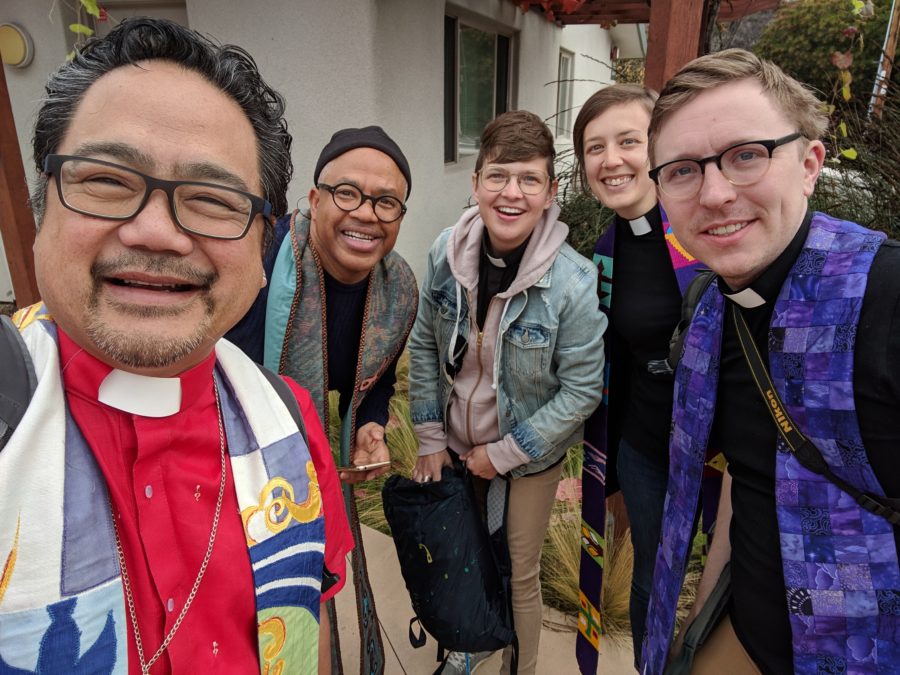
In the days after the action, (you’ll already know this if you bothered to read the comments) there were plenty of folks who disagreed with our position, the tactics we used or even the right we had to call ourselves Christian, Muslim, Jewish, etc. There have also been of false narratives shared into internet space that need to be debunked: no officer was assaulted by anyone, there were hundreds of more people present than has been reported and there were no rocks being thrown from the south side of the wall — in fact, there was a band on the other side playing in support of our action! So yes, detractors are to be expected, but, overall, the response has been overwhelmingly positive and encouraging. (Thank you!)
When people ask me: “Why?” “Why does it matter?” “Why would you do that? “Why should we care?” All I can say is that my faith compelled and compels me to find a way to address the needs of the stranger. Like few aspects of my faith, the call to unabashed and enthusiastic welcome is simple and clear — because when it comes to the stranger seeking shelter, food, drink and welcome, I have no choice but to offer it. I will not always be perfect in offering hospitality, but I will never let fear of imperfection or failure be an excuse to not try.
In the case of this particular action, it was a San Francisco Bay Area colleague, Deborah Lee (executive director of the Interfaith Movement for Human Integrity), who put out the call to join this action. And while I am sure I could have come up with many excuses NOT to show up, none rang true. My excuses were more about the inconvenience of being away than anything else. At that very moment, I had the privilege, means and flexibility to not only be present but to risk arrest. So, after consulting with my spouse and with a little trepidation, I answered: “Yes, I am in. See you in San Diego!”
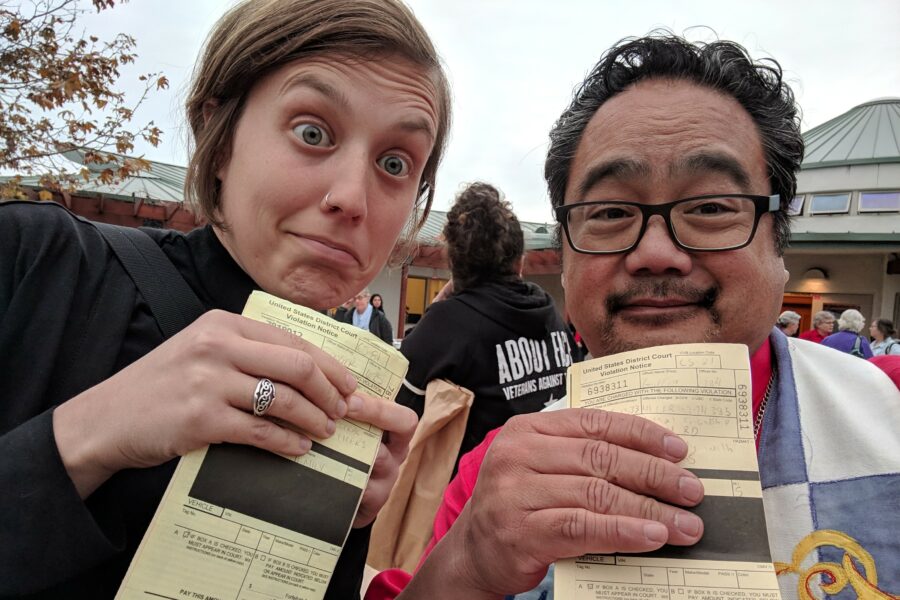
It is that same privilege that was also very clearly in play as we stood nonviolently defiant in front of the border patrol agents. Sure, there were a few very tense moments and, in our current political climate, we could never be completely sure what would happen, but for the most part I do believe that we were not going to receive the same treatment that others normally would. We were protected by cameras and, while it did not completely stop them, we know images of being overly violent with senior citizens and the clerically garbed weren’t ones they wanted to be captured for sharing with the public.
Amidst the chaos of the time, one of the beautiful outcomes of these actions built on common passions and convictions is the community that is built between those seeking the common good. In between the intense moments filled with conviction, tension and the unknown, we experienced the grace of meeting new friends, the support of a widening community, the balm of unexpected laughter, the tears of communal compassion and the experience of hope made real. I am grateful for new friends, reconnecting with others, online friends met in person and the building up of relationships that are living out common beliefs of love, compassion, justice and moral conviction.
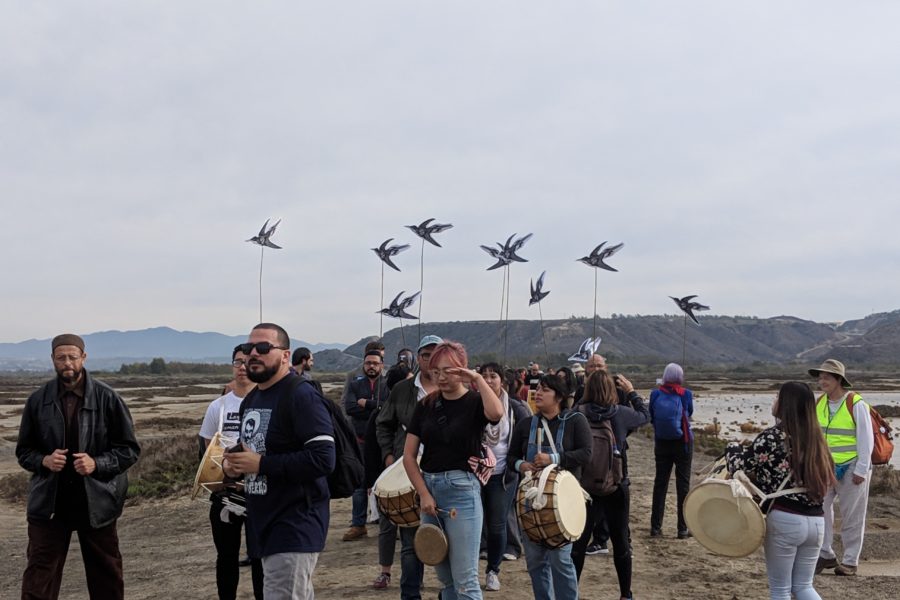
At the end of the day, being part of these actions and engaging in civil disobedience is about keeping the issue at hand in front of those who would otherwise choose not to see it and to challenge those who would prefer that people do not know what is happening. With video stories by Time and Now This, combined with a great deal of local and national news coverage, the reach has been great and it will force others to decide how to act and hopefully shift the moral character of how the U.S. government acts on the border.
So here is the challenge that I have for everyone who believes that we must choose – as a country and as a global community – a different way to treat those seeking refuge: Not everyone is in the position to engage in acts of civil disobedience, but we all have time, talent or resources that can build up and support the many organizations and movements attempting to change the realities of our borders. Working for migrant justice is both immediate and aspirational, so be it attending a local action for the first time and/or giving money to organizations that you have supported in the past, I plead for you to get involved.
As has been said time and time again, the soul of our nation is at stake. This is not an overly dramatic or a hollow statement, but a genuine call for us all to take seriously our faith. We must each continuingly decide if, when and how we will become involved in making sure that the national soul we save is one that extends such radical hospitality that there are doors so widely flung open that we make real the possibility that angels will be entertained without us even knowing.
I know that everyone who participated in the #LoveKnowsNoBorders action is grateful for your support and prayer. I know that I am grateful for all of the messages of support in person and online. Again, thank you and I look forward to walking this ongoing journey of justice with you.
BRUCE REYES-CHOW is a former General Assembly moderator (218th) and is based in San Francisco. He is currently the director of coaching at The Center for Progressive Renewal and interim pastor at Broadmoor Presbyterian Chuch in Daly City, California. Bruce welcomes most online interaction and can be reached via @breyeshow on Facebook, Twitter and Instagram.