Guest commentary by Paul Watermulder
“And a little child shall lead them,” we read in Scripture. Or in the words of Jesus himself, “out of the mouths of babes and infants” comes the truth.
Across our land, students, teachers, families, police officers, social workers and pew-sitting Christians are in an uproar about America’s lack of effective control of abuse of guns. Adults have debated and argued the matter through the killings and the attempted assassinations of presidents, congressional leaders, judges, civil rights advocates, police, teachers, gang members, innocent bystanders and innumerable victims of spousal abuse.
But the parade of shocking injustices against the innocent has continued. It has been laid at the feet of the mental health community, of politicians, of hunters, of terrorists, of the political left and the political right — to no significant avail.
But now it’s the kids. Last year saw our children and grandchildren picking up where we have dropped the ball. They’ve seen high school children murdered and grade school children slaughtered. They’ve heard families in other countries express fear to visit the U.S. because of gun violence. They have seen the news report that it is more dangerous to be a child in America than in any other developed country due to gun violence.
And they’ve heard enough. They’ve had enough. “Let the little children come unto me, for of such is the Kingdom of God,” said Jesus. And they are starting to follow the ways of Jesus in speaking up for peace on the streets and in the schools of America and in caring more about results (dead children) than in abstract principles. They go along with Pope Francis who said, “Service is never ideological, for we do not serve ideas, we serve people.” Our offspring are protesting the injustice of the massacre of the innocents in our very own time and on our very own land. And they are watching to see who will stand with them against evil as it comes to yet this newest of our generations.
I used to carry a gun every day; before becoming a Presbyterian minister, I was a street cop in Berkeley, California (a suburb of San Francisco). I worked night shift in what was at the time the high crime, low income community of West Berkeley. I never fired my weapon in the line of duty, but virtually no week passed in which its use was very nearly called for to protect someone, and its presence in or out of its holster made a huge difference in bringing a non-lethal peace.
That’s where I developed my working definition of a cop: A good police officer is one who protects the vulnerable from the bullies. It’s that simple. And the bullies are armed and dangerous, and often mentally ill and just as often drunk, angry or high.
I praise God for quality peace officers who care about the communities they serve and who seek to protect the vulnerable from the bullies. And I praise God for their ability with weapons that can stop evil in its tracks.
Twice in my pastoral ministry I have disarmed parishioners who have been on their way to find and shoot their wives: Though I was not armed, neither of them got the chance to do those things, and I was grateful that I had been trained not only in working up close with such people, but also in disarming their weapons.
In my experience, many terrific Christians and many wonderful Americans also are very familiar with guns and are part of the solution rather than the problem with guns in America.
But since we live amid so many people who have access to guns and who are not well-trained or mentally healthy or sober or caring or seeking to treat their neighbor as themselves or to love like Jesus, the protesting kids are right. Dead right. A new path must be taken if we are to be anything close to the city set on a hill, a beacon of hope, a society of protectors of the vulnerable from the bullies.
Like most everything that can be used for good, guns are certainly being used for evil. Or to put it more to the liking of many, like anything that can be used for evil, guns can also be used for the good.
My wariness of guns came from having guns pointed at me and at others who were trying hard to be part of the solution, not the problem. And from finding too many results of horrible choices by people with guns.
In fact, as many other police officers may testify, I found that personal handguns often were used in ways that their owners probably never desired or anticipated. These included:
- Suicides in the depth of drunkenness or depression.Guns generally allow no room for second thoughts, such as being talked off a bridge or being found with before an overdose became lethal or (as in one case) becoming frustrated in not being able to tie a noose knot and giving up.
- Shooting an unknown person who turned out to be, for example, a “friend of our college-age son, who had told him he could always come to our house if he was in town and needed a place to sleep.” Or in another case, shooting a drunk neighbor who mistook a neighbor’s house as his own and tried to get in to go to sleep.
- Stolen by criminals and used in subsequent crimes or illegally sold to yet other criminals. Virtually every traceable gun used in crimes I was familiar with had been stolen.
- Accidentally discharged, as when a small child finds the gun that was thought to be well hidden and shoots a friend or family member without knowledge of what she had done. Or when being cleaned. Or when being moved by a family member trying to get behind it to something else in the closet. Or being examined by a teenager with friends. You get the picture.
- Used by a homeowner to threaten somebody in an argument leading either to an unintended discharge or causing the other person to escalate upon seeing that gun show up.
- And in a very small number of cases, used to successfully defend a home or family.
It is so easy to forget that anytime a person shoots somebody else, even in righteous self-defense, that shooter can count on being taken into custody and staying under arrest from a few hours to days or longer.
What can we learn from those upset by gun violence (our children as well as our Lord) on this subject?
For starters, very few matters in life are solved with one-size-fits-all solutions. What is true in one community may not at all be true in another. What is right at one time in life may be wholly unhelpful at another time. So, we need conversations that go beyond seeking a single and simple solution to a very complex set of issues.
How about committing ourselves to real conversations with people who we think do not agree with our viewpoint? Polarization has come to define so much of our national dialogue on any subject that we are no longer a bell curve but a barbell of opinion. And we often may fear that the “other side” is so entrenched as to have nothing but withering scorn or mountains of “facts” to refute our thinking, so that the whole experience will be painful and upsetting, and the conversation leaves naught but long-term scars.
Perhaps churches could each intentionally hold discussions on aspects of gun ownership and control with established groups such as sessions, small groups, youth groups or classes. And such groups could agree ahead of time on ground rules to listen to see what one thing they can learn from the “other side” and to refrain from assigning the “other side” the attributes of Satan, Judas and the Philistines all wrapped into one.
If it is true that “guns are not the problem, but people are” (though often their access to guns is the real problem!), we could talk in quiet discussion settings of the kinds of people or conditions we think should (or should not) have access to guns. We may then discover how each of us are our brother’s keeper and how our work on the gun problem will include recognizing our mutual responsibilities to pay attention to each other and to mental and emotional strain.
People on both sides of the public debate will need to recognize that some laws will have to change; law, by nature, has an enforceable factor that is needed with some people. Also, we will need to recognize that changing the laws is a key component, but never the only nor the hardest part of our becoming safe for all of our children.
The hardest part will be the personal discussions with family members, friends and neighbors. Misunderstanding is easy; we can almost guarantee being misunderstood and maligned. But if sacrifice in the manner of Jesus means anything to a Christian, surely it can mean that we become willing to sacrifice our reputation or even any smugness we might have about our position.
The more we talk and listen about guns being in our houses and cars and in the hands of very bad people and of very good people and everybody in between, the more we tame this Herod-like slaughter of our innocents of every age.
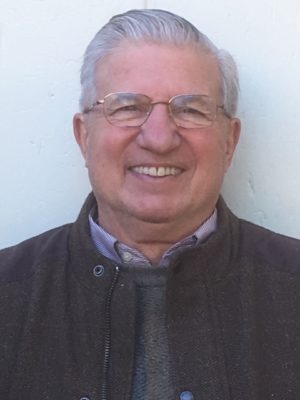 PAUL WATERMULDER is retired from 40 years as a pastor, most recently as senior pastor of First Presbyterian Church of Burlingame, California. Previously he served as an urban police officer and a merchant seaman. He is a fourth-generation preacher, husband of 47 years and father of four, with six grandchildren.