I need periods of deep breathing, long runs, silence, crisp air, fallow soil beneath my feet, fresh thoughts, giant trees and stimulating conversations. This is what I seek when I venture up to Marin County for continuing education.
Last year I began a Doctor of Ministry program at San Francisco Theological Seminary. When I travel up to the hills north of the Bay, I feel joy and excitement and calm. The cool air in the mornings, the sight of rolling hills and the grey clouds breaking across the trees coalesce within me generating a contemplative and hope-filled mood. I feel a deep intuition that I may be in the right place.
The contemplative chapel each morning grounds me in the embodied character of my work and also reminds me of the purpose of my work.
I am seeking a way to live and to teach theologically that is progressive, historical, socially active, contemplative, biblical, liturgical, missional and subversive. Or, put differently, I wish to walk with Jesus. Continuing education is an opportunity for me to gather with others who share this desire.
I began the D.Min. program searching for a formational opportunity in which I may be formed as a person and not only informed of “best practices” for church programs. While I am exploring spiritual practices throughout church history, I am also keenly interested in crafting spiritual practices that intersect with an increasingly post-religious society.
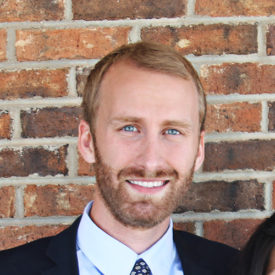
I am the pastor of Faith Presbyterian Church situated across the street from a major public university in San Diego. It is a thrilling place to be and to explore. In some respects, it is a microcosm of religious trends in our broader society.
As part of my preparation for my summer seminar, I have been reading Diana Butler Bass’s book, “Christianity After Religion.” Bass outlines in rather stark terms the mass migration away from churches. We have heard this narrative before. She labels the years 2000-2010 “The Horrible Decade.”
However, Bass also observes, “Religious discontent is indistinguishable from the history of spiritual renewal and awakening.” While the landscapes of religion and spirituality have shifted a great deal in the past two decades, I think Bass may be right. Discontent is the beginning of change and can be the beginning of a new awakening.
What might it begin to look like for the “spiritual but not religious” to share space and practices that engage deep longings, fears, dreams and aspirations?
I am hopeful, and my continuing education is oriented with this hope.