 In the Gospel of Matthew, we read: “After the Sabbath, as the first day of the week was dawning, Mary Magdalene and the other Mary went to see the tomb. And suddenly there was a great earthquake; for an angel of the Lord, descending from heaven, came and rolled back the stone and sat on it. His appearance was like lightning, and his clothing white as snow. For fear of him the guards shook and became like dead men. But the angel said to the women “Do not be afraid. I know that you are looking for Jesus who was crucified. He is not here, for he has been raised, as he said. Come, see the place where he lay. Then go quickly and tell his disciples, ‘He has been raised from the dead, and indeed he is going ahead of you to Galilee; there you will see him.’”
The tomb was empty. That was the last thing that Mary Magdalene and the other Mary expected to find when they got up before dawn and made their way to the tomb. After all, the Marys watched for themselves as just three days earlier the body of Jesus, which had been taken down from the cross and wrapped in clean linen cloths, was laid by Joseph of Arimathea in a new tomb hewn in the rock. They watched for themselves as a huge rock was rolled in front of the opening of the tomb. Hatred, bitterness, deception and betrayal had come to call and Jesus was dead. And now, on the third day, they saw for themselves that the same tomb that held the body of God’s son was inexplicably empty.
COVID-19 has come to call and, like an unwanted house guest, isn’t planning to leave anytime soon. Fear abounds. Elected leaders in high places and evangelical Christians discount the wisdom of scientists. Maps highlighted in bright colors show where the highest concentrations of the virus are present. We watch as the media show us pictures of patients on quarantined stretchers attended by medical personnel in full hazmat suits. We watch as the days turn to night and nights turn to day, and things only get worse.
And like the tomb of Joseph of Arimathea, this Easter our sanctuaries will be empty as well. I’ll admit this saddens me. I have always loved the strains of “Jesus Christ Is Risen Today” sung joyfully by the gathered congregation. And while I won’t miss the smell of lilies (which makes me sneeze and my eyes water), I will miss the excitement of God’s people gathered to hear the familiar story that is the hallmark of our faith.
But just like the empty tomb didn’t have the final word thousands of years ago, neither will our empty sanctuaries in 2020. Remember, the angel of the Lord delivered an important message: “Do not be afraid. … Go quickly and tell his disciples, ‘He has been raised from the dead, and indeed he is going ahead of you to Galilee; there you will see him.’” Jesus did go ahead of them, and “the eleven disciples went to Galilee, to the mountain to which Jesus had directed them. When they saw him, they worshiped him; but some doubted. And Jesus came and said to them, ‘All authority in heaven and on earth has been given to me. Go therefore and make disciples of all nations, baptizing them in the name of the Father and of the Son and of the Holy Spirit, and teaching them to obey everything that I have commanded you. And remember, I am with you always, to the end of the age.’”
Go. Go and make disciples. Go and be lights to a fearful world. Go and feed the hungry for they are more plentiful than ever. The tomb was empty, but Christianity began. The churches are empty, but people are being the church in ways that were never imagined at the beginning of this new decade. The pastors in the presbytery I serve are reporting more people “tuning in” to Zoom worship or Facebook Live than have been “stopping in” for in-person worship in recent memory.
Now don’t get me wrong, I believe wholeheartedly in community. But in this time of needing to do things differently – quite frankly not living in fear of the seven last words of the church, “We’ve never done it that way before” – the gospel is still being shared. And it’s being heard. And it’s being lived — lived beyond the safe four walls of our sanctuaries.
Neighbors are checking on neighbors while maintaining social distance. Those who are less at risk are helping those who shouldn’t go to the supermarkets or the pharmacies. Food pantries are being creative as they make sure food is available to those who need it most. Release to the captives who have nearly served their time, or who are non-violent offenders, is real.
The empty tomb was the beginning of what we know as grace. The empty tomb was the beginning of what we know as redemption. May it be so for the empty church buildings as well.
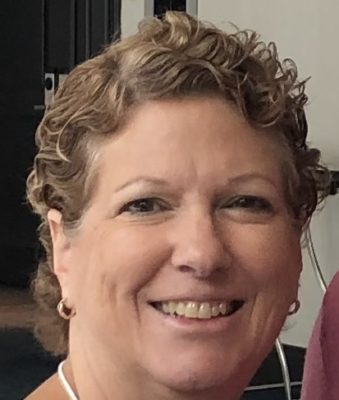 BARBARA SMITH is the transitional director of presbytery ministries for the Presbytery of Newark.