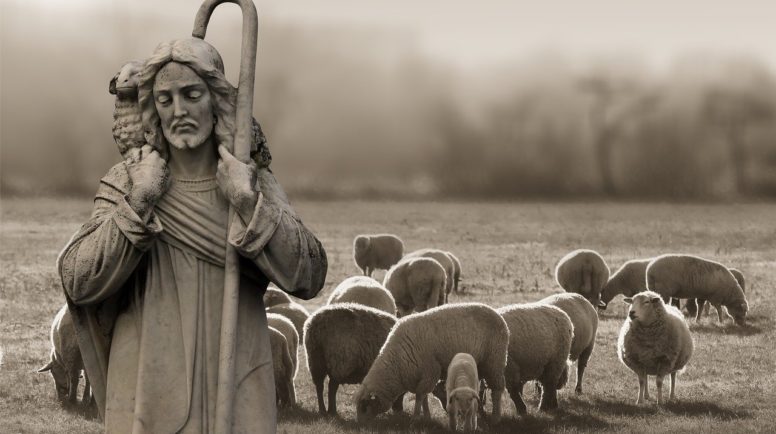
Take time to read the parable of the lost sheep in Luke 15 this week. The compelling piece of this parable is the shepherd’s sensitivity to care for all of the sheep, especially the vulnerable one. I have never thought about this before, but we don’t hear the perspective of the sheep – whether it wanted to be rescued or knew it needed to be rescued – all we know is that the shepherd went after the one who was lost, in danger.
During this crazy time of pandemic ministry, I have noticed a concerning, consistent trend. In speaking with other ministers, it seems pastors are much more reticent to move from online worship to indoor worship than their congregants. I daresay that the decision to go from indoor to online worship was actually an easier choice than when or whether to resume indoor worship (I would not say this applies the same way to outdoor worship; our church has successfully worshipped outside and in-person for a month now). I am not certain why pastors seem more reticent to resume indoor worship, but, from my own experience and conversations with colleagues, I offer four possible reasons for this divide between shepherds and their sheep on returning to in-person worship:
1. Pastors are emotionally and spiritually depleted. Yes, I think we are all tired of the stay-at-home environment that the pandemic has forced upon us, but I know I am (and in talking with other pastors, I think they share this sentiment) not just that kind of tired, but emotionally exhausted. There was a blog posted this summer warning churches of an impending pastoral crash. “Less gathering does not equal less work,” John Dobbs wrote.
The extension of the pastoral call to spiritual support should not be overlooked. I’ve not only lost members of our faith community due to COVID-19, but I have been privileged to pray with friends, loved ones and others who are still recovering. While it is an honor to be invited into the sacred space of someone’s extended network, it multiplies the trauma and reach of COVID-19. This disease does not present as small and manageable to me, but pervasive and devastating — affecting almost everyone in the church I serve directly or indirectly.
I have also witnessed the fear of my congregation. While many appear less fearful as time goes on, I’m concerned that the fear is now manifesting itself in other ways — such as the need to control re-entry. And, my own fear has not dissipated. I tend to depend on logic and reason, and I see no logical reason to let go of healthy fear yet; nothing has changed about this virus.
2. Pastors have been inundated with news and information about church re-openings that ended in the worst possible way.As a minister, my news feed is not only full of cautionary tales from churches that became hot beds for COVID-19 following a decision to resume in-person worship (even with “appropriate” restrictions and precautions), but I also have to manage the cautious positions of our stated clerk and presbytery.
I read way more articles discouraging in-person worship than encouraging it. Just today, I glanced at headlines such as: “West Virginia sees coronavirus outbreak in churches,” “Churches should not be the first to reopen” and saw church at the top of the list of “Coronavirus risk level by activity.” Access to information is helpful, but it seems that more epidemiologists are discouraging in-person gatherings than encouraging, and especially with mixed opinions, these decisions weigh heavily on shepherds called to care and protect their sheep.
3. I am still grieving. The word pastor literally means “shepherd.” I have not even made peace with losing two of my sheep to this disease months ago (and not being able to be with them when they were sick), and we continue to pray for a third whose health is perilous. I feel personal responsibility to make decisions to keep all of us safe. And I am very scared and uncertain whether I can protect my sheep if we move indoors for worship. I know some are okay with accepting these risks, but I don’t know how I could be. Months ago I thought of the church building as a place to enhance and bring life, and now I cannot help but see it as somewhat the opposite. I still claim our time together in the presence of God as the church vital and essential to life, but I am terrified that I could be a part of a decision that puts the health of those I love, serve and shepherd in danger. “What is at risk?” we have been called to ask. And, unfortunately, the answer could be life itself.
4. It has been challenging to keep us all together during as we have worshipped online; it will be more difficult to keep us together when we try to do both (in-person and online worship). Like many small churches, I have been facilitating a Facebook Live worship service solo from my home each week. And, on the weeks that we have used video, I have been our editor. We have been successfully using the Facebook comments to interact during live worship, and it is a beautiful thing to hear from worshippers as we join together. We pass the peace, share joys and concerns, and I can even greet worshippers by name. The online worship experience will have to change when we go back in person; I will need help from members to do both types of worship. I don’t see a way to interact with those online and in person simultaneously. I have to be concerned that a non-interactive “recorded” service will feel exclusive to those who do not feel safe returning in-person.
I am not always a perfect shepherd, but I am trying my best to serve God and love my sheep. As a shepherd – a pastor – I feel my call is to be most careful and protective of the lives of those I serve. I never envisioned being in a time where I would discourage someone from attending church indoors, but because my role to help others connect with God and serve God and one another has not changed, I find myself in that position today.
 JULIE RAFFETY serves as the pastor at First Presbyterian Church in Franklin, New Jersey. Julie is a violinist, aspiring writer, snowboarder, runner, identical twin and crazy about popcorn.