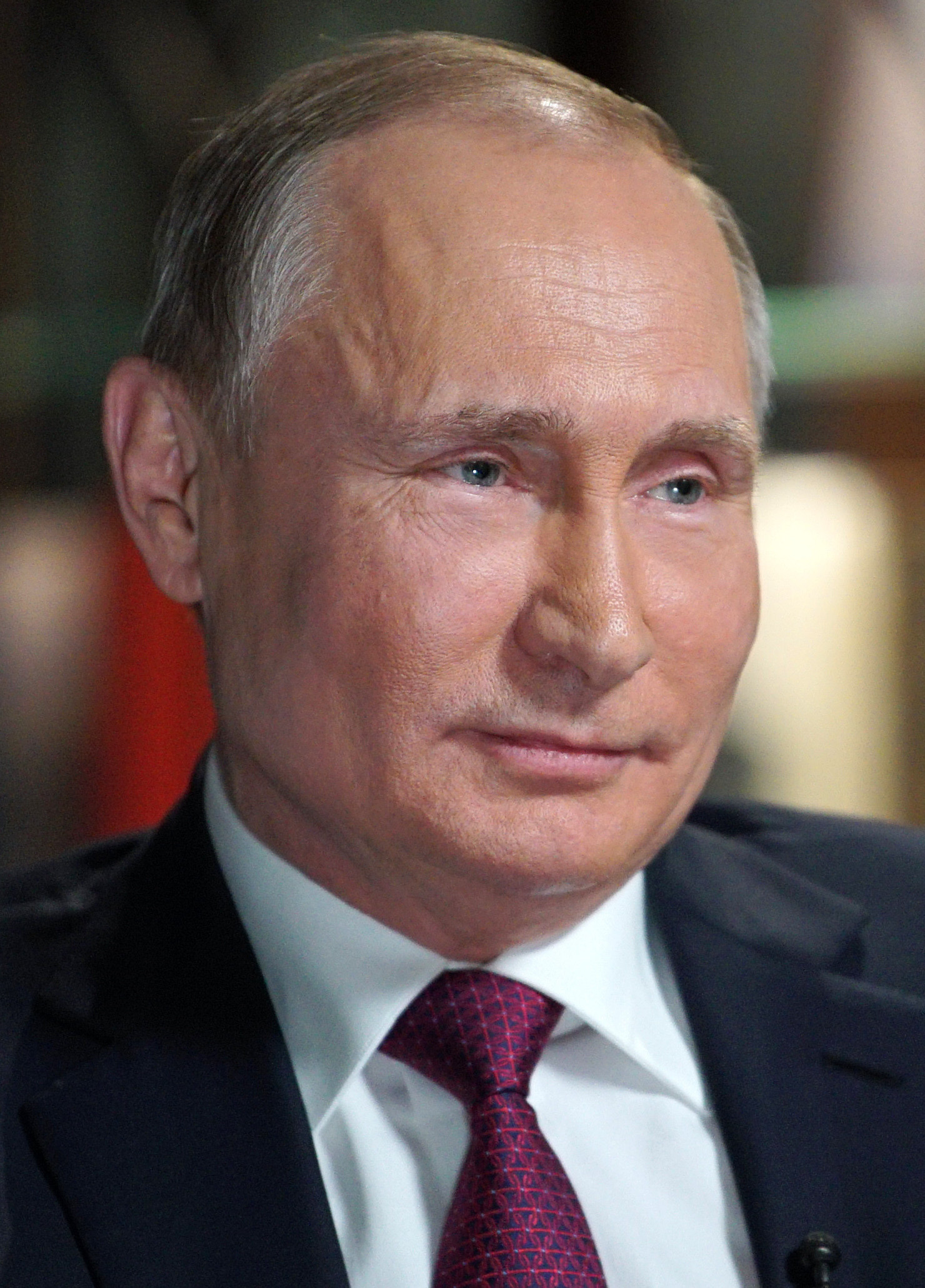
The Russian invasion of Ukraine is more than political, it’s a religious crusade. As U.S. intelligence officials try to understand Vladimir Putin’s mindset, they would do well to take seriously his language around the “sacredness” of the Ukrainian territory for Russia. He is older, isolated, and thinking about his legacy. He wants to be eternally revered by the people of Russia, and he sees this crusade into Ukraine as his way to rebuild the historic Russian Empire. Intelligence officials should be examining his mind based on the psychoanalytical nuances associated with spiritual abusers, religious extremists, and religious cults. As people of faith, it’s important for us to understand this crisis from this lens as well.
Vladimir Putin has tried to project himself as the defender of traditional Christian moral authority, not just in Russia, but around the world. He has enacted laws in Russia to penalize divorce, to oppose homosexuality, and to support “traditional family values.” This is from a divorced man who is known to have praised his country’s prostitutes. His authoritarian Christian laws have brought praise from people like Donald Trump, Pat Robertson, and Franklin Graham. Even in the week prior to the Ukrainian invasion Donald Trump and prominent evangelical politician, Mike Pompeo, were praising Putin’s strong leadership. But let us be clear that authoritarianism is not strong leadership. It is antithetical to the gospel of Jesus Christ who taught that to be great you must become a sacrificial servant (Matthew 20:20-28). But that has not stopped many cult leaders and tyrants throughout our world’s history from using Christianity to manipulate power, from David Koresh and Jim Jones to Adolph Hitler and Benito Mussolini.
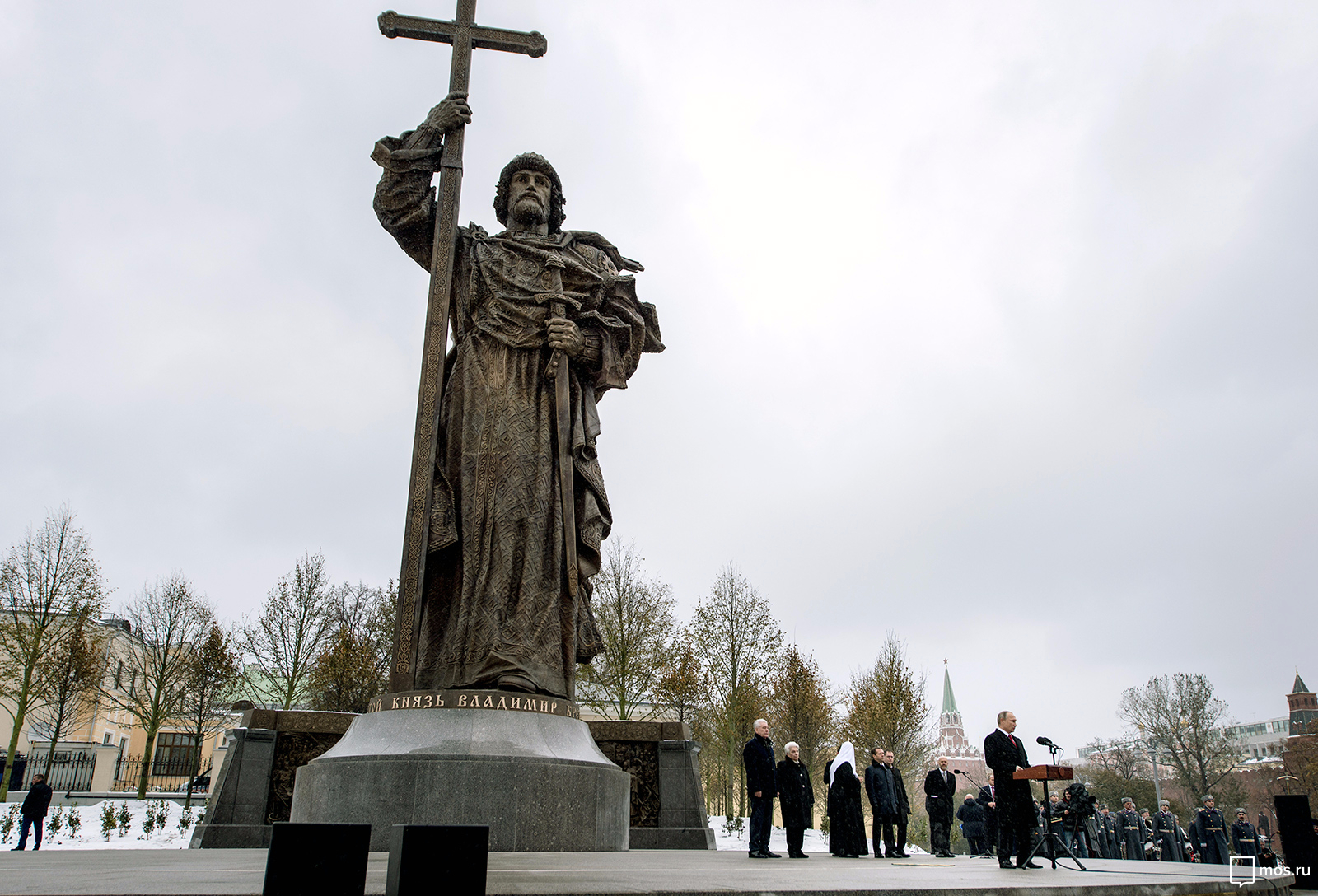
To understand Vladimir Putin’s mindset during his Ukrainian invasion, we can start by looking at the monument to St. Vladimir (also known as Prince Vladimir of Kyiv and Vladimir the Great) that stands over 57 feet tall outside of the Kremlin. Dedicated in November of 2016 as a project of the reestablished Russian Military Historical Society, this controversial monument to St. Vladimir of Kyiv underscores the religious aims that Putin is using to justify his political ambitions in Ukraine. To many of those in the Russian Orthodox Church, Kyiv, Ukraine is the Holy Land of the Russian Empire.
Over a thousand years ago, Prince Vladimir of Kyiv united the Rus people of modern-day Belarus, Russia, and Ukraine into the historical Russian Empire. After Prince Vladimir’s envoys returned from an excursion to Constantinople, they shared about Eastern Christian faith. Prince Vladimir converted and brought the Rus people into the faith through a mass baptism. In the 980s, Prince Vladimir invaded the Crimean Peninsula, held at this time by the Byzantine Empire, and successfully negotiated a marriage to a Byzantine Christian princess.
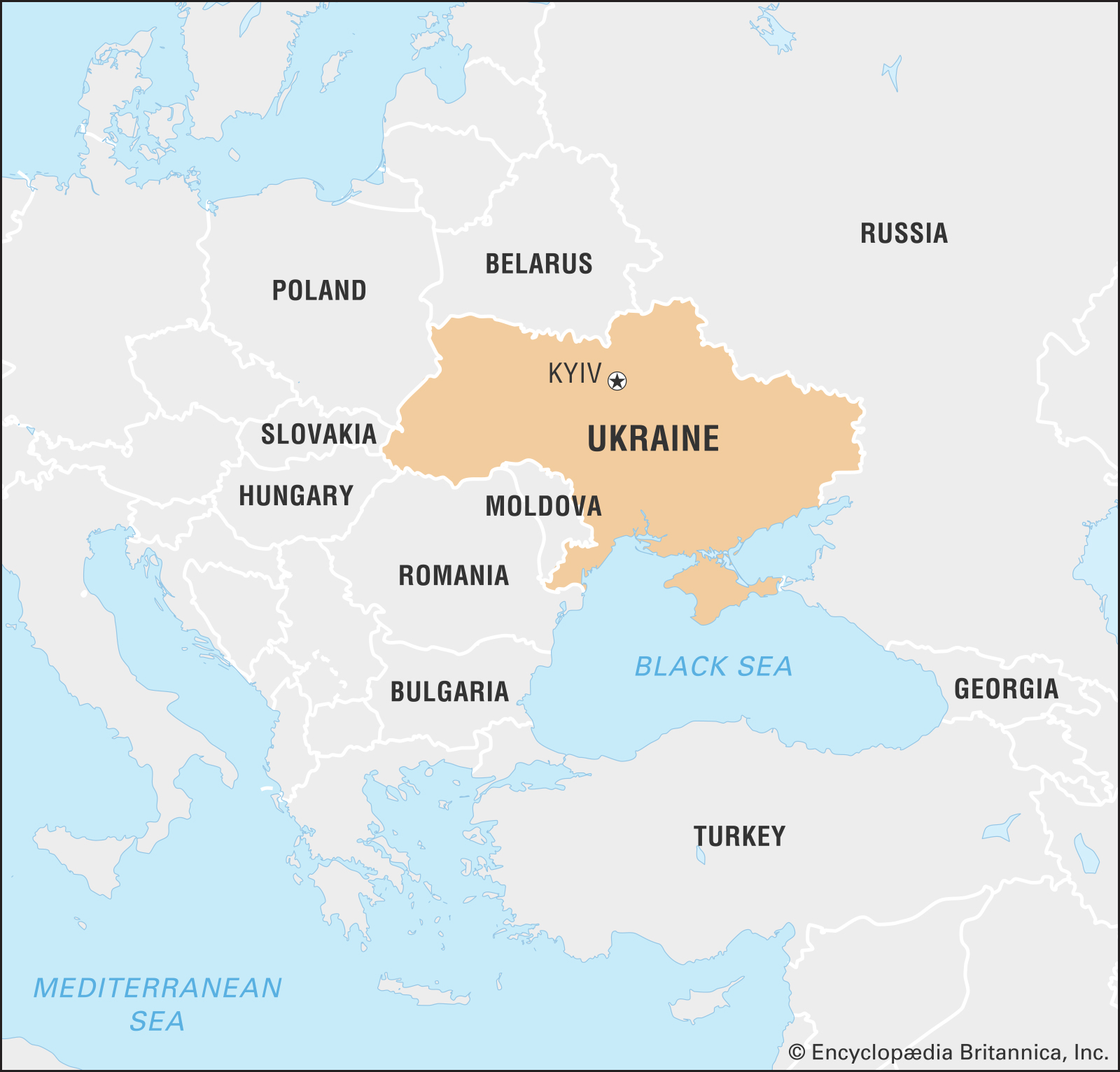 Under Prince Vladimir’s reign, Kyiv became a prosperous city, the center of the Russian Empire and that of the new Orthodox Christian church of the Rus people. Over centuries, however, the Rus people moved further north, and Moscow became the center of the unified Russian Empire. That is until the fall of the Soviet Union when Ukraine became a sovereign nation unto itself. Vladimir Putin described the collapse of the Soviet Union as the “greatest geopolitical catastrophe of the century.” And because of Putin’s fondness for St. Vladimir of Kyiv, Putin has held himself out as the defender of the sacred land of the Russian Empire, especially that in Kyiv.
Further escalating tensions between Ukraine and Moscow some of the Ukrainian Orthodox churches created a union with some of the Moscow-controlled Russian Orthodox parishes in Ukraine to establish the new “Orthodox Church of Ukraine” at the Unification Council in Kyiv in 2018. The newly unified Orthodox Church of Ukraine is an independent religious body under the authority of a religious leader in Kyiv, not Moscow. Putin directly protested this move, along with the Patriarchate of the Russian Orthodox Church. Putin’s presidential spokesperson, Dmitry Peskov stated that the Kremlin supported the Russian Orthodox Church’s protest and vowed to defend “the Orthodox faithful in Ukraine.”
Some have suggested that Putin has invaded Ukraine due to the perceived weakness of Democratic presidents here in the United States, noting that Putin annexed Crimea under Obama, and launched this current assault under Biden’s watch. But I believe that analysis is naïve to the manipulative and abusive way that religious cult leaders respond. I’ll let you decide whether Obama and Biden are weak, but it appears likely that Putin didn’t launch a military attack on Ukraine under Trump’s presidency because Trump did Putin’s bidding. Trump openly disparaged the NATO alliance, publicly slandered Ukraine as the source of U.S. election interference, and refused military support to Ukraine (until he was forced to reverse course). Abusive people like Putin can come across as rational and measured when they get their way. As Jesus said, “Even sinners love those who love them” (Luke 6:32).
The reality, in my opinion, is that Biden has long been a strong supporter of the NATO alliance, and Putin is desperately afraid that the Holy Land of Mother Russia, Kyiv, Ukraine, is edging towards becoming a part of NATO. Having a President Biden in the White House is threatening Putin’s grand spiritual quest to be the one to reunite the historic Russian Empire. When abusive cult leaders feel someone is standing in the way of their spiritual destiny, they respond with manipulative threats and irrational violence, which may help explain Putin’s odd behavior.
Trauma-informed analysis of psychological and spiritual abuse might actually be the most pertinent way to understand the mindset of Vladimir Putin. Many perpetrators of domestic abuse, religious extremists, cult leaders and spiritual abusers believe they have a right to do whatever abusive thing they are doing. In like manner, we have seen Putin’s self-righteous, arrogant claim that he and Russia have a spiritual right to the sacred land of Ukraine. When abusers feel confronted or threatened, they will engage in DARVO: Deny the abuse; Attack the one confronting them; and Reverse the Victim-Offender roles.
In this trauma-informed analytical framework, Putin has responded exactly as would be expected. Putin has denied that Russia has done anything wrong in invading Ukraine. He is attacking a sovereign nation while arguing that they are the true aggressor, and lashed out at the NATO alliance for holding him accountable. And he is claiming that Russia is the victim of assaults to its sovereignty, and the offender is “the West,” particularly the NATO alliance. As he continues to be confronted for his abusive behavior, Putin is engaging in manipulation by threatening to unleash nuclear war if others try to interfere in his abusive assault on Ukraine. This is understanding spiritual abuse 101, and the only way to counter it is to keep speaking the truth publicly and to hold the abuser accountable.
Sometimes it is also necessary to deny the abuser access to the true victim. In this case, that would mean direct confrontation with a nuclear power. Is that the right thing to do? I don’t know. But the U.S. intelligence community would be naïve to ignore the religious context of Putin’s war. And they would do well to consider the mindset of spiritual abusers and religious extremists.
Putin is older, isolated, and thinking about his eternal legacy. In my opinion, there can be no question that Vladimir Putin sees himself as a sort of Vladimir the Great 2.0. Why else would he erect a 57+ foot statue of Prince Vladimir of Kyiv outside the Kremlin? For Putin, this is a Holy War rooted in religious extremism — a crusade to restore the spiritualized authority of Holy Mother Russia. And Putin sees himself as a candidate for sainthood as he defends the rights to the sacred land of the historic Russian Empire.