Editorial note: Six young adult advisory delegates who offered statements for this article wish to remain anonymous. They are differentiated by a number and numbered in no particular order.
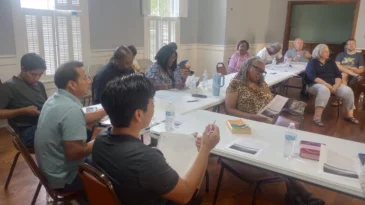
MILWAUKEE — The Young Adult Advisory Delegates (YAADs) to the 227th General Assembly of the Presbyterian Church (U.S.A.) met this week for lunch to attempt to reconcile their differences and agree on a “Covenant of Behavior“ and “Statement Concerning Faith” to which some YAADs have written “Response to the Statement Concerning Faith and Presbyterians for the Kingdom.”
The lunch, funded by the group Presbyterians for the Kingdom (PftK) – a theologically conservative group made up mostly of young people in the PC(USA) – acknowledged harms caused by its members during the week’s deliberations among YAADs and included a call to unity.
Concerns over actions and intentions
What began as an effort by non-PftK YAADs to encourage honest dialogue and acknowledge differences ended with a covenant that was never presented for debate and left many YAADs uncomfortable. “I have been deeply saddened and disappointed that such a well-intentioned event aimed at reconciliation proved to be such an avenue for harm,” said YAAD-6.
YAAD-4 felt misguided about the nature of this gathering: “I was under the impression it was gonna be, like ‘Oh, we’re all children of God. We’re all welcome in Christ’s house … we might have different theological views … but we’re all respected and loved.’ I thought it was going to be something like that. It was not.”
“I showed up to the luncheon [hoping] to have conversation; there was not really time for actual conversation,” said YAAD-1. “And then we were presented the statement concerning faith … We weren’t given written copies of it, we weren’t allowed to discuss it, and we were immediately called to have a voice vote about it.”
Other YAADs echoed the sentiment, saying there was no opportunity for discussion and they did not feel the covenant addressed the concerns they’d hoped it would.
What happened at the lunch
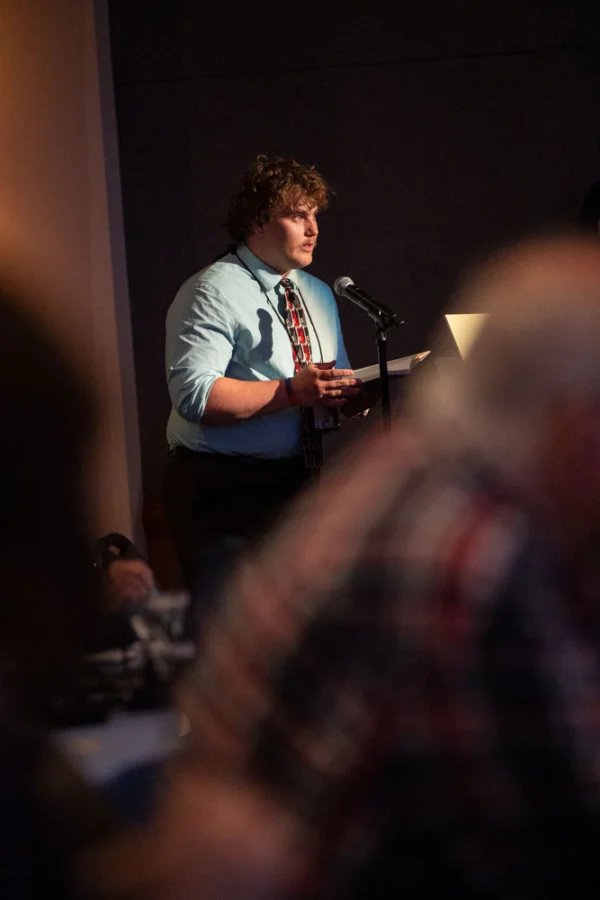
Alexander Boltz, a YAAD from the Presbytery of the Twin Cities Area and not a member of PftK, offered the opening prayer, saying, “Creator God, we come to you in acknowledgment of our fallen nature. We come to you knowing that we have failed to recognize the humanity and dignity in all of your creation. We hold in prayer the hope that you will forgive us that your mercy overruns, that the specific faults and our actions and words may be forgiven through Jesus Christ our Lord.”
Following the prayer, Richard Ackerman, who is not a YAAD but serves as vice president of Presbyterians for the Kingdom and attended the assembly as an observer, offered an apology on behalf of PftK.
“I would like to collectively repent and confess on behalf of PftK,” he said.
“I think all the PftK people can concur with me [on] all the times when we have not spoken the truth in love. A common collective sin amongst conservative Christians is speaking their convictions with a spirit of arrogance, judgment and mockery, and we have not been entirely innocent of that. And I know many people can testify to that. Give us the strength to stand by our convictions with love and charity as Scripture tells us respecting the dignity, humanity, and belovedness of others as we do so.”
Dan Turis, a teaching elder commissioner from the Presbytery of Cincinnati and mentor to several PftK members, offered an assurance of pardon to those gathered and encouraged them in their collective work of understanding.
“If you were me, if you are going to be me one day, looking out at you all, you would be encouraged,” he said. “What you are about to do in this space — it can only happen through Jesus Christ. There’s no other way that this could happen in such a beautiful way.”
“Our conversation was mostly about things we have in common,” said Addy Tracy, a YAAD from the Presbytery of Scioto Valley. “But this was a step forward to see each other’s humanity … an issue that we’ve been having was that we just weren’t talking to each other, and this was our way to come and talk to each other and find a way to disagree.” (See Note 1.)
“In love,” interjected Toney Gibson Jr., a YAAD from the Presbytery of Mississippi, emphasizing PftK’s hope to have a role in conversations that will shape the future of the denomination, including the assembly-approved GEN-09, “Beyond Changing Families” study, which the group supports in its amended form.
Related reading: Learn more about GEN-09 in this article by Caroline Garcia, Outlook reporting
“We still disagree on many things. But we want to help this church grow because we love it so much,” Gibson added. “I feel like that is what’s going to get us forward. We’re just glad to have our foot in the door now as Presbyterians for the Kingdom.”
Questions about representation and process
Online conversation about the event framed it as a success story — yet a number of YAADs feel quite differently. They expressed that what was supposed to be an opportunity to talk through theological differences ended up being a call for unity without addressing those differences.
What was supposed to be an opportunity to talk through theological differences ended up being a call for unity without addressing those differences.
“I understand that [PftK believes] they’re part of the church, and I want to honor and respect that. But I think it is problematic the way of going about the claim to unity without talking about their theological things that I have massive problems with,” said YAAD-1. Reconciliation has to be “the act of admitting what we don’t agree with, and talking about that,” the YAAD added.
YAADs who spoke with the Outlook did not feel comfortable signing the Statement Concerning Faith. “I was not going to sign anything that … validated the existence of an organization or affiliation that was counter to my existence,” said YAAD-3.
“[The PC(USA)] affirms everyone’s sexuality and gender identity. PftK does not.”
Similarly, YAAD-4 said the word “sanctify” in the statement was concerning because PftK members may view queer lifestyles as something that needs changing or sanctification.
PftK’s website defines marriage as “between one man and one woman” and states that “God created mankind male and female, each according to His design.”
Ackerman, who observed GA227, said two actions reflected the denomination’s commitment to freedom of conscience: reaffirming the “Olympia Overture” and allowing churches to specify whether they are welcoming to LGBTQIA+ pastors in the search process.
Related reading: Learn more about the assembly’s decision to make adjustments to the church call process in this article by Caroline Garcia, Outlook reporting
“PftK affirms and celebrates that the PC(USA) is a big tent, meaning we are committed to working alongside our LGBTQ[IA+] colleagues,” he said. “We do not consider LGBTQ[IA+] an essential issue, meaning there are true Christians on both sides that can work together in mutual forbearance as the church.”
Although two non-PftK YAADs partnered with PftK YAADs to write the Statement Concerning Faith, multiple YAADs explained in interviews that the document was heavily edited by PftK members, and there didn’t seem to be fair representation in the leadership of the lunch.
As YAAD-4 put it, “The gender diversity … was non-existent. And you noticed that in the leadership; you noticed it in who was taking over conversations at each table.”
In the “227th General Assembly YAADs’ Response to the Statement Concerning Faith and Presbyterians for the Kingdom,” issued on the closing morning of General Assembly 227, posted on the official MyGA message board and endorsed by six former Moderators of the PC(USA), this lack of representation was highlighted.
“What began as a collaborative effort, one that Young Adult Advisory Delegates helped to shape, drifted into something led by PftK,” the statement reads. “That was against the intent of what was planned. As the work went on, PftK’s input grew dominant and ours grew faint. Women, femme, and female voices were never balanced or equally represented among those shaping the document. This was not for lack of effort. A few steadfast YAADs, none of them affiliated with PftK, worked to secure equal representation and to bring in the voices PftK had not considered, and we thank them for their courage.”
Ethan Van Deventer, a YAAD from Charleston Atlantic Presbytery who is not a member of PftK, was involved in drafting the YAAD’s Statement Concerning Faith. He expressed the “minor concern” that PftK was being offered a platform on which they offered prescriptive values.
“I think that the healthier way to approach it, and that I wish we had maybe been able to reach more clearly [at the lunch], would be to just be children of God who sometimes have disagreements on how to live that out and what parts of our faith we value more individually or in concert or ‘small c’ congress,” Van Deventer said.
“The statement we’ve written is not about demonizing [PftK], excluding them, or saying we should ignore them. It’s about saying the only way to include them is to talk to them and to be honest about what they believe. Because I don’t think they are doing that, and I think these conversations need to continue happening,” said YAAD-1.
A response to this statement, signed by seven PftK YAADs and two YAADs who are not part of the group, did not address each point of the MyGA-posted letter, but contends that outside influences on Facebook discouraged YAADs from supporting the PftK attempt at reconciliation and the joint Statement Concerning Faith. The response also argues that claims of inadequate representation do not reflect the diversity of those involved in the work.
“While the authorship of the document was primarily done by a male member of the LGBTQIA+ community, it was also worked on by a female member of PftK,” this response statement alleges. “The three moderators of the lunch meeting were all progressive, non-PftK YAADs, one of whom was a woman, and two of whom were members of the LGBTQIA+ community.”
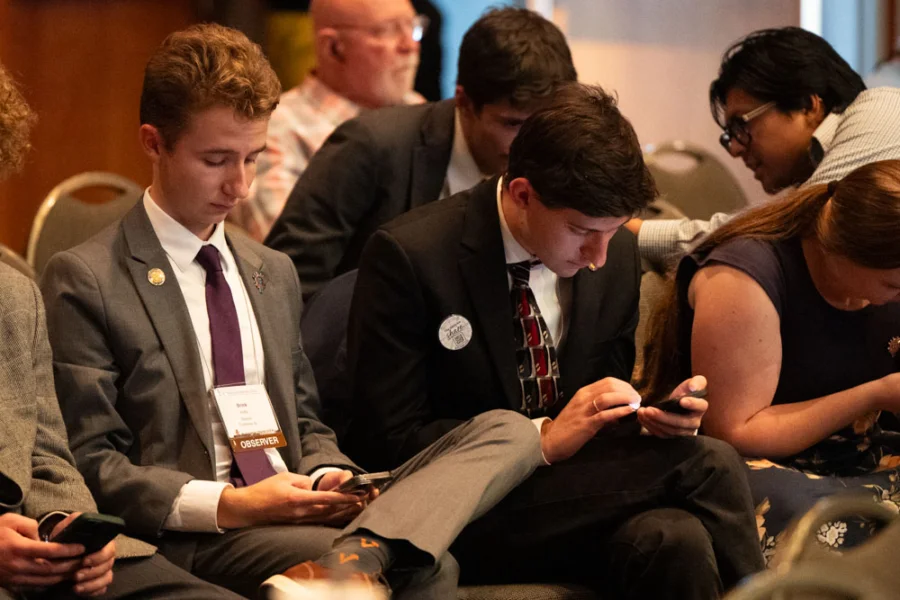
This response also noted points of unity among YAADs, including their advocacy for an anti-AI overture and their urging the assembly to delay a proposed new confession of faith pending further study.
“This kind of unity is possible [across theological convictions], even when both sides have strong convictions about their beliefs,” said the response. “We as Christians can and must strive for the unity that Jesus prayed for.”
Safety, transparency and the path forward
In terms of steps forward, some of the YAADs have hopeful outlooks – such as mediated conversations, opportunities to discuss theology, and efforts to repair harm – while others are ready to walk away. Regarding reconciliation, YAAD-3 said, “At no point do you have to reconcile if you do not feel safe; your safety is of the utmost importance.”
Some YAADs say they experienced harassment, unwelcoming comments, and a lack of respect that had sullied their experience at General Assembly.
“I’m counting down the hours until I get on the plane … and go because GA [is] not safe … It’s not safe for anyone who identifies as not a cisgendered White man. Because of [PftK], because of their affiliation in this place, it’s not safe,” said YAAD-4.
Similarly, YAAD-5 stated, “It feels very predatory, and in a way that we didn’t know we were prey coming into this. I didn’t know [PftK] existed until I got here … and I think the thing that people are most angry about is they claim to speak for all of us. And they don’t,”
Going forward, YAAD-2 encouraged transparency from PftK members about what they believe, while also hoping for more protective measures and accountability for the treatment of the LGBTQIA+ siblings.
Despite some feeling unsafe and uncomfortable due to this situation, almost every YAAD who spoke to the Outlook emphasized how much they valued their experience in Milwaukee. “I’m so very happy that I’ve come here. I’ve made a lot of great friends,” said YAAD-1.
“I’ve made some friends that I think will be lifetime friends,” said YAAD-5.
Note 1: After General Assembly ended, YAAD Addy Tracy followed up with the Outlook: “[My statement] was an accurate quote at the time it was taken; however, at the lunch, I was feeling manipulated by the presence of the Ptfk and felt like I was only able to speak positively about the experience. After the lunch, as the Ptfk continued their malicious behavior, my thoughts on the lunch became more clear.
The lunch was taken over by the Ptfk, where they decided to manipulate the conversation to only be either superficial or a way to evangelize for their conservative group, without changing their behavior and continuing to harass the women and LGBTQ+ people in the YAAD group. While I was not given the opportunity to sign the statement ‘227th General Assembly YAADs’ Response to the Statement Concerning Faith and Presbyterians for the Kingdom,’ I strongly agree with it.”