During last week’s 250th anniversary celebration, as fireworks lit up the night sky on the Fourth of July, I felt conflicted. Given the rise of Christian nationalism — and its condemnation by the General Assembly just days earlier — how should I, a Presbyterian Church (U.S.A.) minister, respond to this national milestone? Beneath the “rockets’ red glare,” I found myself asking: Can Presbyterians be patriotic?
Can Presbyterians be patriotic?
I believe the answer is yes. In fact, I believe Presbyterian patriotism offers a vital, prophetic witness against Christian nationalism. Disciplined by history and guided by our Reformed theological tradition, it allows us to commemorate the American Revolution without succumbing to either nationalistic flag-waving or blanket condemnation.
Related reading: “PC(USA) labels White Christian nationalism ‘Theological Error’” by John Bolt, Outlook reporting
Why patriotism is a pressing question for Presbyterians
Can Presbyterians be patriotic? This question is especially timely. Just days before the nation’s semiquincentennial, the General Assembly voted down a commemoration of Presbyterians’ revolutionary involvement, fearing it “risks sanctifying a narrative that binds the Church’s witness to a national origin story” and fuels Christian nationalism. Yet the Committee on Reformed Identity in the United States also noted that its disapproval “in no way discourages people from taking pride in their Presbyterian heritage and its contributions to American civil society.”
That leaves American Presbyterians with an important question: How should we relate to our nation’s history without slipping into Christian nationalism or American exceptionalism?
How should we relate to our nation’s history without slipping into Christian nationalism or American exceptionalism?
I approach that question as both a full-time AP United States History teacher and a part-time minister of a small rural congregation nestled between the historic battlefields of Monmouth, Trenton and Princeton, New Jersey. For both my congregants and my students, the Revolution literally happened in our backyards. This history matters to us; it is part of who we are.
At the same time, I share the committee’s concerns about nationalism. In my classroom, I strive to teach history honestly. My students wrestle with our nation’s exclusions, failures and contradictions alongside its achievements. In this complexity, I point them to figures who forced the nation to confront its sins — specifically Frederick Douglass, who can serve as a guide for Presbyterians navigating patriotism today.
Frederick Douglass offers a model of honest patriotism
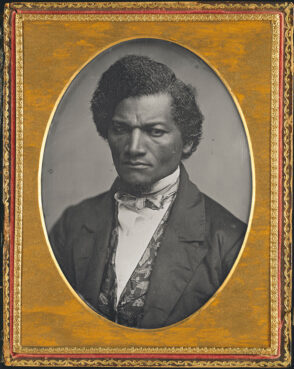
On July 5, 1852, Douglass delivered his famous speech, “What to the Slave is The Fourth of July?” Like a prophet, he excoriated celebrating Independence Day from the perspective of an enslaved person, “us[ing] the severest language” to describe the nation’s hypocrisy in failing to extend liberty, equality, and justice to millions of enslaved Black Americans. He refused to romanticize the nation’s past. Presbyterians should do the same.
Douglass – himself a Christian – also refused to spare the church. He declared it “superlatively guilty” for its complicity in slavery, condemning those who had “shamelessly given the sanction of religion, and the Bible, to the whole slave system.”
Denouncing the Christian nationalists of his own day, he wrote that “the existence of slavery in this country” meant that “your Christianity is a lie.” Likewise, American Presbyterians must reject Christian nationalism, name our nation’s sins and stand in solidarity with those who are marginalized.
Yet Douglass did not stop with condemnation. His critique was rooted in a deep appreciation for the Declaration of Independence, whose principles he called “saving principles.” He urged his “fellow-citizens” to “stand by those principles … at whatever cost.”
He spoke with genuine respect for the nation’s founders, describing them as “brave” and “truly great men,” and argued that it was “a slander upon their memory” to claim they intended the Constitution to be “a slave-holding instrument.”
That appreciation made his critique even more powerful. Douglass rejected not America’s founding ideals but its failure to live up to them. He ended his speech “where I began, with hope” — hope that the nation could yet embody the liberty and equality it proclaimed. His prophetic honesty, grounded in hope rather than cynicism, provides a model of patriotism that American Presbyterians urgently need today.
What the PC(USA)’s confessions say about Christian nationalism
Our own confessional tradition reinforces this vision. The Confession of 1967 reminds us that while all people stand under God’s judgment, “no one is more subject to that judgment than” those who consider themselves “guiltless before God or morally superior to others” (9.12).
The PC(USA) therefore rejects the claims of moral superiority and national supremacy that lie at the heart of Christian nationalism, a stance underscored by the denomination’s commitment to an honest patriotism at the 223rd General Assembly. Our confessions also declare that “the church which identifies the sovereignty of any one nation … with the cause of God denies the Lordship of Christ and betrays its calling” (9.45). A distinctly Presbyterian patriotism can never equate the nation with God’s kingdom.
How worship shapes Presbyterian patriotism
Our worship also forms us for faithful citizenship. Corporate confession is central to Presbyterian worship. As Christians, we confess not only Christ but also our sins.
The same posture should shape how we commemorate our nation. Where nationalism seeks celebration without confession, presenting a sanitized past built on comforting myths, Presbyterian patriotism insists that commemoration and confession belong together. Naming our nation’s sins is not unpatriotic; it is an act of Christian truthfulness that echoes Douglass’ prophetic witness.
Where nationalism seeks celebration without confession, presenting a sanitized past built on comforting myths, Presbyterian patriotism insists that commemoration and confession belong together.
This intersection of confession and commemoration points toward a distinctively Presbyterian patriotism. In Philippians, Paul exhorts believers to dwell on “whatever is true … whatever is just … if there is any excellence and if there is anything worthy of praise.”
Guided by Scripture, Presbyterians can celebrate what is genuinely good in our founding documents – ideals such as liberty and equality – while also calling the nation to embody them more fully.
That calling will look different across our denomination. For some, it means extending those ideals to marginalized communities, such as supporting the families of detainees at Delaney Hall. For others, at a time when the nation is enacting violence at home and abroad, faithful witness may mean abstaining from civic celebrations altogether. Sometimes a solemn silence is the most patriotic act of all.
Patriotism without nationalism
Ultimately, patriotism is not the problem. Uncritical nationalism – with its demands for historical amnesia and unquestioning loyalty – is.
The General Assembly rightly warned against binding the church to a national origin story. Yet our Reformed tradition also provides the tools to navigate this tension. Grounding our civic engagement in honest history, corporate confession and Christian hope allows Presbyterians to offer a prophetic witness without abandoning our heritage.
We reject Christian nationalism not by ignoring our past, but by remembering it truthfully and, like Frederick Douglass, laboring toward the fuller realization of the liberty and equality proclaimed in our nation’s founding Declaration 250 years ago.