Guest commentary by Jim Chatham
When I was in high school, I occasioned now and then into the home of a woman named Millicent McKeithen, the mother of two friends. It was often a unique experience. Mrs. McKeithen would strike up a conversation in which she genuinely wanted to know about my life.
“Tell me what you’ve been doing lately, Jim? I haven’t seen you in a while.”
“Your family recently moved to a house on Westview Drive. What’s it like?”
“Are you on the school basketball team this year?”
Coming from some people, this might have felt weird. From Mrs. McKeithen, it felt normal and genuine. She really did want to know. “You passed your radio license exam last week? Does that mean you can talk to people over the radio now? Do you make your own radios? How do you learn to do that?” Mrs. McKeithen peeled back layers. She also injected comments about herself, but seemed mostly interested in me. I would come away with the exhilarated feeling that I genuinely mattered, that for this person my life was important. No small thing! Even now, well over a half-century later, I can still feel the effect.
 On a spring Saturday afternoon in my senior year of college, I was watching the Big Four Track Meet – NC State, UNC, Wake Forest and Duke – at our college athletic field. I was seated in the concrete grandstand about 15 rows up at midfield. I became aware of a lone figure who entered the grandstand down below and began climbing the steps. He was a powerful man, nearly my height, far more than my strength. Dr. Keith KcKane, my social studies professor. His job (poor man!) was to take several classes 21-year-old engineering students, drowned in electronic filters and differential equations, and try to make us slightly broader human beings. He wanted us to have at least fleeting acquaintance with René Descartes, John Locke, Jean-Jacques Rousseau, William James and Friedrich Nietzsche. Most engineering students cared little.
Climbing higher, Dr. McKane, to my surprise, looked at me. “Mr. Chatham, I believe,” he said, and asked if he could sit down. Awed and honored, I said, “Yes, please do!”
“I love track meets,” he said, “and this should be a good one.”
“So do I,” I replied, and we settled in.
Between distance runs and dashes, pole vaults and shot puts, Dr. McKane and I conversed for two hours. He was an innately curious man, and he seemed, to my surprise, interested not only in the track meet but also in me. “Where did you grow up, Mr. Chatham? What kind of place was it? What were your favorite things to do? What pointed you toward engineering? Did the Sputnik scare you, as it did many others? What do you think of Terry Sanford, running for governor? How do you react to that news editorialist on TV every evening, Jesse Helms? Do you think the state’s colleges will desegregate peacefully?”
Dr. McKane also told me about himself, his interest in philosophy and psychology, how he had thrown the javelin on his college track team.
By the time that track meet ended, I was a different person. Pumped! Juiced! I had been asked good questions by someone who really wanted to know. He had looked behind doors usually left closed and treated me as having genuine value to him.
I had no further sit-down conversations with Dr. McKane, but when we crossed paths, we spoke with special friendliness. My motivation level in his course soared! I had never had much interest in “social studies,” but that changed. I never again showed up for his class unprepared. If he thought something was meaningful, I wanted to know its meaning. If he had read something really good, I wanted to read it.
I experienced a new dimension that afternoon. It would be a few years before I consciously wanted to borrow from his style, but that day pointed me in a new direction.
My daughter-in-law, Rachael, told me recently of inviting three couples from their newly-joined neighborhood for dinner on three different evenings. After each dinner, she and our son Will were aware that the conversation had all been one-way: the two of them had learned a lot about their visitors, but that the visitors had wanted to know virtually nothing about them. Frustrating! One-way-only conversation can become very annoying.
 This seems all too characteristic of modern life: many of us don’t seem to think of or even care about asking. We get focused on our own personal worlds and stay there, oblivious to the creative effect a few words of interest might have on someone else.
Thirty-seven years as a pastor taught me that knowing and being known is one of the sacred gifts of human living, that most of us would like to be known much better than we are, that, deep-down, loneliness is for us a pervasive psycho-pathology. A well formulated question or two can work wonders. It is one of the fine arts in human relationship. Based on what I just heard from another person, what do I want to ask or comment next? What will best show my interest and give that person the opportunity to proceed further? Formulating a good question can be work, requiring devoted listening and thinking. But it can also have a huge creative payoff. Being cared about is big for us humans, and all too rare.
The very first subject the Bible wants us to know about is the creative power of the spoken word. “And God said, let there be … and God said, let there be … and God said, let there be …” — each followed by enormous creativity (Genesis 1). And the further miracle is that God chose to share this power with us: “God created humankind in God’s image.” We, too, possess language with the power to create — right on the tips of our tongues.
Is it possible that you and I can start using it more frequently? Will not our whole society become more relational, less adversarial, less quick to condemn “the other” with stereotypes, more prone to realizing the camaraderie of our shared humanity if we develop a bit more curiosity toward one another? Can each of us do our small part and make a big difference? It’s really a quite natural thing to do, and we may find that we actually enjoy it!
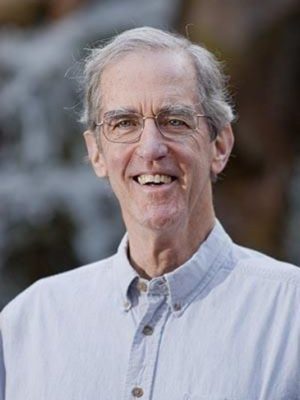 JAMES O. CHATHAM is an Honorably Retired Presbyterian pastor living in Asheville, North Carolina. His most recent book is “Psalm Conversations, Listening In as They Talk with One Another.”