Presbyterian Colleges and Seminaries
Presbyterian Colleges and Seminaries Listed below are colleges and universities of various levels which are affiliated with the Presbyterian Church (USA). Click..



Presbyterian Colleges and Seminaries Listed below are colleges and universities of various levels which are affiliated with the Presbyterian Church (USA). Click..
Cleopas asks Jesus, Are you the only visitor to Jerusalem who does not know the things that have happened there in these days? (v.18). But Cleopas himself appears to be uninformed about the transformation that took place among the multitude at the Cross.
The popular mind thinks that there was a murderous mob around the Cross crying, "Crucify him! Crucify him!" But such was not the case. The city of Jerusalem was and is relatively small with limited public space. Pilate's judgment hall could not have held more than a few dozen people. The High Priest and his supporters were naturally present for the political trial of Jesus. There is no hint that the supporters of Jesus were allowed into the room. On that occasion the High Priest's men (in the hall) responded to Pilate with the cry, "Crucify him." But on the street it was a different matter.
LOUISVILLE -- Souper Bowl of Caring officials say Presbyterian churches collected more than $1 million in last month's annual anti-hunger campaign.
As of March 5, organizers say, 2,356 Presbyterian churches nationwide had raised $1,001,523 -- and collections haven't been fully reported. The total marks the second straight year that Presbyterian collections broke the $1 million mark.
So far some 14,654 organizations and congregations from a variety of U.S. religious denominations have reported collecting a record $9.5 million, according to Souper Bowl officials.
Young Presbyterian women may be eligible for the National Network of Presbyterian College Women (NNPCW) Scholarship Fund program. The deadline for 2008 applications is April 11.
The NNPCW's scholarship program helps equip young women to be leaders in both church and society. Three scholarships are offered this year: one $1,000 scholarship for an NNPCW member active in empowering women on her campus and two $1,500 scholarships for new immigrant women pursuing a college education.
A cross-section of Presbyterians are currently taking part in a United Nations-based effort to raise the status of women.
Thirty-two Presbyterians representing Presbyterian Women, the National Network of Presbyterian College Women, Racial Ethnic Young Women Together and Presbyterian Men are participating in the 52nd session of the Commission on the Status of Women, a body of the United Nations Economic and Social Council.
I propose that the Presbyterian Church designate that a Good Friday service from noon until 3 p.m. be included in all Good Friday worship services.
I am a regular church member who believes that the Bible is the word of God. I start with the fact that the foundations of the Christian Church are the birth of Christ, his crucifixion, and his resurrection. The Bible tells us the place where these events took place and the days of the week of the crucifixion and resurrection. The Bible tells us Christ was born in Bethlehem and was crucified in Jerusalem at a place called Golgotha.
I begin this story with an apologia. If I write as though my associates and I played the starring role in the drama of reunion, be assured that I know better! Thousands of people were involved, many of them in important ways. But my friend, the editor of The Presbyterian Outlook, asked me to tell my story, and I have done my best.
My involvement began in 1971 when, at the urging of my longtime Mississippi friend, Andrew A. Jumper, then pastor of Central Church in Clayton, Mo., I became a member of the Board of the Covenant Fellowship of Presbyterians (CFP).
On October 31, 1986, then D.Min. candidate Mary Naegeli interviewed J. Randolph Taylor regarding his journey through the reunion of 1983. Taylor was president of San Francisco Theological Seminary at the time. The Outlook publishes never-before-excerpts of their conversation as part of this 25th anniversary look back. The Outlook is grateful to Mary Naegeli, now member at large of San Francisco presbytery, for sharing this transcript with our readers.
Geneva (ENI) -- Observers of the Latin American Council of Churches say the sudden resignations of its general secretary, the Rev. Israel Batista, and six other staff may reflect disagreements about the direction of the region's biggest church grouping.
The council's board of directors announced in February that the staff had tendered their resignations at a board meeting held that month in Panama. It made no mention of any reasons given by the staff.
The resignations came as the board of directors was to carry out an evaluation of the Quito-headquartered organization's three-year plan.
It can't be 25 years since we voted in reunion of the Presbyterian Church (U.S.A.) after being split for 122 years. But it is. And in remembering the year we voted and the year we reunited, there are a lot of laughs and tears.
In Columbus, Ga., the General Assembly of the Presbyterian Church U.S. was getting ready for the call to vote on reunion. The result of the vote would go to the presbyteries, where at least 3/4 of them had to approve reunion. The United Presbyterian Church U.S.A. had already approved.
New York (ENI) -- A group of U.S. church leaders has asked that U.S. Secretary of State Condoleezza Rice directly address the crisis over the Gaza Strip in her planned visit to the Middle East this week.
The leaders of Anglican, Orthodox, Protestant, and Unitarian Universalist churches and Roman Catholic religious humanitarian groups on February 29 sent a letter to Rice. They urged her to 'to take urgent action to address the still unresolved Gaza crisis'. This crisis, the leaders, said 'is hindering progress on the peace process and also create conditions that pose a particular threat to the small Christian community in Gaza."
I was there! In Atlanta in 1983, at the confluence of the Nostalgia and the Lethe, where recollection and forgetfulness merge to form memory, I was one of the thousands (whose numbers have swollen in the retelling) to see it happen.
I had long said it would be one of the happiest days of my life, and it was. Its most memorable image was grand and terrible: the final sessions of both Assemblies had been choreographed and scripted to end at precisely the same time, and two great denominations were gaveled into oblivion; their churchless people walked out of the adjoining halls in single file, to meet the column from the other group.
Anniversaries are important to Presbyterians. It is often my privilege as stated clerk to send official certificates to Presbyterian congregations when they celebrate anniversary milestones. These requests have come in abundance in recent years, a sign that our congregations take seriously their heritage, want to reconnect to their founding dreams, and make fresh commitments to live them out in a new time.
WASHINGTON -- People of faith from a variety of religious
traditions -- including Christians, Jews and Muslims -- will
join here in a day of worship and witness in opposition to
the war in Iraq on March 7

The Presbyterian Outlook has a long history of advocating unity among Christians. In the April 7, 1947 issue (vol. 129, no. 14, page 7 the co-editors, Aubrey N. Brown and Ernest Trice Thompson, share an editorial that strongly supports reunion between the branches of Presbyterianism. It is reprinted in its entirety below.
Speaking of what distinguishes the Reformed from the Lutheran confessional traditions, Karl Barth stated, "[T]he significance of the confession in the Reformed church consists in its essential nonsignificance, its obvious relativity, humanity, multiplicity, mutability, and transitoriness. One could describe the Reformed confession in its totality the way Schiller spoke of the bell: 'And as the mighty sound it gives/Dies gently on the listening ear/We feel how quickly all that lives/Must change, and fade, and disappear.' In point of fact, the Reformed confession is a fading bell stroke ... a disappearing shadow."1
Reunions. What a waste of time.
If you served on the reunion planning committee for the class of '97, or '87, or '77, or any other seven, you spent countless hours tracking addresses for former classmates, struggling to set a date, arranging accommodations, negotiating the price of the banquet, booking the entertainment, and harrumphing over the sluggish responses.
In the beginning God created a man. It seems that pretty quickly God knew that if that's all there was there wouldn't be any more and so ... woman. Humankind in two forms with infinite variations. Size and color, habitat and interests, aptitudes and preferences and ... well, look at just your relatives and add to the list. God's plan. Our destiny.
It's taking quite a long time for all of us to get the big picture and maybe in this life we'll never get all that God intended but we still have to keep trying and celebrating whatever and whenever we do get it right.
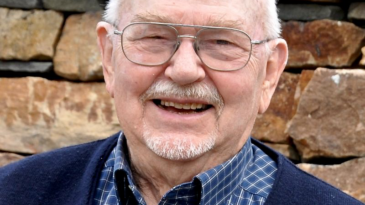
Just twenty-five years ago, the Presbyterian Church in the United States (PCUS) and the United Presbyterian Church in the United States of America (UPCUSA) reunited at a meeting of their General Assemblies in Atlanta, Ga. -- to the joy of many! We should remember and celebrate this occasion. We should use it also to recall our Presbyterian past of divisions and unions over the centuries.
I had been a member of the southern Presbyterian church for ten years when, in 1954, two great issues confronted its General Assembly: (1) After our separation of 1860, should we unite with the "northern" Presbyterians? (2) Should we resolve to support the desegregation of this country's public schools?
In that spring an official "yes" to the second question was on its way to Assembly vote from its Church and Society Committee. Ironically, just before the GA came the Brown decision of the U.S. Supreme Court. Ever after, southern Presbyterians were given little credit for that "yes."
Celebrating the 25th anniversary of that June 1983 day in Atlanta when the northern UPCUSA and southern PCUS became the reunited Presbyterian Church (U.S.A.) is a time, not of nostalgic indulgence in a past that once was, but a time to engage in honest reflection on how far we have come in fulfilling the dream that brought us together and see how far we have yet to go in becoming a new Church.
First, denominational reunion would never have taken place in 1983 had it not been for the creation and existence of eighteen union presbyteries between 1970-1983, once called "the most unique phenomenon in North American Presbyterianism." The constitutional changes that made their creation possible were achieved under the win-lose polity of majority rule with close majority votes.
Who can imagine how the things we call ideas live in the world, or how they change, or how they perish, or how they are renewed?1
Marilynne Robinson's question frames an essay on Montreat as a place of significant Christian influence in the Presbyterian Church in the United States, and since reunion, also in the Presbyterian Church (U.S.A.). The Conference Center in this privileged Presbyterian village near Asheville, N.C., has experienced rebirth in the past few years. Under the leadership of George Barber, an accountant who has just finished his tenure as president, the Conference Center (with the oversight of the Mountain Retreat Association Board) was put on a firm financial footing. More than $20 million in pledges and deferred giving have been secured for the Center during a time when General Assembly funding has dried up. That is a remarkable achievement in which the church can rejoice.
I was born into the United Presbyterian Church of North America (UPCNA), went to one of its six colleges, and was ordained after graduating from its only seminary, Pittsburgh-Xenia. In a sense, the uniting of the Presbyterian family in the United States became one of the hallmarks of my 50 years in the ministry.
In May 1950, our stated clerk received from the Presbyterian Church U.S. (PCUS) and the Presbyterian Church U.S.A. (PCUSA) "an invitation to unite with them in their program of acquaintance and cooperation and in the plan of union which they were jointly developing."
When reunion was an accomplished fact, and the dust and rhetoric surrounding it had settled down somewhat, a group emerged to question the way things were working out. They called themselves the "Genevans."
In the beginning, at St. Simons Island, Ga., in 1990, they didn't even have a name. Four presbytery executives, two of whom drifted away from the group later, invited participants in a conference on human sexuality to stay for an informative question-and-answer session after the conference.
Anniversaries are important to Presbyterians. It is often my privilege as stated clerk to send official certificates to Presbyterian congregations when they celebrate anniversary milestones. These requests have come in abundance in recent years, a sign that our congregations take seriously their heritage, want to reconnect to their founding dreams, and make fresh commitments to live them out in a new time.
© Copyright 2026 The Presbyterian Outlook. All Rights Reserved. Privacy Statement. Website by Web Publisher PRO