

The meditation for Lent IV on Jesus' healing of the blind man in John's gospel effectively opens the central question before our beleaguered, cacophonous church. The PC (USA) is in an identity crisis. Publications and websites put forward by numerous associations claim to know the truth and to have the truth, and the truths are as different as night and day. Such stubborn knowing (seeing) is appropriately called into question by Chris Chakoian's meditation.
It set me thinking about how our eyes are opened, and how we learn to see. In John's story, learning to see is costly for the man healed, for his community of faith -- and even for the disciples. It is not, pun intended, a pretty picture. The healing provokes judgment as well as grace, for the light, which in John is never extinguished by the darkness of the cosmos, reveals as well as it enlightens.
Rarely has a film captured my attention as did Hotel Rwanda. I recommended it to the congregation this past Sunday (1/30/05), something I've not done previously, and even declared that it should be required viewing in every school and college, beginning with Middle School. Hotel has no gratuitous violence or language. It is based on a true story, and those who wrote and directed it are to be commended, not only for making an excellent, suspenseful film, but also for bringing public attention in a mass market to the horrors of continuing genocide. In three months Hutus massacred 800,000 Tutsis, a horror that began immediately after a peace accord signed under the watchful eyes of Western powers. The Rwandan government, in the hands of a Hutu general following the president's flight into exile, did nothing to prevent the slaughter.
Good advice is readily available on almost every topic. But when it comes to our church I am not so sure.
Some speak to us in hearty voices assuring us that all is well. Others are more strident, drumming their cadences out as though calling us into a campaign. And some speak so quietly that it is almost impossible to tell if they have something to say at all.
One of the quietest voices is that of a relatively obscure Benedictine monk named Adalbert de Vogüé. He lives in the abbey of La Pierre-que-vive, and he has thought about The Rule of Benedict for nearly fifty years. He has really thought about it, not quite in the same way that we have thought about the Westminster Confession of Faith. First hearing it read aloud daily as a novice, once in Latin and then later in French, he has become as adapt at listening to it as a doctor with his stethoscope upon a bared chest.
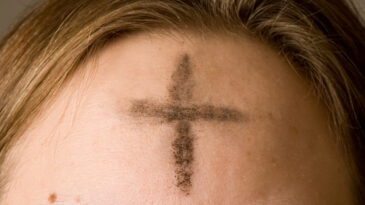
I walked down Grace Street in Richmond twenty years ago, and about two blocks away from St. Paul's Episcopal Church I began to see people with dirty foreheads: all sorts of people, some smartly dressed for work on their lunch hour, some rather shopworn and tired. It wasn't until hours later that I realized that the source of the "dirt" was Ash Wednesday worship, so distant was this day in the liturgical calendar from my Presbyterian experience. Now Presbyterian churches galore, including our own, have Ash Wednesday worship. We ministers smudge the foreheads of worshipers and say: "Remember that you are dust, and to dust you shall return."
We may look at the contributions of Shirley Guthrie to the Presbyterian Church, to the church catholic, to his students and colleagues, and to his family and friends from many angles. In the appreciative articles honoring him and his work, the Outlook, with the advice of his colleagues at Columbia Seminary, has represented those angles of approach to this profound thinker and teacher of great simplicity, who by God's grace (he would most certainly say) had a beneficent and transforming effect upon multitudes. Wherever his students preach and teach, Shirley's influence is spread to people in the pews, who themselves begin their own theological reflection -- even if they are shy to call it that.
Harrowing images assail us; newspaper reports tell of mega death, miraculous rescue, fragile hope. The peoples of earth offer assistance to nations devastated by earthquake and wave. No one asks how such a thing could happen in a world created by God.
We live with the uneasy assurance of science that unstable tectonic plates produced an earthquake eight times more powerful than the explosion of a hydrogen bomb. Yet what do we say about the Creator of the rolling spheres, and of the roiling deadly seas.
Therefore we will not fear though the earth should change,
Though the mountains shake in the heart of the sea;
Though its waters roar and foam,
Though the mountains tremble with its tumult. (Psalm 46:2 -- 3)
It is fitting for The Presbyterian Outlook to salute the Martin Luther King Jr. holiday by remembering what tireless advocates Dr. E. T. Thompson and Rev. Aubrey Brown were for racial integration and justice. (Thompson was the Outlook's first editor and professor of church history at Union Seminary in Virginia; Brown was editor from the 1940's to the 1970's.) This paper stood tall on these matters when such beliefs were dangerous to espouse.
When Thompson was tried for heresy in Mecklenburg (now Charlotte) Presbytery, everyone understood that the sub-texts of that trial, ostensibly about the faithful interpretation of Scripture, were his positions on integration and ethics. Because of the malign interweaving of biblical inerrancy with segregation in the South, people who agreed with Thompson and Brown were labeled communists by fundamentalist Presbyterians.

Two quotes I saved from a piece in the New York Times called "The New Designer Despair," take issue with a destructive tolerance that leaves souls shriveled and minds tired. The subject was education in moral judgment. The writer quotes the principal of his daughter's school: "We encourage our children by telling them that there are no bad ideas." He also references Modern Times by the English, Roman Catholic historian, Paul Johnson: "the church is the last place in the world where we make the distinction between good and bad ideas."
If the biggest, baddest, and best story of 2004 is religion, religion in politics and public life, then the designer despair generated by too much tolerance is gone. There are scores of religious people who tell us what is good or bad. The presidential election was shamelessly religious. Jerry Falwell ran a partisan voter registration campaign in countless congregations, and Democrats cast their usual nets into African-American churches.
As the first faint light of Christmas cast its imperceptible glow around the celebration of Thanksgiving, I preached and celebrated the Lord’s Supper in the renovated chapel at an ecumenical Christian community, Richmond Hill.
With this issue The Presbyterian Outlook introduces the columns of Ron Ferguson, who was a journalist before attending divinity school and becoming a Presbyterian minister. He studied at St. Andrews, Edinburgh, and Duke Universities. Ron began as a pastor in a huge public housing area in Glasgow, Scotland, called Easterhouse (a place more like Gethsemane and Calvary than Easter).
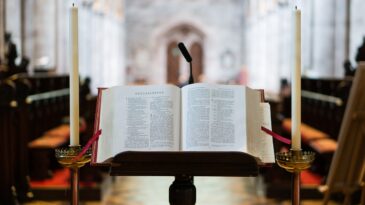
Reformation Day (which this year – perhaps too appropriately – fell on Halloween) provides a needful occasion on which to reflect on the role of Scripture and preaching in the Presbyterian Church. The matter is made urgent by the recent election that sacrificed (at a cost of 600 million dollars on the presidential race alone) substantive debate about the serious issues before this republic on the altar of entertainment, spin, and downright dirty lies.

It’s clearly possible that we Americans need to distinguish between what has been given us by the hand of Almighty God, and what we have wrested by exploitation from others who were in this land before we were, as well as from those who were brought to the ‘New World’ against their wills and purchased by us, and as our property made enduring contributions to our national wealth. Thanksgiving is a peculiar American holiday.
I planted, wrote Paul to the Corinthians, Apollos watered, but God gave the growth. (I Corinthians 3:6)
This image of the church is a flourishing plant, a living organism with deep roots, firm foundations, and tender branches. I am concerned about the tender branches, especially as they matriculate each year in church conference centers.
A faithful Presbyterian missionary, fresh from the mission field, asked this question in a new member class in a neighboring congregation. She was disturbed at the silence of the mainline church in the face of 9/11, the war on terrorism, and the invasion of Iraq.
The first duty of responsible citizenship is prayer – even before we wind our way into the voting booth. Timothy’s mentor gave him this advice: “I urge you that supplications, prayers, intercessions, and thanksgivings be made for everyone, for kings and all who are in high positions, so that [the Christian community] may lead a quiet and peaceable life in all godliness and dignity.” [I Tim. 1 – 2]
Hundreds of thousands of non-Presbyterian Christians, Palestinians, Israelis – and stockbrokers – now know how to “spell Presbyterian.” Not long before, when the 216th General Assembly convened in Richmond, Virginia, that was not the case. The first report I received about the Assembly’s actions regarding Israel: ending construction on the security wall, studying the possibility of divestment, and the funding of Avodat Yisrael (the messianic Jewish congregation in Philadelphia) was from a church member who picked up a distorted, scurrilous story on the Internet.
In March, a letter came from the Editor and CEO of The Layman, Parker Williamson, requesting that The Presbyterian Outlook “publish corrections and apologies for erroneous statements made in two of our editorials, titled “Ministry of Fear” (January 26, 2004) by John Sniffen, former Associate Editor of the Outlook, and the editorial, “Addressing the Issues” (March 22, 2004) by Interim Editor O. Benjamin Sparks.
Our moderator, Rick Ufford-Chase, is urging the church to take risks, to "get in the boat with Jesus." One of the risks he encouraged sent chills down the spines of some seminary presidents. He called for sacrifice. He believes pastors are paid too much, and that we need to learn, alongside Hebrew and Greek, a living language such as Spanish or Korean.
One of the "holy moments" on the floor of the 216th General Assembly came when the minority report on Authoritative Interpretation became the majority vote by only four votes. There was a spontaneous moment of silence, prompted by the sadness of those who had prayed and worked for the majority report which would have invalidated the 1970s authoritative Assembly statements. There was also the humble recognition by everyone present who saw how deeply divided our church remains on the issue of ordination.

There is an invitation on The Outlook Web page inviting guest viewpoints on the war in Iraq, in response to the reports of torture and abuse in the Abu Ghraib prison in Baghdad. One of you remarked that I had not declared where I stand.
This editorial is a declaration, taking its cue from the Ascension of Jesus into heaven, where he sits at the right hand of God, and shall come to judge the living and the dead. For (1 Corinthians) Christ must reign until he has put all his enemies under his feet. The last enemy to be destroyed is death.
Do you need to be told that even such modest attainments
As you can boast of in the way of polite society
Will hardly survive the Faith to which they owe their significance?
— T. S. Eliot, choruses From "The Rock"’
There is division among us over what constitutes authentic Reformed worship. I have witnessed this firsthand while — as moderator of the worship planning work group for the Committee on Local Arrangements for the 216th General Assembly — balancing competing demands of representation and inclusivity for the Assembly in Richmond in four weeks. The variety of Presbyterian worship today is extraordinary. We’ve made choices.
I first encountered African Church hostility to our debates over ordination in 1998 from the courageous editor of the Presbyterian Church of Ghana’s newspaper. He and I talked of many things, not least of which was the fact that for years his was the only voice in Ghana that spoke truth to power. He was hounded, threatened, and would have been shut down, had his funding not been from the Presbyterian Church. A Reformed Christian, he was a tireless advocate of freedom of the press.
A couple of years ago an elder at Second church, Richmond, introduced himself, saying he and his wife had lived in Rich-mond for over 30 years, and felt at home in a place they had come to love very much. Then he said, "I know that for many of you, that’s no more than a long weekend." It’s true. We don’t forget history or lineage.
What, besides God’s Spirit, God’s providence and God’s purpose for the PC(USA), will hold us together in a recognizable form through the next 20 years? Does God need the PC(USA) to continue to make a Reformed witness that has been our hallmark since long before John Witherspoon signed the Declaration of Independence?
© Copyright 2026 The Presbyterian Outlook. All Rights Reserved. Privacy Statement. Website by Web Publisher PRO