


The media have been full of stories and commentaries on the water landing of a US Airways passenger jet that resulted in no fatalities, and few serious injuries. Often, almost too often, the outcome of this potential mass tragedy has been proclaimed to be a miracle. One commentator said that the happy ending was the result of a series of small miracles.

Two recent and very ordinary events have set me thinking about a New Year’s resolution that might just be worthwhile for us..
She was birdlike and petite, with a hawk nose and an attractive smile. She was routinely mocked in parliament by big angry men shouting "Go back to Moscow" or "Go back to Israel." Yet this indomitable Jewish woman could make strong men tremble. Oh, and she helped break down the walls of apartheid in South Africa.
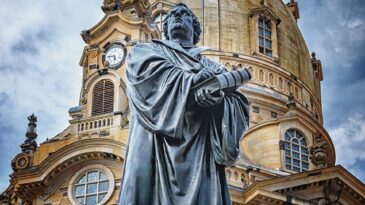
Where better to turn for a source of New Year’s resolutions than the Ten Commandments? Martin Luther’s exposition of the Eighth Commandment*..
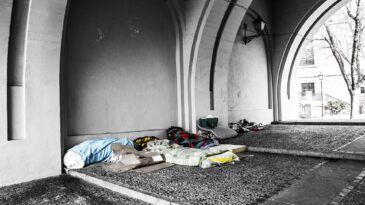
From the time of Christ, his followers have struggled to recreate a wholesome life and community that reconciles each of us to one another and to God. Instead of reconciliation, however, we frequently find ourselves trapped by circumstances that limit our capacities to be free to love, to live a life rich with possibilities, and instead, find ourselves isolated and broken.
“Doubt” opens with the parish priest, Father Flynn (Phillip Seymour Hoffman) delivering a brief, eloquent homily about doubt. This is the 1950s, and the well-dressed, clean-scrubbed congregation sits in rapt attention, in part because Sister Aloysius (Meryl Streep) is the self-appointed behavior modifier.
(ABP) -- On Nov. 12, in a front-page story, the Atlanta Journal-Constitution broke the news that the Georgia Baptist Convention has approved a new policy giving GBC executives the freedom to refuse donations from churches it finds to be out of step with Southern Baptist beliefs. The policy move is aimed (for now) at First Baptist Church Decatur, because it called a woman, Julie Pennington-Russell, to serve as pastor.
I had been pondering it all summer, but it didn’t hit me full force until I saw it juxtaposed so starkly. There, lying on my nightstand, were two bookmarks. Not exactly earth shaking, I hear you say. True.
After a blood-gushing fight to the end, a 389-year-old U.S. monster perished Nov. 4, 2008.
Yes, American slavery finally expired.
Of course, in 1865, when most states ratified the 13th Amendment, Congress had declared it dead. Mississippi's legislature was the holdout, managing to delay ratification until 1995!
(RNS) NEW YORK — Here in America’s financial capital, Sunday (Sept. 14) was normal in most respects. Streets were filled with shoppers, parks with strollers and picnickers, and homes with people watching the Jets lose and the Giants win. But our always-on communications brought a steady stream of sobering news from emergency talks on Wall Street.

In the midst of chaos strong leaders take time to see beyond worrisome symptoms and distressing situations by recognizing emerging opportunities and rising leaders.
SAN FRANCISCO — In just a few weeks since the end of the218th General Assembly, it is safe to say that serving as moderator already has been an incredibly meaningful experience.
When it comes to policy issues related to Israel/Palestine, the 2008 General Assembly made significant movement back toward the positive, prophetic peacemaking approach the Presbyterian Church (U.S.A.) employed prior to 2004. This is a good thing.
I think the 218th General Assembly which met in California should be called “The Oprah Assembly.” It was so postmodern. So open. So culturally attuned. So worldly. So tolerant. Just so “Oprah.”
June was a month of excitement for me. I was excited about the new call I received, I was excited about returning to California, for I had been in Iowa for the last seventeen years, and I was excited because the timing of my move coincided with the General Assembly in San Jose.
SAN JOSE — “It is no accident that the Committee on Peacemaking and International Issues takes so much time,” said outgoing Stated Clerk Clifton Kirkpatrick.
The initial reactions to the Authoritative Interpretation of G-6.0108 approved by the General Assembly in San Jose were dramatic. Some were rejoicing, others despairing, because they believed that the General Assembly, in approving the overture submitted by the John Knox Presbytery, had removed the impediment to the ordination of non-celibate gays and lesbians that had been declared by the General Assembly Permanent Judicial Commission in the case Bush v. Presbytery of Pittsburgh.
Editor’s Note: This sermon was preached recently at First Church in Dubuque, Iowa. The Scripture references include Psalm 146:1-7, Romans 13:1-7, and John 18:33-38a.
By way of disclosure, I am well into my 74th year, and have been a Presbyterian all of my life, first in the old Northern church, then the United Church in the North, then the old Southern Church, then the Northern Church (in the South), the Southern Church (in the almost North), and finally our present Presbyterian denomination. I have served as a deacon in two of those denominations, and a pastor in three of them. I was raised in a congregation with history that stretched back to the early 1700s, and in my teenage years I was
"Women Blaze an Interfaith Trail: Two teachers become first Jewish female and first Muslim female to receive advanced degrees from Catholic Theological Union," and "She's First Jewish Graduate of Catholic Theological Union" were headlines in The Chicago Tribune and The Chicago Sun-Times on May 15.
On May 15 the California Supreme Court affirmed the rights of same gender couples to the legal protections and responsibilities of marriage. Not coincidentally, in 1948 it was the California Supreme Court that first extended equal protections to interracial couples — a full sixty years ago, twenty years before Loving v. Virginia declared all miscegenation laws unconstitutional. The ruling will go into effect thirty days after the decision.
One colleague calls it "Amnesty April." Others call it "data cleanup" and "data scrubbing."
Whatever the name, this month at the church I serve we will initiate a thorough cleanup of our membership data. That may seem a small and mechanical matter, but I think it cuts to the heart of what we do.
Baseball is often rhapsodized as a religion in America. It makes sense then that Yankee Stadium is a stomping ground for popes.
The only two who have set foot on U.S. soil have celebrated Mass in the Bronx, in the most famous sports arena this side of the Colosseum.
On April 20, Pope Benedict XVI was set to become the third.
The crisp, hot, late afternoon sunshine in Nicaragua is perfect for playing baseball. Who might want to play?
We notice that the construction crews seemed to finish up the day's work with a bit more energy and gusto; several of them asked me as the work for the day wound down, "Baseball?" Just that one word, with their deep Spanish language accent, and the interrogative lilt rolling up at the end, turned a word into a question. "Si," I would readily reply, wondering what I was getting myself into.
Recent studies indicate that only about half of our church members grew up Presbyterian, and many of these left our Presbyterian congregations during their teen years only to return later as they begin to establish families. As a result, an understanding of our Presbyterian heritage and the tenets/themes of our Reformed faith is not part of the background or memory of most of our members.
As folks make a commitment to the ministry of teaching children or youth, they often come to the task with a sense of call, a love for young people, a desire to pass along the stories of our faith, and an earnestness to teach with creativity and age appropriateness. However, many are unaware that being Reformed implies particular things about the ways that we teach the children and youth in our care. To that end, we look to the major tenets our tradition to consider how they inform our teaching.
© Copyright 2026 The Presbyterian Outlook. All Rights Reserved. Privacy Statement. Website by Web Publisher PRO