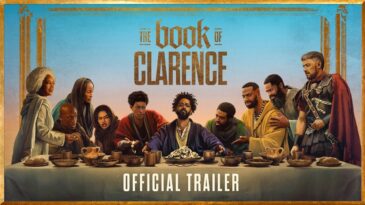
Normally, I automatically recoil when I hear cuss words come from the mouths of children in films, especially when only used for shock value, or a cheap laugh at the incongruity (of course, the more it’s used, the less incongruous it is).
One of the reasons for the high popularity of Stephanie Meyer’s storytelling is that she manages to establish and maintain many tensions at once. And that’s a big reason the movies based on the books work so well too.
by Benjamin T. Conner Wm. B. Eerdmans Publishing Co. Paperback. 129 pages
reviewed by JEFF KREHBIEL
Two of the most important movements in the mainline church in recent decades have been the focus on Christian practices represented by the Valparaiso Project on the Education and Formation of People in the Faith (represented by Practicing Our Faith, 1997), led by Dorothy Bass and Craig Dykstra, and the emergence of “missional” theology out of the Gospel and Our Culture Network, led by Darrell Guder and George Hunsberger (represented by The Missional Church, 1998).
by Timothy Beach-Verhey Baylor University Press, 320 pages
reviewed by ROGER J. GENCH
In this fine book on public theology, Timothy Beach-Verhey seeks to find a way for American Christians to contribute to public discourse without seeking to dominate it (as in the past) or to accommodate to its assumptions (our current temptation).
by Nicholas Wolterstorff Wm. B. Eerdmans Publishing Co. 282 pages
reviewed by DAVID LITTLE
Sometimes, a book comes along that entirely reshapes consideration of a key topic in theology and philosophy. Such a book is Nicholas Wolterstorff’s “Justice in Love.”
by Allister Sparks & Mpho Tutu HarperOne. 368 pages
reviewed by CAMERON BYRD
Toward the end of this book, written on the occasion of Bishop Desmond Tutu’s 80th birthday, the authors raise this question: “What kind of person do we have here in this humble high school teacher who became a lukewarm priest and eventually grew into a turbulent peace activist and Nobel Laureate (1984) and is now entering his octogenarian years not just as a man for all seasons but for all faiths and all humanity?”
A Sense of Being Called by Richard Stoll Armstrong Wipf and Stock Publishers. 192 pages.
reviewed by MELANIE HAMMOND CLARK
I was in the ninth grade, in the last few weeks of communicants/confirmation class, and the new senior pastor of our 2,700-member congregation came to get to know us and to let us know him.
Natural Saints: How People of Faith are Working to Save God’s Earth by Mallory McDuff Oxford University Press. 240 pages.
reviewed by BENNETT
“Natural Saints” is both a memoir and a record of actions taken by Christians around the U.S. to protect the environment and provide a sustainable future.
What if William Shakespeare’s plays were not really written by the sometime actor? What if, instead, they were penned by Edward de Vere, Earl of Oxford? And if so, why the subterfuge?
Why do a CSI movie when there’s so much of that already on television? Well, maybe because you have a more complex story that takes longer to develop, and maybe because you can sustain a gritty mood with more subtle artistry.
There are many good books. The number of great books is drastically fewer, but when a reader finds one, we sense within a chapter or two that the book we hold in our hands is something special.
by Jean F. Risley WIPF and Stock Publishers. 141 pages.
The last several years have seen a bevy of books extolling the virtues and enumerating the challenges of small-church ministry, such as Jason Byassee’s “The Gifts of the Small Church” and Brandon O’Brien’s “Strategically Small Church: Intimate, Nimble, Authentic, and Effective.”