
Both are about people dealing with grief and emotional displacement. Both are about how easy it is to say, 'You need to move on with your life,' and how difficult that is to do. In both, the hardship comes in unexpected places, and so does the relief. In both, the redemptive part is how people love one another.
c. 2007 Religion News Service
Of all the actors, athletes and hip-hop performers venerated by urban teenagers in Southern California, most improbable of all, perhaps, was a 13-year-old girl by the name of Anne Frank.
So goes the inspiring story behind "Freedom Writers," a recent movie starring Hilary Swank. The film's Jan. 5 release was timed to precede the nation's commemoration of another figure in the ongoing fight against racial prejudice: Martin Luther King Jr.
Both are about people struggling to survive in a hostile environment. Both are about people who start out very awkwardly, but slowly learn to care for each other. Both are about experiencing racial discrimination, both overtly and covertly. Both are about learning to succeed in small but important ways, like relying on hard work, and refusing to be beaten down, and withstanding the criticism and rejection of others. Both are about taking pride in one's own story, one's own struggle, one's own life. Both are about gaining respect by maintaining dignity, integrity, and self-reliance. Oh, and getting by with a little help from your friends.
'Talladega Nights: The Ballad Of Ricky Bobby': This bumpy-ride lowbrow comedy about a race car driver (Will Ferrell) contains a startlingly frank and lengthy discussion at the dinner table about prayer. Is it OK to pray to 'baby Jesus'? Or must we address a 'full-grown Jesus with a beard'?
'You have heard that it was said, 'You shall not commit adultery.' But I say to you that everyone who looks at a woman with lust has already committed adultery with her in his heart.'' (Matthew 5:27-8)
Maurice (Peter O'Toole) and his best friend Ian (Leslie Phillips) are two old English stage actors who meet for breakfast regularly at their favorite café, sometimes with other friends. They accompany each other to the theater. They look after each other, and frequently enjoy cocktails together in the early evening. Though Maurice is married, he doesn't seem to spend much time with Valerie (Vanessa Redgrave). Oh, he wanders over to visit occasionally, and they talk like old friends. Sometimes he gives her money, when he's had a little acting gig, maybe playing a dying man on a television hospital drama.
Reviews of 'Dreamgirls' and 'Home of the Brave'
Jeff Lipsky, director of the film, "Flannel Pajamas" is interviewed by Ron Salfen, OUTLOOK film reviewer.
'Déjà Vu': The problem with time-travel movies is that the logic always breaks down somewhere. So it is here. We want to root for Denzel Washington, the likable detective, and his impossible romance with Paula Patton, the once-and-future victim, but the time-warp theory gets, well, warped.
'The Pursuit Of Happyness': We've also seen the Dad-struggles-to-raise-his-son-by-himself movie. Because this one is based on a true story, and because Will Smith is playing the primary character with his real-life son, Jaden, this one has a very authentic feel to it. But the screenplay is a slow spiral downward for two hours, followed by a few moments of triumphalism at the end. Yes, we get to walk out relieved, but most of the experience is, well, not one of 'happyness.'
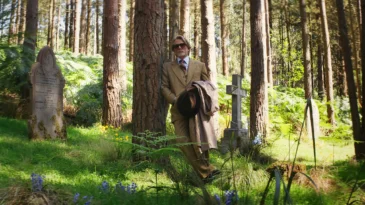
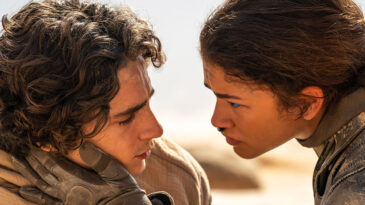
One is set in modern-day England, the other among the ancient Mayans, just prior to the time the Spaniards arrived. Both are about 'nice' people who encounter outlaws. In both, the characters' ordeal is such that nothing will be the same for them afterwards. In both, a startling revelation alters the whole paradigm. In both, at the end, the main characters are desperately clinging to a love fiercely tested.
What was it like in Berlin, in the summer of 1945? In "The Good German," we get a surreal glimpse, and the picture isn't pretty.
There's rubble everywhere. Bombed-out buildings are part of the landscape, as are the gaunt faces, the food lines, and the palpable smell of despair. The Allies have already partitioned the defeated city, and the rifts between them are already swelling to the surface, even as the Potsdam Conference decides how the victors will divide the spoils.
Editor's Note: On November 26, the film, "The Nativity Story", will become the first feature film ever to premiere at the Vatican, in Vatican City (Rome), Italy, reports Religion News Service. It is scheduled for a December 1 release in the United States. The premiere will be held at the Vatican's Aulo Paolo VI (Pope Paul VI Hall) with 7,000 invited guests. The event is a benefit, with contributions going toward construction of a school in the village of Mughar, Israel, located approximately 40 kilometers from Nazareth, which has a diverse population of Christians, Muslims, and Druze.
Ron Salfen, Texas pastor and OUTLOOK film reviewer, had a chance to attend an advance showing of the film and interview the film's director, Catherine Hardwicke. His review is posted along with this report. Here is the interview:
Outlook: First, let me be a non-typical critic, and tell you that I really liked your movie. I thought it was fantastic.
CH: Thanks very much. You know, I grew up Presbyterian. ... I grew up in First Church in McAllen, Texas. Now my parents have moved to Bend, Ore., but they go to the First Presbyterian Church there, and my Dad still sings in the choir.
Outlook: You've chosen to combine the accounts of Matthew and Luke, and at the end, the manger scene looked like a lot of Nativity sets, with all the characters huddled around the cradle.
CH: Yes, that was our nod to popular imagination, and what we knew people would expect.
It's not easy to make a movie about the birth of Christ. If you're too literal, it feels like an awkward bathrobe play, and even the Gospels themselves contain commentary. Besides, what to do about the different ways the Bible itself presents the story, and how about the prophecies leading up to the birth of the Messiah? Which to utilize? And how about the background music? Is it going to be "authentic indigenous," or Gregorian chant, or traditional hymnody, or contemporary "soft rock"? And how about the biblical characters? Are they going to be stentorian; stiff and awkward, and perhaps somewhat filled with a sense of self-importance? Or are they just going to be "ordinary people," and how do you manage that with a Hollywood cast?
How important are the stories we carry in our hearts! They guide our lives and nurture our growth. Evelyn Fulton, a lifelong advocate for women and the first woman to graduate from Pittsburgh-Xenia Seminary in 1949, recalled: "My mother, and my father, too, always said 'You can do anything you want in this world.'"
For the past two years--2005 and 2006--we women have been telling our stories. We have laughed, cried, and been amazed again at what God has called us to do. In our stories is the history of the Presbyterian Church opening its ministries to women.
On the DVD, "Women's Ordination: Past, Present & Future," thirteen of these wonderful women tell their stories. They all eventually became successful as pastors, executives, community leaders, moderators, and theologians, but it was not easy. The DVD was produced by the Women's Ordination Mission Team of Chicago Presbytery to be sure these women's stories can be an inspiration to a new generation of women and men.
This is a tough movie to sit through. "Intense" is an understatement. It brings back all the horror, puzzlement, and shock of 9/11, and then it becomes oh, so personal.
John McLoughlin (Nicolas Cage) begins this day like any other: awake at 3:30 a.m., he stumbles to get dressed in the dark without waking his sleeping wife (Maria Bello). He quietly looks in on his four children, all snug in their beds, before he takes the George Washington Bridge into the City, where he works as a Port Authority policeman. He's a veteran sergeant. He sees himself as a true professional: someone who rarely smiles, who is all business. He thinks that a certain amount of distance from his men is necessary for them to maintain proper respect for his rank."
Three movies, three very different cosmologies. And all the heroes must risk life and limb to even make it to the end of the story.
The "Miami Vice" television show of the 80s featured "cool" actors playing laconic, iconic homicide detectives in a Miami filled with pastel colors, sun-splashed beaches, and upscale private harbors. Sunglasses required, jacket optional, repartee sparse.
"An Inconvenient Truth" is an hour and a half of preaching. That is, it is Al Gore preaching to us about the impending crisis of global warming. Mr. Gore has all the current statistics displayed by all the latest technologies, and he's shown speaking before packed-to-overflowing houses of attentive and empathetic listeners, appealingly designed to emphasize youth and include several minorities. (This is the kind of congregation we would all love to have on Sunday mornings.) There's no hymn singing, though, and no praying, just clear-eyed, somber warnings about the impending disasters, complete with dire predictions of floods, hurricanes, tornadoes, drought, and other natural disasters (see Matthew 24:7).
For the churchgoing Christian, there's plenty to like about "The Da Vinci Code": The whole time, people are talking about the faith. The important places are locales like museums, libraries, and sanctuaries. Knowledge of ancient languages, (Western) history, culture, and art is essential. And it's oh, so literary, even to the point of playing with words, so that the keys to the puzzles lie with being able to figure out the clues within the words. Just delicious.
Ah, but for the churchgoing Christian, there's plenty not to like, as well.
Both films feature, prominently, the country's president--a fit, trim, handsome, well-dressed, well-manicured white man somewhere in his 50's. Both feature terrorist plots against the president. In both, the terrorists themselves are somewhat shadowy foreign figures whose motivations are uncertain, but seem more political than personal. In both, an affair not only undercuts the integrity of the participants, but puts everyone else at risk, as well. One is a deadly serious drama and the other a completely satirical goof, but both have somber, sober, cynical undertones.
"Tsotsi" means "thug" in South African dialect. Tsotsi (Presley Chweneyagae, in a remarkable debut) is a thug, all right, from the slums of Johannesburg. He glares constantly, as if always boiling with rage. He is cruel, violent, and humorless. He surrounds himself with other thugs, and together they go to the central train terminal, where they find their victims. They rob people who are unguarded enough to flash a wad of bills when they are paying for a newspaper. When they return to their slums, they spend their stolen money gambling at dice, and when it runs out, they go steal again. Tsotsi seems to be practically unredeemable. And then something unexpected happens.
Both are about journeys from the cosmopolitan United States to the jungles of another continent. In both, the central characters are nice, trusting, non-violent, and affectionate. In both, the first foray ends in great disappointment, but perseverance pays off when the second attempt succeeds. In both, there is a kind of determined optimism, almost to the point of suspending disbelief. In both, love triumphs, but it's not always romantic love that matters, but the genuine caring that binds one being to another despite their unlikely alliance.
Three things are too wonderful for me; four I do not understand: the way of an eagle in the sky, the way of a serpent on a rock, the way of a ship on the high seas, and the way of a man with a maiden. (Proverbs 30: 18-19)
There's a decided disadvantage to making a movie of a play. It's probably going to look "staged"--lots of conversation, lots of character interaction, plot development through dialogue, but it all feels confined to tight quarters. There are a couple of decided advantages, though, of converting a successful play into a movie: the snappy repartee is already audience-tested, and the ending is going to feel like a finale.
"A Good Woman" is based on Oscar Wilde's 1892 play, "Lady Windermere's Fan." There's a mature kind of jocularity here, as if it's the older folks who are funny, intelligent, and wise, and the younger folks are physically handsome, but tend to be victimized by their own immaturity, ardor, and impulsiveness. But, of course, there's no fool like an old fool, and the young have to be prevented from being impaled by their own principles.
It's 1965. Vietnam was on television, and so was Lyndon Johnson. Martin Luther King Jr. was leading the Civil Rights movement, and racism in America was both subtle and overt, particularly in the Deep South. Bouffant hairdos. Motown sound on the radio. And college basketball was a white man's game.
It's not that there weren't some black players. But the ones who toughed out the taunts from the stands had to endure the unwritten expectations of Division One competition: You can play one black at home, two on the road, and three if you're desperately behind. But a whole team of blacks would be undisciplined, would only be capable of the "playground" game, no teamwork, all "showboating."
Don Haskins was a successful high school girls' basketball coach. Sure, he had dreams of coaching a men's program at the college level, and he was amazed when he was offered the position at Texas Western (now the University of Texas at El Paso). He didn't realize they had no recruiting budget, little talent to work with, and few expectations even of itself. He set out to change all that. He wanted to go recruit some good players. So he scoured the playgrounds, not only in Texas, but also in places like Gary, Indiana, and Harlem. He told those black kids that if they followed his program, they would play. And so a dedicated group of seven black players all accepted scholarships. And Haskins (played capably by Josh Lucas) went about trying to shape them into a team.
It's an old story: aging widow is left with lots of money and little to do. She tries needlework, charity work but finds the other old biddies dreary and tiresome. She definitely doesn't want to be like them. She visits the grave of her only son, who died at 21 years of age on some field in France, fighting the Germans. His headstone is in the middle of a neat, crowded row of other headstones, silent, mocking monuments to the "War to end all wars."
Laura Henderson (Judi Dench) has a car, and driver, furs, an elegant estate, and all of one lady friend. She's sharp-tongued, sharp-witted, and is often construed as rude, selfish, and eccentric. She's also bored to tears. She desperately needs an occupation, and could really use a cause.
One day she happens upon an old, closed-down theater called "The Windmill." It's London, during the Depression. On a whim, she buys it. She then contracts with a local out-of-work but experienced manager, Vivian Van Damm (Bob Hoskins). They like each other because every time they meet, it's a clash of wit and will. It gets the blood pumping for both of them.
Oh, and they hit on a formula that keeps the blood pumping for their patrons. It seems that the Windmill Theater initially enjoyed significant success with the modest innovation of the continuous musical revue. But then, all the other theaters copied them, and they were no longer unique. Sales slumped. Mrs. Henderson quite seriously suggests to Mr. Van Damm that a true innovation would be if their girls were nude. Mr. Van Damm acts shocked, but can't help but be intrigued by the idea. He says the authorities would never allow it. It turns out that Mrs. Henderson knows the particular government administrator, and she wears him down with her bargaining technique, until he finally allows it, but only if the women in question are completely still, like a sculpture in a museum.
The long-term appeal of "King Kong" is the unique dynamic of the Beast being attracted to Beauty, as she brings out his softer, gentler side. In this re-make, the Beast protects her, enjoys a sunset with her, laughs with her, and is even playful with her. But, of course, he's too brutish to survive in this world, because he's too much of a threat to others.
This version of "King Kong" is set in the 1930's, like the original. It's actually three movies of one hour each: the prelude and the voyage, the island, and the return.
© Copyright 2026 The Presbyterian Outlook. All Rights Reserved. Privacy Statement. Website by Web Publisher PRO