“Deconstruction” is a buzzword lately. Exvangelicals are deconstructing the faith of their childhood. Feminists are deconstructing narratives of biblical womanhood. Queer people are deconstructing complementarian interpretations of Scripture.
The term evokes the painstaking work of pulling apart harmful ideologies — dismantling a wall, brick by heavy brick.
But deconstruction assumes there was construction first.
For many, faith was something we inherited, passed down like a family heirloom, often without much examination. We accepted the God of our parents, the theology of our childhood church, erecting the scaffolding of our worldview before we had the tools to question them.
I still remember walking into my first seminary class, confident in the faith I’d carried since childhood. But my foundation was about to face an earthquake.
My professors didn’t want me to recite doctrines; they wanted me to wrestle with them, consider the historical context of Scripture, explore interpretations, sit with contradictions I’d glossed over. It was disorienting and difficult, and I doubted I was up to the challenge. My head ached from the weight of new questions. But I kept going, maybe because one of the beliefs I’d inherited was “finish what you start.” I examined each belief, doctrine and interpretation and asked: Do I believe this? Why? What does this say about the God I am choosing to follow?
Somewhere in that rubble of questions, I was constructing my faith for the first time. Not inheriting or blindly accepting, but building thoughtfully, brick by brick.
I’d started seminary immediately after finishing college, still identifying more as an athlete than a scholar, and it helped to think of my brain as a muscle: weak and sore at first, but stronger with exercise. The more I engaged in theological thinking, the easier it became.
That education taught me how to recognize harmful theology when it crept into the pulpit or the public square — whether Christian nationalism masquerading as gospel truth, patriarchy dressed up in proof texts, or binary thinking that shrinks the beauty and diversity of God’s creation.
But here’s what worries me: theological education is under threat.
Religious studies programs (all the humanities, actually) are being slashed from colleges and universities. Seminary enrollment is shrinking. The spaces where people can learn to think deeply about God, Scripture and the moral imagination are disappearing.
And yet, religion is everywhere, shaping our politics, communities, cultural conflicts and hopes for the future. I recall hearing interfaith leader Eboo Patel say, to an audience of college administrators, that if we are not preparing students to cooperate across religious differences, then we are failing to equip them for today’s realities. How much more urgent is it, then, to nurture places where people can learn to engage religion with wisdom, humility and courage?
I love how my Presbyterian tradition values education. Presbyterians founded colleges across this country — not just to educate pastors but as an act of social uplift, to liberate and transform lives. Our seminaries have been where future leaders are stretched, challenged and prepared to serve in ways that honor the complexity of God’s world.
As we lose those spaces, the responsibility to form theological imagination shifts to our congregations. Are our churches prepared to cultivate spaces of deep learning, curiosity and construction for all who long for a faith that can hold in the midst of a changing world?
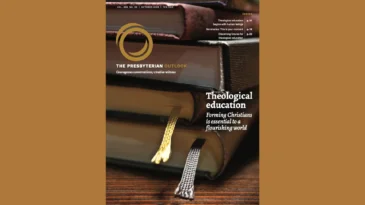
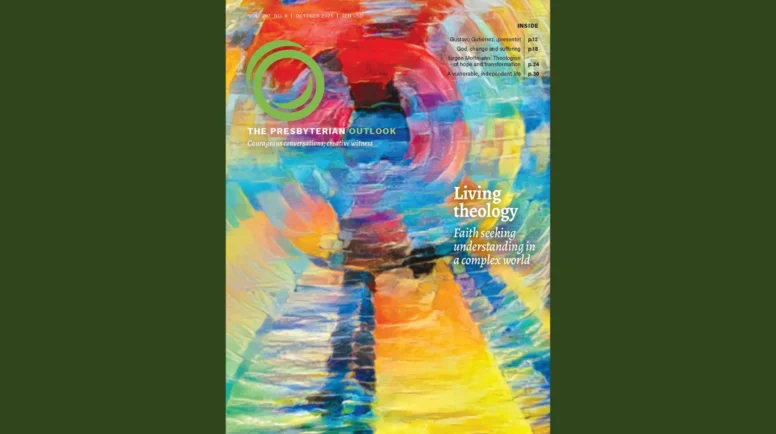
Theological education, whether in seminary classrooms or adult discussion forums or story times for children or the essays in this issue of the Outlook, gives us the tools to discern what is true, to dismantle what is harmful, and to build what is good. It helps us move from the shaky ground of inherited assumptions toward a faith that is lived, thoughtful and alive.
When it is tempting to settle for simple answers, we need theological education. We need it so we can keep asking better questions. We need it so we can keep building, brick by careful brick, a faith worth passing on.