

From the time of Christ, his followers have struggled to recreate a wholesome life and community that reconciles each of us to one another and to God. Instead of reconciliation, however, we frequently find ourselves trapped by circumstances that limit our capacities to be free to love, to live a life rich with possibilities, and instead, find ourselves isolated and broken.
‘Tis a sign of the season: Brunswick, Ohio, cancelled its holiday lights display due to a lack of money. Snowflakes normally hung from the downtown light poles stayed in storage for possible use next year.
“Doubt” opens with the parish priest, Father Flynn (Phillip Seymour Hoffman) delivering a brief, eloquent homily about doubt. This is the 1950s, and the well-dressed, clean-scrubbed congregation sits in rapt attention, in part because Sister Aloysius (Meryl Streep) is the self-appointed behavior modifier.

As I have gotten older, I have shifted one hundred eighty degrees in my attitude toward the penitential seasons of Advent and..
The congregation’s membership ministry starts with recruitment and retention, but it must push on to transformation.
'Tis the season for looking back
As the worsening recession spreads dislocation, church leaders face increasing pressure to do more with less.
His initial words seemed so harsh, but the others’ response was stunningly gracious. Now, together, they have become conversation partners, and an avenue toward peace may result.
When a congregation launches a Church Wellness Project, voices telling the old stories come first. Some are negative, some are fond reminiscences, some are reminders of “how we used to do things,” and some are one more try at getting an idea or need on the table.
Day-after reflections of an election may sound dated when you read them a couple weeks later. That being said, now that you’ve heard numerous pundits’ two cents’ worth, the mail delivers a mainline Presbyterian editor’s two cents’ worth. That is to say, I write as one who aims to obey God’s will as revealed in the inspired words of holy Scripture, as one who has a passion both to evangelize the world and to promote justice, as one who promotes the ministry of reconciliation and connectionalism, and as one who above all aims to glorify God. All this is motivated by living in the hope, the audacious hope, of the resurrection.
(ABP) -- On Nov. 12, in a front-page story, the Atlanta Journal-Constitution broke the news that the Georgia Baptist Convention has approved a new policy giving GBC executives the freedom to refuse donations from churches it finds to be out of step with Southern Baptist beliefs. The policy move is aimed (for now) at First Baptist Church Decatur, because it called a woman, Julie Pennington-Russell, to serve as pastor.
In a congregation getting started on a Church Wellness Project, teams are preparing to gather information from their fellow members. They will interview young adults, newcomers who joined, visitors who didn’t stay, former members, current and former leaders, and people engaged in various ministries, as well as staff.
Beware the dangers lurking in the pages of the magazine you are holding. This “Just the Stats” issue can mess with your head.
I had been pondering it all summer, but it didn’t hit me full force until I saw it juxtaposed so starkly. There, lying on my nightstand, were two bookmarks. Not exactly earth shaking, I hear you say. True.
Mark Twain once said “There are two kinds of people in the world: those who believe there are two kinds of people, and those who do not.” This week we begin a three-part series of articles by Edwin Barron on two kinds of churches. They reflect great research and offer lots of insights.
Of the seven factors that nurture health in a congregation, perhaps the hardest to embrace is “Listening Church.”
After a blood-gushing fight to the end, a 389-year-old U.S. monster perished Nov. 4, 2008.
Yes, American slavery finally expired.
Of course, in 1865, when most states ratified the 13th Amendment, Congress had declared it dead. Mississippi's legislature was the holdout, managing to delay ratification until 1995!
A healthy congregation will try to live on two levels at once: the overarching and future-oriented, and the basics of doing day-to-day ministry.
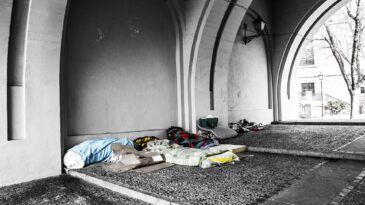
In times of economic upheaval, everybody gets inconvenienced. Most feel anxious. Some — a minority — actually lose their jobs, their homes, their savings, even their hope. Their plight often goes unnoticed.
We interrupt our regularly scheduled cycle of reporting to direct our attention to you. Older folks speak often of you as “the church of the future;” at other times they amend their words with: “The youth ARE the church right now.”
As financial distress spreads from Wall Street to Main Street, ushering in a recession likely to be long, churches have two fundamental responsibilities.
A Presbyterian church leader looked at possible avenues for seeking health in his large Southern congregation and asked, “Where do we start?”
As Michael Lindvall reminds us in this week’s Benedictory column, history should be a “distant mirror” that helps us see ourselves and our times more accurately. This week’s issue of the Outlook turns our eyes to what may be the clearest mirror into which we Presbyterians are inclined to gaze: the life and writings of John Calvin.
(RNS) NEW YORK — Here in America’s financial capital, Sunday (Sept. 14) was normal in most respects. Streets were filled with shoppers, parks with strollers and picnickers, and homes with people watching the Jets lose and the Giants win. But our always-on communications brought a steady stream of sobering news from emergency talks on Wall Street.
“We’re narrowing our list of priorities,” a church leader said the other day.
© Copyright 2026 The Presbyterian Outlook. All Rights Reserved. Privacy Statement. Website by Web Publisher PRO