Advertisement

Tsunami: Humankind as Job

Harrowing images assail us; newspaper reports tell of mega death, miraculous rescue, fragile hope. The peoples of earth offer assistance to nations devastated by earthquake and wave. No one asks how such a thing could happen in a world created by God. 

We live with the uneasy assurance of science that unstable tectonic plates produced an earthquake eight times more powerful than the explosion of a hydrogen bomb.  Yet what do we say about the Creator of the rolling spheres, and of the roiling deadly seas.  

           Therefore we will not fear though the earth should change,
           Though the mountains shake in the heart of the sea;
           Though its waters roar and foam,
           Though the mountains tremble with its tumult. (Psalm 46:2 -- 3)
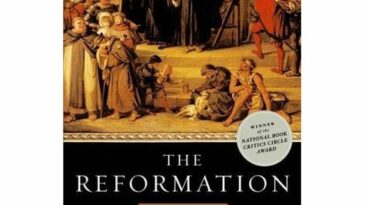
The Reformation: A History

The Reformation: A History, by Diarmaid MacCulloch, Viking, 2003. 700 pages

When I picked up McCulloch's magisterial history of the Reformation, I thought perhaps I would spend a couple of hours dipping into it. I was in for a surprise. This large work of nearly 700 pages became almost an obsession for me as I engaged in a dialogue with this British theologian who has given us a passionate and opinion-filled discussion of the events we call the Reformation.

When Lightning Strikes

Local television and radio stations across the width of New York State issued warnings of a series of rolling thunderstorms approaching the area. Some of them might be severe, the announcers said, possibly with tornado force gales. Just after 8 p.m. lightning hit the walls of the sanctuary of First Church of Pittsford, producing a blast like a freight train driving full speed into a depot at the end of the line.

ACSWP, PC(USA) “reconciling letters” on Hezbollah trip

After keeping silent since their return from a controversial trip to the Middle East this fall, some members of the Advisory Committee on Social Witness Policy have released a letter -- and, in turn, received one from top leaders of the Presbyterian Church (U.S.A.).

The exchange of letters -- and of a summary of "highlights" from the October 14-31 fact-finding trip, which included a meeting with the leaders of Hezbollah, a group the U.S. State Department has identified as a terrorist organization -- includes both an explanation for the Hezbollah meeting and some acknowledgment of regrets.

Reconciliation in Middle East and in denomination; letters report review ACSWP trip

Several weeks of intense dialogue between Presbyterian Church (U.S.A.) leaders and members of an Advisory Committee on Social Witness Policy (ACSWP)-led delegation that held a controversial mid-October meeting with Hezbollah officials in southern Lebanon has culminated in an exchange of letters.

A joint statement to the Presbyterian News Service on in mid-December included the two letters and a brief report of the delegation's Oct. 14--31 visit, which included stops in Lebanon, Syria, Jordan, Israel/Palestine and Egypt. The Oct. 17 meeting between the Middle East "fact-finding" delegation and leaders of Hezbollah -- which is on the U.S. government's list of terrorist organizations -- created a deluge of protests from numerous Jewish groups and Presbyterians around the country. The meeting was widely televised on Arab networks.

Dr. King and The Outlook

It is fitting for The Presbyterian Outlook to salute the Martin Luther King Jr. holiday by remembering what tireless advocates Dr. E. T. Thompson and Rev. Aubrey Brown were for racial integration and justice.  (Thompson was the Outlook's first editor and professor of church history at Union Seminary in Virginia; Brown was editor from the 1940's to the 1970's.)  This paper stood tall on these matters when such beliefs were dangerous to espouse.  

When Thompson was tried for heresy in Mecklenburg (now Charlotte) Presbytery, everyone understood that the sub-texts of that trial, ostensibly about the faithful interpretation of Scripture, were his positions on integration and ethics. Because of the malign interweaving of biblical inerrancy with segregation in the South, people who agreed with Thompson and Brown were labeled communists by fundamentalist Presbyterians.

What have we done for Brown?

The 50th anniversary celebration of the landmark 1954 Brown v. Board of Education Supreme Court decision was a necessary spotlight on that ruling’s profound contribution to goodness in this nation. With the commemoration over, that spotlight becomes a searchlight, seeking us out in the darkness where in an audience we sit, comfortably, when it is our turn to take the stage.

Time and Eternity

"What time is it?" is one of the most frequently asked questions, and no one wearing a watch has difficulty answering it. But change the wording slightly and mystery abounds. "What is time?" has been pondered through the ages and we think about it especially at the coming of a new year. Time is elusive--you can't smell, taste, hear, or see it even though you may have a lot of it on your hands!

PCCJR challenges divestment effort

Presbyterians Concerned for Christian & Jewish Relations, a group of Presbyterians troubled by the stand the Presbyterian Church (U.S.A.) has taken regarding divestment in certain companies doing business in Israel, is asking Presbyterians to join together and work to get that policy changed.

At issue is a 431-62 vote taken last June by the General Assembly authorizing selective, phased divestment in some companies doing business in Israel in protest over the Israeli government's treatment of the Palestinians. Before any divestiture happened, the PC(USA) first would try to negotiate with the companies involved and would consider filing shareholder resolutions to try to change the companies' actions.

Robert P. Baskin new OUTLOOK publisher

Robert P. Baskin, a Richmond, Va. financial and business executive and active Presbyterian layman, has been named publisher of "The Presbyterian Outlook" effective January 3, according to a recent announcement of the Presbyterian Outlook Foundation.

For the past two years, Baskin has been director of corporate services for EMC, a mechanical contractor in Richmond. He provided operational and financial support to a company that covers the East Coast, with responsibilities that include risk management, safety, training, and special projects.

What the New Year Holds

Two quotes I saved from a piece in the New York Times called "The New Designer Despair," take issue with a destructive tolerance that leaves souls shriveled and minds tired. The subject was education in moral judgment. The writer quotes the principal of his daughter's school: "We encourage our children by telling them that there are no bad ideas." He also references Modern Times by the English, Roman Catholic historian, Paul Johnson: "the church is the last place in the world where we make the distinction between good and bad ideas." 

If the biggest, baddest, and best story of 2004 is religion, religion in politics and public life, then the designer despair generated by too much tolerance is gone. There are scores of religious people who tell us what is good or bad. The presidential election was shamelessly religious. Jerry Falwell ran a partisan voter registration campaign in countless congregations, and Democrats cast their usual nets into African-American churches.

Defend God?

The morning routine at our house calls for reading the letters to the editor of the New York Times. Since the election, that’s become something of a trial. More often than not, the letters have to do with the role of “religion” in politics. Many letter-writers see the nation divided between the devout, who are concerned for “moral values,” and the secular, who are presumably interested in issues that have nothing to do with “morality,” such as war and peace, and the obligations of the rich toward the poor.

An American Holy Day Sermon: Sufficiency

Scripture Readings: Deuteronomy 8:1-3, 6-10, 17-20; Psalm 65:9-14; James 1:12-18, 21-27; Matthew 6:25-33

”You crown the year with goodness, O God, and your paths overflow with plenty.  Amen.

How long do you suppose it has been since we have talked about – or even allowed ourselves to feel – a sufficiency of anything?

“Is your pastor a theologian?”

Is your pastor a theologian? 

A long time ago, when I was first at Princeton Theological Seminary, President James McCord informed incoming students that all pastors should consider themselves to be theologians. I was wise enough (or naive enough) to take his advice literally, and in my own ministry I have always tried to achieve the goal he set for us.

Polar Express

'The Polar Express' is an animation film that features Tom Hanks voicing several roles on his way to making a Christmas movie that looks and feels really different, especially on IMAX.

Our unnamed hero is a little boy who's just old enough to start doubting Santa Claus. He overhears his parents telling each other that he's shared his doubts with his younger sister. The mother and dad say, 'This may be the last year of the magic.' The little boy falls asleep, and the next thing he knows, a big train pulls up in his front yard, where the conductor offers to take him to the North Pole.

Finding Neverland


'Finding Neverland' is the play within the play within the play that is really about finding the magic at the heart of imagination. And, fittingly enough, it's all about believing.

Johnny Depp plays J. M. Barrie, the playwright who wrote Peter Pan. It's London, 1903.  The theater is the exclusive reserve of high society:  reserved people in reserved seats.  Barrie has enjoyed some success, but he'd not gotten in touch with his 'inner child' enough to pen the story that would immortalize him. Until he met the Davies family.

The Mom (Kate Winslet) is alone with her four sons, and somewhat destitute since her husband died. Her overbearing mother (Julie Christie) provides material relief, but emotionally, she's a dead weight. She constantly fusses about discipline and responsibility, and seriousness.  As if, should there be any playfulness left in them at all, it would soon be snuffed out for lack of a belief that it was important.  Sort of like Tinkerbell.

The Incredibles

Remember the parable of the talents in Matthew 25: 14-30?  The servants who are rewarded are the ones who are given ten and five talents, and produce ten and five more. The servant who is chastised is the one who takes his one talent and buries it. Yes, yes, the 'talent' in the parable referred to a unit of money and not to individual ability. Nonetheless, it's irresistible for preachers and other well-meaning commentators to apply the metaphor of personal talents. The message would be something like, 'Use your gifts, especially if they can help someone else.'

Well, that's also the message of 'The Incredibles.' This is an animated Pixar feature, where the voices are notable actors, but it's all programmed into the graphics, just like the music soundtrack and the cutting-edge visuals. This is pure high-tech, because there's not a 'real' scene in it.  But it's engaging, nonetheless, in part because of the compelling character development.

The Presence of Yuletides Past

We all have memories, often treasured, of Christmas seasons past. First as children, then parents and grandparents in our older years, we remember the stories we heard first in our youth and have continued to read in our latter years.

We all remember Charles Dickens, who left us The Christmas Carol (1843) about the tightwad Ebenezer Scrooge, who was transformed by visits from the Spirits of Christmas Past, Present and Future. Scrooge finally got with it and celebrated the Yuletide by raising his clerk, Bob Cratchit's wages and giving support to Bob's crippled son, Tiny Tim. Dickens was an English author who set the standard for Christmas tales.

OUTLOOK readers ought to know that Presbyterians have contributed to our understandings about Christmas with their holiday stories.

Divestment Debate Broadens, Deepens

Much of the conflict involving the Presbyterian Church (U.S.A.) and its policy involving Israel and divestment is being played out on the big stage -- at the national and even international levels.

But PC(USA) leaders are being reminded that decisions the denomination has made nationally are having repercussions too in local communities, for local churches.

"This Sunday we will have a squad car in front of the church I serve in Forest Hills," Charles Brewster, pastor of Forest Hills Presbyterian in the New York City area, said recently during the moderator's conference in Louisville -- a gathering of presbytery moderators and other regional leaders from around the country. Brewster, the moderator of New York City presbytery, was voicing concern about an anonymous letter threatening violence at Presbyterian churches in protest over the PC(USA)'s plan to consider selective, phased divestment involving some companies doing business in Israel. That letter was mailed from Queens, not far from Brewster's church, "and we take the threat very seriously and we are all frightened," he said.

Florence Henderson, an elder and the vice-moderator of Baltimore presbytery, said Presbyterians there have been "bombarded" with questions about "what has happened, why has it happened?"

Susan Wittjen, an elder and moderator of New Covenant presbytery, said Presbyterian and Jewish leaders in Texas have been discussing their discomfort with a recent trip the Advisory Committee on Social Witness Policy made to the Middle East -- a fact-finding tour that included a controversial meeting on Oct. 17 with Hezbollah leaders in Lebanon. Jewish leaders were unhappy about the Hezbollah meeting, and wanted more publicity for a letter that top PC(USA) leaders -- John Detterick, executive director of the General Assembly Council, Clifton Kirkpatrick, the denomination's stated clerk, and Rick Ufford-Chase, moderator of the 216th General Assembly -- issued calling that meeting "misguided, at best" (see OUTLOOK, Nov. 15 issue, p.7.)

16 amendments proposed to the Constitution from the 216th G.A.

The 216th General Assembly (2004) has sent sixteen proposed amendments to the Book of Order to the presbyteries for their affirmative or negative votes. Presbyteries may place some or all amendments in a consent agenda or omnibus motion following the instructions in the amendments booklet. Amendments 04-B.1 and 04-B.2 may be voted on as amendment B and amendments 04-E.1a through 04-E.9 may be voted on as amendment E, but presbyteries should follow the instructions for reporting votes.

Brief pro and con arguments are given for each proposed amendment.

A crack in the chalice at Christmas

As the first faint light of Christmas cast its imperceptible glow around the celebration of Thanksgiving, I preached and celebrated the Lord’s Supper in the renovated chapel at an ecumenical Christian community, Richmond Hill.

Is peace possible?

Brothers and Sisters in Christ,

Is peace possible?

I have been increasingly troubled by our continued reliance on the “just war” theory as a path toward credible peacemaking. In the last three years, my chagrin has grown to an almost visceral discomfort with the rhetoric and the reality of the “war on terrorism.”

My Mother’s Mary

Union Seminary had let out for the 1957 Christmas holiday, and I had come home, looking forward to being with my parents, and to sharing the good news that I had "met someone" with whom I might get serious. As I looked about the neat little house my parents had just built in the York County, S.C. countryside, I noticed that there was a new woman keeping watch over the modest Christmas display.

Two PC(USA) employees “no longer employed”; Fallout from Hezbollah

The fallout from Presbyterian actions involving the Middle East continues to rain down.

On Nov. 11, the denomination announced that it no longer employs two Presbyterian Church (U.S.A.) national staff members who traveled to the Middle East last month and were involved in a controversial meeting with Hezbollah, a group that the U.S. State Department lists as a terrorist organization.

Gone are Kathy Lueckert, who as deputy director of the General Assembly Council was considered part of the top level of the denomination's leadership, and Peter Sulyok, coordinator for the past dozen years of the Advisory Committee on Social Witness Policy.

In announcing the departures, John Detterick, executive director of the General Assembly Council, did not make it clear if Lueckert and Sulyok resigned or were fired -- or say precisely why they no longer are PC(USA) employees, citing in a written statement their right to confidentiality.

 But the Hezbollah visit, made during a two-week fact-finding tour by the Advisory Committee on Social Witness Policy -- a visit that also included high-level meetings with political, human rights and religious leaders around the Middle East -- had provoked strong and immediate criticism both from Jewish leaders already angry with the PC(USA), and by some from within the Presbyterian church.

Presbyterian-Jewish relations have been tense since the General Assembly's decision, last summer, to begin a process of phased, selective divestment in some companies doing business in Israel, in protest over Israel's treatment of the Palestinian people.

Six criteria recommended for divestment decisions

A committee of the Presbyterian Church (U.S.A.) has announced six criteria it says the church should use in deciding whether to divest in certain multinational companies doing business in Israel.

The PC(USA)'s Mission Responsibility Through Investment committee, meeting Nov. 4-6 in New York, drafted six criteria to guide the denomination in its divestment decisions, while emphasizing that any decisions will be made in a careful, deliberate way. The PC(USA) holds more than $7.5 billion in investments through the Presbyterian Foundation and the Board of Pensions, and the earliest any stock could be sold as a deliberate divestment action would be after the next General Assembly meets in 2006.

The question of whether the PC(USA) should divest in companies active in Israel, in protest over Israel's treatment of the Palestinian people -- or whether such a proposal is anti-Semitic or a bad idea, as some have contended -- has been white-hot since the General Assembly authorized a process of phased, selective divestment by a 431-62 vote last June.

Page 848 of 883
Advertisement