Advertisement
Everything you need to prep for General Assembly in one place
The Presbyterian Outlook

The Presbyterian Outlook

Creating and curating trustworthy resources for the church, the Presbyterian Outlook connects disciples of Jesus Christ through compelling and committed conversation for the proclamation of the Gospel.

More Stories from this Author

King Kong

The long-term appeal of "King Kong" is the unique dynamic of the Beast being attracted to Beauty, as she brings out his softer, gentler side. In this re-make, the Beast protects her, enjoys a sunset with her, laughs with her, and is even playful with her. But, of course, he's too brutish to survive in this world, because he's too much of a threat to others.

This version of "King Kong" is set in the 1930's, like the original. It's actually three movies of one hour each: the prelude and the voyage, the island, and the return.

God Was in the Laughter: The Autobiography of David Haxton Carswell Read

by David H. C. Read. New York: Madison Avenue Presbyterian Church, 2005; available by order from The Hood Library at Madison Avenue Presbyterian Church (921 Madison Avenue, New York, NY, 10021; $20 plus $3 shipping and handling).


During a scheduled "free" afternoon of a continuing education event at Austin Presbyterian Theological Seminary, David H. C. Read spent his "free" time reading the sermons of, and offering instruction and encouragement to, a pair of young pastors. Each chapter of his autobiography God Was in the Laughter radiates that same grace and generosity.

David Haxton Carswell Read was for thirty-three years pastor of Madison Avenue Church in New York City and perennially listed among the best preachers in the United States. His voice was heard regularly on the National Radio Pulpit. In 1973 he was the Lyman Beecher lecturer at Yale Divinity School. He published about a dozen books of sermons and a half dozen other volumes on preaching, evangelism, and as well an introduction to Christian faith. His sermons are bright and witty, theologically rich, wonderfully insightful to the human need for God, and though they were preached decades ago, they may still be profitably read as models of homiletical discipline and vessels of God's grace.

A More Profound Alleluia: Theology and Worship in Harmony

edited by Leanne Van Dyke. Grand Rapids, Wm. B. Eerdmans, 2005.  ISBN 0-8028-2854-X. Pb., 155 pp.  $15. 


Leanne Van Dyke, at the end of her contribution to this book of essays on theology and worship reminds us that if one pulls on a single thread of worship practices, "theological implications begin to spill out," and if one pulls on a single thread of theology, "worship practices begin to spill out." Accordingly, the "thoughtful pastor, church leader, and lay person will wish to think through these mutual integrations so that worship and theology can fit together and be a fragrant offering to God." (p.78)

Van Dyke's own effort to trace the mutual relations between what we believe and how we worship centers on the church's task of proclamation, pairing our understanding of the Word made flesh in Jesus Christ with the word that engages us in Scripture, sacrament, preaching, and other liturgical moments. She is joined in this integrative effort by five other contributors: John Witvliet, whose initial essay deals with the opening of worship and its Trinitarian shape; William Dryness, who traces the mutual connections between the church's act of confession and the doctrines of sin and grace; Ron Byars, whose essay shows how the church's practice of confessing the faith in creedal form (and in the prayers of the liturgy) implies a certain doctrine of the church that in turn sheds light on the meaning of our confessing; Martha Moore-Keish, who writes on the deep connections between the church's practice of celebrating the Eucharist and its eschatological hope; and David Stubbs, who helps us see the end of worship as the calling to live in such a way that our lives do not mock our worship but rather reflect its truth and reality.


Fathers’ Day

To this point in history insufficient attention has been devoted to masculinist, or more precisely – fatherist, biblical exegesis.  When this important field is better recognized, I will offer the following father's perspective on Luke 1:41:  "When Elizabeth heard the greeting of Mary, the babe leaped in her womb."  Obviously, as is the way with women, Elizabeth related this information to Mary who passed it on to Dr. Luke, who wrote it down.

Clichés and truisms


"Power corrupts. Absolute power corrupts absolutely." Clichés are clichés, and truisms are truisms. But Lord Acton's most famous cliché posits enough truth to cause any thinking American to tremble with fear.

When the Berlin Wall fell in 1989, most westerners rejoiced. This symbol of Soviet totalitarianism had crumbled, and freedom was singing a new song. However, a handful of those rejoicing also began to tremble. They asked, "What will become of America if it remains the lone superpower in the world? Will she muster sufficient character and courage to contain the corrosive effects of unchecked power in this new world?"

When the earlier Bush government felt compelled to send troops to Kuwait to defend its ally against the Iraqi invasion there, it achieved its basic goals. The military withdrew, encouraging the hope of other nations that we would not over-assert our power.  

Then 911 happened. The appearance of invulnerability was shattered. Americans were taken hostage by fear of further attacks. Ends now could justify means, that is, if the ends in view included the preservation of American's freedoms. And what of those means? What about a second invasion of Iraq driven by a complicated mix of incomplete espionage regarding alleged weapons of mass destruction over there, alongside a hunger for justice (vengeance?) over here. Would dubious ends justify the means of a new war? What should we do with the resulting prisoners of war? Could we extract information from them that might avert more terror-caused carnage?

What has happened to my country?

   Lately I feel like a stranger in the United States.

I am a remnant of what has been called "the greatest generation," but it's not the thinning ranks of my generation that has me feeling lost and confused. It's the debate about torture that has been swirling around me for months. I never imagined such a debate in my country.

A single statement from the executive branch that torture is forbidden everyplace, all the time, by every agency and under all circumstances, would stop all such talk immediately. There might be an element of danger in that stance, but virtue knows any sacrifice is worth a better future. We need to end the torture debate so the world will know that my country would never become as the enemy.

My father fought in World War I in Europe. He was a quiet man who never talked about his service in France, but my mother's photo of him in his uniform is etched in the minds of his children.

When World War II broke out, we were five boys and a little sister. The three oldest enlisted within days of the declaration of war. As number four, I enlisted as soon as my 18th birthday rolled around. Three of us went into the Army Air Force for pilot training; one joined the 5th Armored Division.

My youngest brother, Dudley, graduated from high school a couple of years later. Dad and Mom did not stand in the way of his enlisting, although they could have gotten a deferment for him to help on the farm. Dud didn't want cold, mud and tents, so he joined the Navy.          

When his orders came to report for duty, what was left of the family climbed into the car and took him to the train station -- his grandfather, a great aunt, his little sister and parents. They all returned to our home to stay overnight. Dad went immediately to the end of the backyard and dug up the basketball standard that had stood for many years over a dusty plot where running feet had trampled out every living thing. It was too painful to see it standing there, silent and unused. After supper and evening visiting, Mom and Dad turned their bed over to company. They took the boys' room; Mom crawled into Dud's lower bunk, and Dad climbed into the top one. Finally, in the dark, alone, Mom was able to shed the tears that she had held back all day. Dad heard her crying and climbed down. They slept wrapped in each other's arms in Dud's empty, single bed. Mom wrote later, "When the morning came, our courage returned."

No2Torture

Editor's Note: Presbyterian Church U.S.A. Moderator Rick Ufford-Chase and Ed Brogan, Director of the Presbyterian Council for Chaplains and Military Personnel, are planning a meeting in Miami, Fla., January 6 - 7, 2006 on the issue of the use of torture by the United States.


We are inviting concerned people of faith to gather in Miami for a time of spiritual renewal in an age of violence, a public witness and worship on the beach that will call on our leaders to live up to the most noble of our country's ideals, and a strategy session about how we might encourage a grass-roots movement of Presbyterians to stand unequivocally against the use of torture by our government and to name the ideals that might lead us to authentic security.

 We are asking Presbyterians to pray, study and take action to assure that there will be no unjust and abusive treatment of detainees by the United States and its allies. This statement is an extension of a quickly growing grassroots effort to educate people about the use of torture and the urgent need to call for an immediate end of these practices, wherever they occur.

There is now clear and compelling evidence that the U.S. government has routinely turned to torture as an appropriate tool in the "War on Terror." As I have traveled this year, I have asked Presbyterians to think carefully about the growing level of violence (torture, militarized borders, security checkpoints, and the War against Iraq) that our government has employed on our behalf in its earnest quest for security in a time of violence. I have insisted, and continue to insist, that this is a deeply theological challenge. As Christians, we know that genuine security is found only in Jesus Christ, whom we discover as we read and re-read Scripture while we seek to live Christ's example in the world around us.

Why the torture abuse scandal matters

Of all the scandals that beset us as Americans, there is one that history is likely to judge most harshly, namely, the official authorization of torture abuse by the current Bush administration. As the Abu Ghraib photos have shown with unforgettable horror, serious violations of international law have followed in its train.

Let us be clear that torture is not just one issue among others. It is a profound assault on the dignity of the human person as created by God. It is therefore inherently evil. It violates a person's body, and terrorizes his mind, in order to destroy his will. The strongest of presumptions stands against it -- not only legally and morally, but also, from a religious point of view, spiritually. At the same time, authorizing torture poses a direct threat to constitutional government. As Columbia law professor Jeremy Waldron has urged, the issue of torture is "archetypal." It goes to the very heart of our civilization. Whether torture is permitted or prohibited is a question that separates tyranny and barbarism from the rule of law.

“The Chronicles of Narnia: The Lion, The Witch, & The Wardrobe”

It's London, during the Blitz. Frightened by the bombing, mothers (the fathers have gone for soldiers) are putting their children on trains to visit any relative who might live out in the countryside. And so Lucy, Edmund, Susan, and Peter, who look to be about six, ten, fourteen, and sixteen, find themselves in a ramshackle old home out in the country with an overbearing housekeeper, an absent relative, and a lot of spare time on their hands. During a rainy-afternoon game of hide-and-seek, Lucy stumbles into an old wardrobe, and when she tries to hide in the back of it, she finds herself in another land!  

Torture in today’s terror-filled world; What is the Christian citizen’s responsibility?

It's an uncomfortable question but one, some Presbyterians think, it's imperative to ask: What is the U.S. government position these days on torture? What's the policy, what's really happening and what should people of faith do about it?

On Jan. 6-7, Rick Ufford-Chase, moderator of the 216th General Assembly, is inviting Presbyterians concerned about torture to come to Miami for a time of prayer, spiritual reflection and public witness. He wants at this conference, https://no2torture.org/ come/miami06.shtml, to generate some thinking on "how we might encourage a grass-roots movement of Presbyterians to stand unequivocally against the use of torture by our government and to name the ideals that might lead us to authentic security," Ufford-Chase has written in his blog.

That's not all.

George Hunsinger, a professor of systematic theology at Princeton Theological Seminary, is helping to convene a group of academics and religious leaders Jan. 13-15 for an event called Theology, International Law and Torture: A Conference on Human Rights and Religious Conviction.

Why did He come?

His answer, in his own words: The Spirit of the Lord is upon me, because he has anointed me to bring good..

What the Celtic cross tells us about peace, unity, and purity

The Theological Task Force on Peace, Unity and Purity revived our interest in Presbyterian history in the United States since 1729, but stopped short of formative roots in the old world. Recently my wife and I joined a presbytery- sponsored tour to visit some sources of our Reformed faith in Scotland and Ireland. We found significant historic challenges to the peace, unity and purity of the church, and also surprising foundations for hope.

"Purity" was a driving force in the turbulent events of the Scottish Reformation. Purity was the match used by John Knox and his colleagues to ignite the flames of church (and national) reform in Scotland--purity in the Word of God, in the sacrament, in the clergy, and in the leaders of the land. In his passion for religious purity, Knox sparked an emotional explosion among Scottish people early in St. Andrews in 1547, and again in Perth, Edinburgh, and beyond beginning in 1559. In these violent birth-years of the Presbyterian Church, purity-minded mobs attacked the churches and monastic houses to strip them bare of their images of "idolatry," typically burning the churches to the ground, and often inflicting bodily harm or death to Catholics who resisted.

Museums and monuments to formative religious struggle marked our Presbyterian heritage across the lowlands and up into the Scottish hills, written in blood by passionate Presbyterians in the never-to-be-forgotten massacres like Glencoe and Culloden.

The Word as a whole, a meditation

Newsflash!

Aoccdrnig to a rscheearch at an Elingsh uinervtisy, it deosn't mttaer in waht oredr the ltteers in a wrod are, the olny iprmoetnt tihng is taht frist and lsat ltteer is at the rghit pclae. The rset can be a toatl mses and you can sitll raed it wouthit porbelm. Tihs is bcuseae we do not raed ervey lteter by itslef but the wrod as a wlohe. i

Isn't it amazing what powers of perception humans have? Even when mortal expressions are limited and imperfect, humans have been gifted with the ability to discern much more meaning from a written text than a surface review might reveal.

Think how often a word or two -- spoken or written -- is misconstrued because we fail to open our minds to the whole of what is intended by the one desiring to communicate with us.

Flora and Fawning

Being myself a progressive liberal, I turned immediately to the Revised Standard Version of the Bible as soon as it became available in 1946.  Hide-bound conservatives in those days called it the Reversed Virgin because the translation of Isaiah 7:14 ("Behold, a young woman shall conceive") differed from the hallowed orthodoxy of the King James Version.

“… and on earth, peace’

So we know that the Scriptures are inspired by God and are authoritative for the church's faith and life. Does that mean that the words in Scripture uttered by angels are just as inspired as those spoken by God or humans? Do their words carry clout, or can we dismiss them as being platitudes? Getting specific, what's to be made of the angels' song to the shepherds, 'Glory to God in the highest heaven, and on earth peace..." (Luke 2:14a)? If the chief end of humans is to glorify God, then the first line of the angelic song sounds substantive. What about the second line, the one that sings the promise of "peace?"

Granted, modern translators differ as to who should receive the peace promise. Is peace to be experienced by "all people?" Is it intended for "all people of good will?" Or is it being offered only to "those on whom God's favor rests?" What's for sure is that the peace is to be experienced by many, including at least all recipients of God's saving grace. It may be intended, as suggested in other biblical passages, for all persons created by God. Indeed, given the plan for the wolf to lie down with the lamb, it appears that God promises peace for all creation.

What about that peace? Holiday carols sing its melody. Christmas cards echo its refrain. But do we really want it?

Commercial Christmas greed in 2005; is there a new holiday mindset?

Simplicity.

That's a cut-against-the-grain word in this season of so much everything -- so many parties and too many cookies, herds of lit-up reindeer marching across the lawns, lines of frantic shoppers hunting Xbox game systems or one more package of anything to put on the mound.

We do it, but in many hearts there's also a whisper -- maybe even a shout -- of "too much," a longing for a sacred silent night.

And so some people are deliberately, consciously, intentionally choosing less. Less Christmas shopping. Fewer decorations to put up and then haul back down, fewer plastic bins into which to cram it all.

Those who cultivate simplicity say they want more time, more peace, more care for the world -- not just at Christmas, but for the rest of the year as well, as a deliberate statement of their faith in God. Some are asking hard questions. How do the choices we make -- what we buy, what we eat, what we drive, what we invest in -- affect the world? What impact do our choices have on the earth and those who produce the goods we buy?

The simple-living movement is about more than saying "too much" to a consumer-driven Christmas, however. It ties together elements of environmental stewardship, of global economics, of socially-responsible investing, of caring for the least in a world in which many Americans have so much while the vast majority of the world's people live in poverty.

Good King Wenceslas, Look Out!

Richard II, son of Edward the Black Prince, was king of England from 1377 to 1399.  According to his biographer, Anthony Steel (his note 23), Richard was the inventor of the pocket handkerchief, which is a very absorbing subject.  I admit that a pocket handkerchief can get snotty, but only if you get too nosy.  During Richard's reign, the power behind the throne was John of Ghent whose name was corrupted to Gaunt.

Boxers or Briefs: A Choice at Bottom

Some people think the Boxer Rebellion describes the refusal of young males to wear a certain style of undergarment.  Actually, it was an event which took place at the beginning of the twentieth century in China.  Old movie fans or fans of old movies might enjoy Charleton Heston and Ava Gardner in "55 Days at Peking".

Moderator’s Conference explores PC(USA) demographics, future

LOUISVILLE -- "How do we understand our little tribe of God's folks?" asked Eileen Lindner, a Presbyterian minister who works gathering and analyzing statistics for the National Council of Churches in Christ.

In other words, what do the numbers say about the health of the Presbyterian Church (U.S.A.) and the challenges it faces?

First, and perhaps most obvious, is the continuing decline in membership for the PC(USA) and other mainline Protestant denominations -- a combined loss of millions of members in recent decades. But that's in part due to demographics. "We were big winners in the post-World War II sweepstakes," the baby boom, and now that high birth rate has leveled off, Lindner told a national gathering of presbytery and synod moderators, convened in Louisville on Nov. 11 by Rick Ufford-Chase, moderator of the 216th General Assembly.

The membership losses the mainline denominations are experiencing should have been expected, projecting ahead the death rates based on those birth patterns, said Lindner, who edits the annual Yearbook of American and Canadian Churches.

"It's not so much what we did wrong," to cause people to leave, "as what we didn't initiate" to bring people in once high birthrates stopped driving growth, Lindner said.

Great Expectorations: Ode to the Spittoon

Men, I am proud to say, are by nature and nurture gross and disgusting creatures. I did my very best to pass on this crude heritage to our three boys. However, my success was not equal to my desire. I assume their occasional fastidiousness may be traced to their mother's "sugar and spice" influence.

The Birth of Jesus

There is power - and then, there is power. There is the power that comes with military supremacy and another kind of..

Teat for Tat

Anointing events as the will of God is a devotional, if not exactly theological, temptation.  Christians accept God's providence in both prosperity and adversity, a sentiment famously expressed in the Heidelberg Catechism, which I think represents the irenic and ecumenical Lutheranism of Philip Melanchthon within the burning heart of Calvinism.  As a passionate advocate for The Book of Confessions,

Getting to Bethlehem

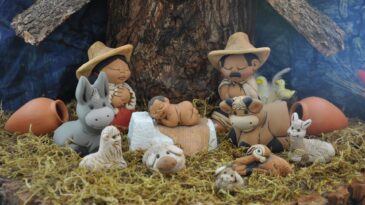
Getting to Bethlehem this year has been rough. Immediately after last year's trek came the massive Indian Ocean tsunami. Since then we have endured the most active hurricane season ever on record, including the still mind-numbing devastation wrought by Hurricane Katrina. October brought the earthquake in Pakistan that killed a staggering 75,000 people. Meanwhile, fresh accounts of political corruption continue to fill newspapers, heating bills are up, and national morale is down.

How do we get to Bethlehem this year? A minimum wage worker must work almost a full day to fill his car's gas tank. Airlines are struggling in bankruptcy. Amtrak is plagued by equipment breakdowns. How do we get to Bethlehem? How do we get past the 150,000 service men and women who are in Iraq, separated from family and festivities, and for some, separated from new babies they have fathered but never seen? Amid suicide bombers and improvised explosive devices, their safety is anything but assured; their length of stay is up in the air.

Advertisement