Embryonic stem cell opponents hail new adult stem cell law
(RNS) Christian leaders who have opposed embryonic stem cell research are praising the enactment of a new law that will enhance the..



(RNS) Christian leaders who have opposed embryonic stem cell research are praising the enactment of a new law that will enhance the..
It is Vacation Bible School planning time in many churches. This year's curricula from the following publishers are included:
Augsburg Publishing
Cokesbury
Concordia
Congregational Ministries
Cook Communications
Group Publishing
Standard Publishing
(PNS) The recent murder of an Iranian pastor is generating fears that the government in Tehran is cracking down on Christian "house churches."
The body of Ghorban Tourani, 50, was tossed in front of his house shortly after he was abducted there by unidentified assailants.
Tourani converted to Christianity after hearing the gospel from visiting evangelists while held in a Turkmenistan jail for manslaughter, having killed a man in a knife fight. His house church was in Gonbad-e-Kavus, a town on the Turkmenistan border, just east of the Caspian Sea.
In his obituary, Tourani was described by an unnamed Iranian pastor as a "fearless Christian" who would "boldly share about Jesus in ... the streets, shops and bazaars."
In Iran, such proselytizing is punishable by death.
Compass Direct, a news agency that reports on persecutions of Christians, said 10 other Christians in several Iranian cities, including Tehran, were arrested shortly after Tourani's murder and tortured by the Ministry of Intelligence and Security
For some, the question they'd most like to ask about the Presbyterian Church (U.S.A.)'s big fundraising campaign is: Is it working? Will they reach the $40 million goal?
But another question that seems to be growing organically from the campaign itself is: What's being learned? What is this campaign teaching folks about how Presbyterians think?
Because in the two and a half years since The Mission Initiative: Joining Hearts & Hands campaign started, it's seen a few extreme makeovers. What started as a "deep pockets" fundraising effort, targeting wealthy Presbyterians with the ability to make substantial gifts, has shifted to a much more diversified approach, with considerable involvement from presbyteries and individual congregations.
Jan Opdyke, the campaign's director, asked what's changed since the campaign's beginning, told a group of Presbyterian communicators that it's gone "about 180 degrees in the opposite direction" of where it started.
But she added that, about halfway through the five-year effort, more than half the $40 million has been pledged -- about three-fourths of it through partnerships with presbyteries. As of September 30, the campaign had reported more than $22.5 million in pledges, and had collected more than $1.3 million of them, with some of that money already being used to put mission co-workers out in the field
George and Jan Beran, former Presbyterian missionaries now in their 70s and living in Ames, Iowa, have challenged other Presbyterians from Iowa to come up with $250,000 for the Presbyterian Church (U.S.A)'s Joining Hearts & Hands fundraising campaign. The money would be used to send two mission co-workers or a family to the Democratic Republic of Congo for three years to do agricultural work.
To kick things off, the Berans have pledged the proceeds from selling a duplex they bought 25 years ago as a rental property.
From their own time overseas, teaching as missionaries in the Philippines and later as Fulbright professors in Nigeria, the Berans have seen firsthand the impact of Presbyterian mission work.
They also know what grassroots believers can do. Close to 30 years ago, their adult Sunday school class at Northminster Church in Ames was studying world hunger. Members raised money to support mission work in Kenya and Tanzania -- underwriting projects that helped farmers learn to improve their crop yields, to store food and produce drinkable water.
Dr. Elizabeth Johnson Walker will join the faculty of Louisville Presbyterian Theological Seminary in June as Associate Professor of Pastoral Care and Counseling. She currently is a professional counselor with the Georgia Association for Pastoral Counseling in Decatur, Ga., and an adjunct professor in the area of Persons, Society & Culture at the Interdenominational Theological Center (ITC) in Atlanta.
She earned a Bachelor of Science in religion and philosophy from Huntingdon College in Montgomery, Ala., and the Master of Divinity degree from Candler School of Theology in Atlanta. She earned her doctorate in theology from Gammon Theological Seminary and the ITC, where she completed her dissertation on "A Model of Pastoral Counseling with African American Women." Her clinical training was received at the Georgia Association of Pastoral Care in Atlanta. She is a licensed marriage and family counselor (LMFT), a Member Associate of the American Association of Pastoral Counselors (AAPC), a Clinical Member of the American Association of Marriage and Family Therapy (AAMFT), and a member of the Society for Pastoral Theology.
(RNS) Advocacy groups say plans of cable television companies to offer family-friendly programming packages are flawed and designed to thwart consumers from getting what they really want: a la carte sales, in which subscribers pick and choose their channels.
The marketing model traditionally used by cable companies and the two leading satellite TV services requires consumers to subscribe to channels in various pre-packaged "tiers." "Right now, to get the good channels, you have to buy the raunchy channels," complained Jim Metrock, head of the Birmingham, Ala.-based child advocacy organization Obligation Inc.
Portions of the cable industry -- under pressure from the federal government -- have come forward with a new willingness to package family-friendly channels into a special programming tier to help parents
Show me a major city that has a significant African-American population, and I'll show you a school called "Martin Luther King Jr. Elementary (or Middle or High) School." Its students will be nearly, or 100 percent, African-American. Wasn't MLK promoting racial integration?
Show me a denomination that has spoken prophetically against race hatred, against apartheid, against segregation, and against all kinds of social injustice, and I'll show you any one of thousands of Presbyterian churches, where nearly 100 percent of each congregation's members come from the same race. Aren't we promoting racial integration?
In his recently released book, The Shame of the Nation: The Restoration of Apartheid Schooling in America, author and educator Jonathan Kozol says that America has gone from desegregation to re-segregation. Walls set up by the power of the law came down only to be replaced by walls set up by social and economic class distinctions. Result: Our schools are more segregated in 2005 than at any time since 1968.
The Presbyterian Church has taken some baby steps toward greater racial diversity, in pursuit of a goal to have 10 percent of our members come from non-western European races by 2010. But the operative term here remains "baby steps." We have much further to go.
Why should we care?
These are acutely trying times for the Christian remnant residing in areas governed by the Palestinian Authority. Tens of thousands have abandoned their holy sites and ancestral properties to move abroad, while those who remain do so as a beleaguered and dwindling minority. Christians, who used to comprise the vast majority of the residents in the Bethlehem area, will fall past a critical point -- and their community will no longer be viable.
Palestinian Christian leaders who should be protecting their co-religionists are instead abandoning them to the forces of radical Islam. Muslim religious law (Sharia) is an enormous influence on the inner workings of the Palestinian Authority. Indeed, the Palestinian Constitution states, "the Sharia will be the paramount source of legislation." By granting Islamic law primacy over every other legal source, including international human rights conventions, the minorities living in the Palestinian Authority are denied proper redress via the courts.
In fact, the Christians have little protection at all from any source, and have faced virtually uninterrupted persecution during the decade since the Oslo peace process began. They live amid a dominant (greater than 98 percent) Muslim population that is increasingly agitated and xenophobic. Intimidation is directed at Christians who dare question the political, economic and social agenda of the Hamas and Islamic Jihad terrorist groups.
A Hidden Wholeness: The Journey Toward an Undivided Life, by Parker J. Palmer. San Francisco: Jossey-Bass, 2004. ISBN 0-7879-7100-6. Hb., 192 pp. $22.95.
Drawing attention to the divided nature of our lives (the "blizzard" that assaults us without and within), Palmer seeks a means by which we might live as more whole persons, "undivided" in the relationships in which we seek to live and serve. Palmer offers no quick fixes, but calls for his readers to create safe spaces to nurture the soul in community; his hope is that such undivided lives will enable us to live non-violently in the world.
A Table of Delight: Feasting with God in the Wilderness, by Elizabeth J. Canham. Nashville: Upper Room Books. 2005. ISBN 0-8358-9804-0. Pb., 132 pp. $12.
Canham invites readers to find God at work in wilderness experiences--both the chosen wildernesses of retreat, and the un-chosen wildernesses of barren times of life. She shares with the reader ways that the wilderness can be a place of prayer where God is at work.
During my student days, an elderly Pentecostal pastor came to address us one day in Chapel. He told the story of an occasion in his ministry when, after he preached a sermon challenging all present to dedicate their lives to Christian service, people streamed forward to offer themselves to serve the Lord. As they prayed, the "glory fell" on them, and the whole throng was "lost in wonder, love and praise," to borrow a phrase from Charles Wesley.
The preacher was quite pleased to see this obvious evidence of God's blessing on his ministry, when abruptly, he said, the Holy Spirit caught him short: "I'm blessing these people not because of what you said, but in order to help them forget what you said."
Some years later I was pastor of a congregation that included an elder who had a stock line for me most Sundays as I greeted the people departing the sanctuary: "That was a great sermon this morning! I don't remember a thing you said, but it made me feel good." It was good medicine for me to be reminded that in the grand scheme of things, who I am and what I have to say aren't all that important after all. I was discovering the truth of Eugene Peterson's and Marva Dawn's marvelous book title, The Unnecessary Pastor.
It is vital that we, as God's servants, neither take our vocation too lightly, nor our ministry too seriously. God will get done what God purposes to get done -- whether we are part of the program or not. God calls pastors to play an active, particular role in the grand drama of the Kingdom of Heaven breaking into this world. Ultimately, however, our ministry and the Gospel cause we serve do not rise or fall on whether we get it exactly right -- on whether we work long hours, on the level of our pastoral and management skills, or for sure on how "spiritual" we are.
My father died November 7. He was 90 years old, almost 91, and had served as an ordained minister for 64 years, all in Texas. After graduating from seminary, he was called to a congregation in Eliasville, a windblown West Texas town barely on the map these days. Most of his ministry, however, took place in the growing suburbs of Ft. Worth, Dallas, and Houston. In the 1950's he wrote a book entitled Our Cities for Christ, which was a call to the Southern Presbyterian Church to pay attention to the rapidly urbanizing South and to be about the work of organizing new congregations for a post-war America.
This impulse toward evangelism was deeply rooted in my father's theological make-up and represented his most consistent response to the gospel's claim. Stephen Webb, in his book, The Divine Voice, has argued that we show we understand the gospel's claims most truly when we preach its good news, an insight my father would have understood instinctively and with which he would have agreed.
The formative influence upon my father's theology was the Student Volunteer Movement (which he encountered through the YMCA) and its aim "to evangelize the world in this generation." The theological problems with that motto, and indeed, with that movement are almost self-evident to us today even though our achievements seem paltry when compared to those of the generations inspired by such a slogan. My father's heroes were people like John R. Mott and later, Robert E. Speer and before them, Sheldon Jackson.
In 1905, just one hundred years ago, the Henry J. Heinz Company was incorporated in Pittsburgh, Pa., and Henry Heinz became America's chief processor and producer of foods that still nourish us and that we still enjoy. But that is just part of the story.
Henry Heinz was born in Pittsburgh's Birmington section, the oldest of eight children, to a Henry and Margaretha Heinz. He spent his childhood years growing up in Sharpsburg, Pa. After business school, he became a bookkeeper in his father's brickyard and became a partner. He carried on his concern for bricks and brick laying for the rest of his life. However, during this time he also began a lifelong love of gardening and peddling produce from the family's garden. The business expanded -- its horseradish product selling especially well. he public enjoyed its taste. After early financial troubles, he and relatives started the H.J. Heinz Company, inventing the "fifty-seven varieties" slogan by which the company has been identified ever since.
Heinz married Sarah Young in 1869 and the couple had five children along the way. As Germans, the Heinzes started out in the Lutheran denomination. After other temporary choices, they finally ended up in the Presbyterian family with an ecumenical attitude. During this pilgrimage, Heinz considered studying for the ministry as his career. However, given his gardening interests, he settled on a calling of providing people healthy food -- along with the Gospel, of course. More of that later.
Out in Presbyterian-land, the calendars for January and February are full of presbytery meetings at which overtures will be discussed and voted on -- perhaps giving as good a sense as any of what the mood of the church might be.
It doesn't seem particularly settled. Some early-arriving overtures have the General Assembly revisiting a controversial decision from 2004 involving divestment and Israel. Others want the assembly to take stands on gay marriage and on ordaining homosexuals.
Debates on controversial matters seem inevitable in the Presbyterian Church (U.S.A.) in the months to come.
But some are hoping that the Theological Task Force on the Peace, Unity and Purity of the PC(USA) may have nurtured a climate within the denomination in which the differences can be talked about with less rancor, with more civility and open-mindedness.
"If these people can work it out and come to a unanimous agreement, it seems the church ought to be able to do that too," said Bill Gannaway, a retired minister from Topeka who works part-time for the Fund for Theological Excellence, trying to raise money for seminaries. "That's the hope I have."
In October, Gannaway helped lead a question-and-answer session in Northern Kansas presbytery, featuring Task Force Co-moderator Gary Demarest of California. Demarest and the task force's other 19 members have been answering invitations all fall, speaking at presbytery meetings and before other interested groups, trying to explain what the task force is recommending as the culmination of its four years of work.
The task force will meet in Atlanta Jan. 11-13 to assess how the report it made public last August is being received and to decide how most effectively to work toward approval of it from next summer's General Assembly.
Friends,
On the night of my election as Moderator of the General Assembly, I asked Presbyterians several questions. "Are you ready to 'get in the boat with Jesus?'" "Is the Assembly ready to imitate the disciples as they took the huge risk of leaving behind all they knew to be both comfortable and sacred, and follow Jesus to 'the other side,' to the land of the Gentiles, the unclean, and the community with whom Jewish law expressly forbid them to have contact?" I invited Presbyterians to make a leap of faith - to believe that if we let go of our fear and step boldly into the world - God will do remarkable things both in and through the Presbyterian Church (U.S.A.)
Many Presbyterians have responded to the image of getting in the boat with Jesus. They are excited to share their own stories of "getting in the boat." I've seen clear indications that many of our congregations are tired of "business as usual," and they're looking for opportunities to "cross over to the other side."
As I've traveled, I have tried to listen carefully. I have prayed for discernment -- for the insight to see "the signs of the times" and the work of God's spirit in our present life. I've asked Presbyterians what they need from our denomination in order to live their faith with courage and conviction.
After eighteen months of an intimate look into the heart of our church, I am convinced that God is calling all of us to become something new. This is our moment to let go and strike out for the other side.
(PNS) The trustees of Columbia Theological Seminary have approved a proposal from the Committee on the Office of the General Assembly (COGA) of the Presbyterian Church (U.S.A.) to create a program for the study of Presbyterian and Reformed history and theology.
Under the terms of the agreement, most of the collection of the Montreat, N.C. branch of the Presbyterian Historical Society will be moved to Columbia's John Bulow Campbell Library when the Montreat facility closes in December 2006.
During a Dec. 5 trustees meeting, the board authorized CTS President Laura Mendenhall, and a committee she appointed, to work with COGA on the details.
So what happens when a pastor-theological-task-force-member tries to don a pastor-editor hat? Simple answer: It raises boundary issues.
I've spent two-plus decades quickly changing in the roles and tasks of the normally complicated pastoral ministry. Now I'm simultaneously wearing two particular hats: editor and theological task force member. Doing so raising questions about how to respect the integrity of each role.
In September of 2001, the Clear Lake Church Session and I prayed as we sought God's wisdom, regarding the possibility of my serving on the Theological Task Force on Peace, Unity and Purity of the Church. Together we concluded that God was calling me to serve as a minister-member of the TTFPUP. They believed God was calling them and the congregation to commission me to join with 19 others in search of better ways for Presbyterians to hold on to one another while holding on to their differing convictions.
In September of 2005, the Presbyterian Outlook Foundation board of directors and I prayed as we sought God's wisdom regarding the possibility of my serving at the Outlook. Together we concluded that God was calling me to serve as editor-in-chief. They believed God was calling them to commission me to join with thousands of readers in the Outlook community to help Presbyterians catch a fresh vision for dynamic ministry, strengthen efforts in cultural transformation, deepen spiritual vitality, and find better ways to hold on to one another while holding on to their differing convictions.
(RNS) Half of Americans have had a spiritual transformation experience, and 35 percent of those are not born-again Christians, according to newly-released research from the University of Chicago.
Most "changers" were part of a religious community when they had the experience and reported an increased commitment to God that has lasted for many years, the study found. Many transformations occurred early in life and at a turbulent time -- during an illness or after an accident or a relationship breakup.
Tom W. Smith, the study's author, was surprised by the reported endurance of the behavioral changes. Thirteen years, on average, have passed since most respondents' experiences.
The question was posed to 1,328 adults in 2004 as the religion component of the General Social Survey by the university's National Opinion Research Center.
Fundamentalist and evangelical Christians reported the highest percentage of changers (72 percent). These groups are more poised for a change experience because their language encourages it, Smith said.
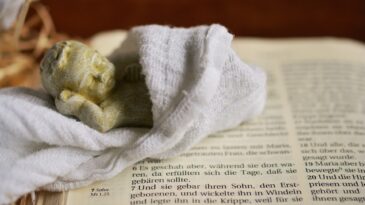
New Year's Reflections: Luke 2:22-40
I have often thought how nice it would be, how much more inclusive we would be, if some year we cast Anna and Simeon in the Christmas pageant along with all the children. Simeon and Anna remind us, with the kind of wisdom and eloquence that come with age, that even though the focus of Christmas is a child, Christmas is not only for children.
For after choruses of angels have lit up the night sky, and shepherds have scurried across fields of promise to see this thing that has happened, the magi have arrived bearing gifts from the nations, these senior adults enter the story when life is getting back to normal for the holy family. From the posture of long years waiting, they reveal to us how large and awesome this tiny baby really is.
Luke presents this chapter of the infancy narrative in the whispers and hushed tones of people who know how to make room for a baby, and of those who understand that their own future is somehow embraced by the child they behold. "Long ago," the Letter to the Hebrews begins, "God spoke to our ancestors in many and various ways by the prophets, but in these last days God has spoken to us by a Son." Somehow Simeon and Anna seem to know instinctively that the presentation of this baby in the Temple is God speaking. This child is the very Word of God whose tiny hands hold out salvation for the world.
The Presbyterian Outlook has concluded its search for a new editor. Now it is time to affirm the value of an independent church press. It seems a small thing to wish for, in these days of denominational strife, theological conflict, and liturgical chaos. It only seems a small thing. A flourishing independent church press is essential, particularly in a time of strife and indecision.
Why is it so valuable?
The independent church press is not beholden to any particular part of the denomination's official establishment. Worthy PC(USA) magazines are valuable sources of church news and many good insights. Various editorial columns reflect independent views, but surely their mission is to promote the life and views of the national church. I am old enough to remember the Presbyterian Survey printed a picture of the procession for the funeral of Dr. Martin Luther King, showing the humble farm wagon used to carry his body to the church. I valued that cover, but many did not. It is my opinion that the Survey had to bend to the realities of reduced circulation for some time after that.
The independent church press offers alternatives to ordinary ways of thinking. In the days of Dr. Ernest Thompson's tenure as editor of the Outlook, such aspects of southern life as segregation were addressed, and alternatives suggested in his mild mannered style. Some of his theological views, however gently expressed, landed him in a heresy trial. Dr. Aubrey Brown and his brother worked hard for the reunification of Presbyterians who had split apart during the Civil War era. It took some courage to do that in the fifties and sixties. Dr. George Hunt continued the search for Presbyterian unity, and broadened the views of the Outlook. Dr. Robert Bullock, an irenic evangelical, encouraged the church, in a series of editorials, to reclaim its doctrinal center. On his watch, the controversial advertisement from the Friends of Sophia occupied a full page. Dr. Ben Sparks, as interim editor, in my view wished to modernize the magazine, to make it more attractive to readers, and to increase its subscription base.
It is also important to realize that the independent church press is not about money, wealth, power, or advantage. Jack Haberer, who has been tapped by The Presbyterian Outlook to don the ceremonial green eyeshade, sleeve bands and stiff cuff protectors will surely not be ordering the latest BMW on the prospect of great financial rewards.

When a mesquite tree buds out in the spring you can rest assured there is no danger of a killing frost. At..
Surely, our Presbyterian Church (U.S.A.) needs an answer. The net losses of 1,887,629 members and 1,985 churches, from the total of our two previous denominations in 1966, cry out for an answer. Lest you conclude that the answer would be to mount a major membership and church building drive, let me suggest that these dismal statistics, in reality, are the symptoms of a deeper malaise, the score card for a team in serious need of coming together for a common purpose.
The church universal, including our PC(USA) denomination, needs an answer. In this country, the church has lost its role of arbitrator/advocate for a moral and ethical society. The church is under attack by new age philosophies that challenge the church's basic doctrines of sin, repentance, forgiveness and submission to the will of God. Respect for and confidence in the church is daily challenged by widely repeated voices of atheism and agnosticism. In Europe, the church is a remnant of echo-filled cathedrals and dwindling faithful. The church needs an answer.
At present, in the PC(USA), there are deeply-concerned groups who feel the answer to the difficult issues before the church is to divide the church. Others have invested decades of time and effort seeking more ecclesiastical openness and understanding toward sexual orientation, while even more are convinced that without biblical parameters, this can cause great damage to our church.
We need an answer--an honest answer to the genuine fears and concerns of those who see no other course but to leave the church, an answer that will move us beyond investing our time and resources in peripheral issues, beyond majoring in minors. An answer that will temper those actions and statements of General Assembly meetings that often result in unrest and distrust in our local congregations and leave our local pastors as the focus of angry reactions. We need an answer that will allow the church to speak prophetically and with authority to the plagues of our time; war across this earth, murder in our streets and the hatred underlying terrorism. We need an answer that will encourage and be supportive of our fellow Presbyterians whose primary focus is personal piety, and equally for those who know the need for corporate acts of compassion.
All these things and more need a reliable answer.
It had been a hard year--members left, a building project stalled, gossip and rancor seemed to raise their heads at every corner. There was a strong sense though that our struggles weren't against "flesh and blood," so neither was the solution.
For 90 days this past summer, our congregation tried to carve out ten minutes a day to pray about their church. Using the acronym CAST, we sought to understand what the spiritual barriers were to our moving forward in Christ. "C" stood for Come, as every part of our family was encouraged to come to the Lord in prayer and invite God to come and meet us in our prayer time. "A" stood for Asking, we needed to be bold enough to ask God to reveal those things that where holding us back from being the congregation we were called to be. "S" was for the Holy Spirit, we would be relying on the Spirit of God to guide us, waiting for his leading and prompting. Finally, "T" meant that we would Trust that the One who loves us so much would in fact meet us, guide us and direct our ways.
For 90 days we encouraged and challenged each other to follow through, join in and become part of the discerning process regardless of our varying positions on issues. We all wanted to follow God's leading. At the end of those three months, people reported on what the Lord had put on their hearts. Together my Worship Director and I planned out a service that would focus on the major themes the congregation had discovered. It proved to be one of the most powerful, unifying, Spirit- filled services we've ever had. God was honored and the Body was blessed to now be able to confidently go forward in Christ -- together.
The long-term appeal of "King Kong" is the unique dynamic of the Beast being attracted to Beauty, as she brings out his softer, gentler side. In this re-make, the Beast protects her, enjoys a sunset with her, laughs with her, and is even playful with her. But, of course, he's too brutish to survive in this world, because he's too much of a threat to others.
This version of "King Kong" is set in the 1930's, like the original. It's actually three movies of one hour each: the prelude and the voyage, the island, and the return.
by David H. C. Read. New York: Madison Avenue Presbyterian Church, 2005; available by order from The Hood Library at Madison Avenue Presbyterian Church (921 Madison Avenue, New York, NY, 10021; $20 plus $3 shipping and handling).
During a scheduled "free" afternoon of a continuing education event at Austin Presbyterian Theological Seminary, David H. C. Read spent his "free" time reading the sermons of, and offering instruction and encouragement to, a pair of young pastors. Each chapter of his autobiography God Was in the Laughter radiates that same grace and generosity.
David Haxton Carswell Read was for thirty-three years pastor of Madison Avenue Church in New York City and perennially listed among the best preachers in the United States. His voice was heard regularly on the National Radio Pulpit. In 1973 he was the Lyman Beecher lecturer at Yale Divinity School. He published about a dozen books of sermons and a half dozen other volumes on preaching, evangelism, and as well an introduction to Christian faith. His sermons are bright and witty, theologically rich, wonderfully insightful to the human need for God, and though they were preached decades ago, they may still be profitably read as models of homiletical discipline and vessels of God's grace.
© Copyright 2026 The Presbyterian Outlook. All Rights Reserved. Privacy Statement. Website by Web Publisher PRO