


I had just a short time with Courtney, a six-year-old girl who helped me clean up after church school. In a quick fifteen minutes, I needed to finish the job and put on my preaching robe to lead the worship service. I made small talk with her as we gathered the magazine pages and put the glue sticks away. Her parents did not attend the rural church in South Louisiana, but she visited regularly with a friend. I did not know her well, so I was in the middle of asking her those generic grown-up questions. I finished inquiring about her favorite subject in school and moved on to, "Courtney, what do you want to do when you grow up?" I expected the same answers that I usually hear: an astronaut, a ballerina or a teacher.
Courtney stopped. A smile began in the corner of her mouth that told me she was bursting with the news. "I want to be...um. I want to do what you do. I want to be a pastor."
"You do?" My excitement brimmed so that I was the one bursting. We stood in a tiny classroom in a country church, but it felt like Courtney and I had passed by a huge milestone and changed history. It caused me to look back to see the long stretch behind us and made me resolve to finish the road ahead.
I grew up in the seventies, when little girls were told that they could do anything. I clearly remember when I was Courtney's age and my grade school teacher informed me that I could become the president of the United States, if I wanted to. But I did not want to be president; I, like Courtney, wanted to be in the ministry. Of course, during that time women struggled to have it all and I saw glass ceilings shatter every day in boardrooms, on the Supreme Court, and in Congress. Yet I had never seen a woman pastor before, so I could not conceive of leading a congregation. I did not know that it was an option.
In October, 1955, fifty plus years ago, the United Presbyterian Church in the U.S.A voted in General Assembly to ordain women to the Ministry of Word and Sacrament. In 1956, the Cayuga-Syracuse Presbytery in New York ordained Margaret Towner, the first women clergyman of the denomination. In 1965, the Hanover Presbytery in Virginia ordained Rachel Henderlite the first woman to be so recognized in the Presbyterian Church in the U.S. These ordinations marked a climax in the history of Presbyterians among whom the role of women in the church had been growing for well over a century. Lois A. Boyd and R. Douglas Brackenridge* told this story in Presbyterian Women in America, Two Centuries of a Quest for Status (1983) published by the Presbyterian Historical Society. On the fiftieth anniversary of the extension of this ordination right to women it is appropriate to recall the women's progress in the life of Presbyterians.
Over the centuries in our male-dominated country, women have been identified and treated in different ways in both society and the church. Early on they were considered mostly "ornamental," as it was put. But males could not do without females. In those early days, a woman named Mary Wollstonecraft published the explosive A Vindication of the Rights of Women (1772), printed in Philadelphia shortly before Americans had adopted a Declaration of Independence in 1776. A Presbyterian woman (turned Unitarian), Elizabeth Cady Stanton, helped write the "Declaration of Sentiments" (1848) based on 1776 male-oriented document. Stanton published The Woman's Bible (1895) in which she and other women celebrated the noted females whose contributions may be found throughout the Scriptures.
In August 1920, Presbyterian President Woodrow Wilson signed into existence the XIX Amendment to the Constitution of the United States granting women the right to vote. At the same time women were gaining ground in public matters, they gained ground in ecclesiastical affairs. In the nineteenth century they had started women's organizations apart from males. Women became deeply involved in the support of and participation in educational endeavors such as Sunday Schools, home and foreign mission work. They formed their own societies to further causes that interested them.
Moreover, because of the "unrest" in the churches, the PCUSA granted the right of women to serve as "brother deacons" (as they were called) in 1922-1923, and "brother elders" in 1930. Ruling elder and mission executive, Robert E. Speer, together with Katherine Bennet and Margaret Hodge, played important roles in this movement in the PCUSA, demonstrating a kind of "de facto" equality in the process. Later on Eugene Caron Blake led the movement in the General Assembly to ordain women as ministers of "Word and Sacrament."
Enter Margaret E. Towner. Towner, a New Yorker, left a career as medical photographer at the Mayo Clinic to study education at Syracuse University prior to assuming the call of Christian education at the East Genesee (N.Y.) Church. Towner then pursued the three-year Bachelor of Divinity Degree at Union Theological Seminary in New York. She believed such training would be helpful to her in Christian Education. And she flourished as Christian Educator in Allentown, Pa.
Special to The Tampa Tribune, used by permission
Editor's note: Derek Maul, a Presbyterian free-lance writer who has written for the Presbyterian News Service and Presbyterians Today magazine, wrote this piece shortly after a church camp supported by Peace River and Tampa Bay presbyteries was forced by threats of violence to cancel a leadership event for Muslim youth (see news story on page 6.) -- Jerry L. Van Marter, coordinator of Presbyterian News Service.
TAMPA, FLA. -- (PNS) My friends run a church camp. You remember church camp? Campfires, marshmallows, best friends, starlit nights. "Kum Ba Yah," holding hands, cookouts, rain every day.
Church camp. You know, the place that's all about people coming together, prayer, hugs, surmounting barriers, spiritual breakthroughs, learning to listen to God. It's about as far away from politics as you can get. Or at least it should be.
Last week my friends had their lives and their children threatened and their patriotism questioned. They had to close the church camp and take their children to a safe place. They had to make other arrangements for a group of -- this is ironic -- international students, visitors from overseas celebrating Christmas and learning about America.
So why did my friends and their guests have to leave in such a hurry? Because their safety and their lives were threatened by Americans who wanted to carry a political agenda into the realm of marshmallows and "Kum Ba Yah."
"If we leave the PC(USA), where are we going to go?" The troubled question came from an evangelical woman, a young leader and emerging scholar in conservative circles. At issue was the possibility of a split in the denomination, likely to be led by disaffected conservatives. "We know where the women stand in the PCA [Presbyterian Church in America]," she said. "The EPC [Evangelical Presbyterian Church] said women's ordination is optional, and they've opted to 'just say no.'" Then came the clincher. Referring to the testosterone-driven conference she and I were attending, she added, "Frankly, I hear these men saying they will do things differently, but I don't know if I can trust them."
How tragic it would be if, in the midst of a grand two-year celebration of women's ordination in the PC(USA), a long-threatened split occurred that would launch another denomination where women's leadership role could possibly be diminished.
What celebration? Well, one hundred years ago (1906) a woman was first ordained a deacon in the UPCNA. Seventy-five years ago (1930) a woman was first ordained a ruling elder in the PCUSA. Fifty years ago (1956), the first woman was ordained a minister of word and sacrament. This convergence of anniversaries makes 2006 a fitting time to celebrate the ways we Presbyterians have promoted gender equality in a century long to be remembered for Women's Suffrage, gender-inclusive language, and The Feminine Mystique.
In his timely article this past June, Cliff Kirkpatrick confronted the statistics of our shrinking membership. He offered some practical tips to respond effectively, and his emphasis upon outreach is on target. He points out what we have been neglecting; now let us consider why we have neglected it.
About a year ago, chest pains and breathing troubles prompted me to see the doctor. The diagnosis proved to be minor and the course of treatment easy. But the diagnostic process was memorable, to say the least.
The family doctor determined to run some tests. He marked a few items on his page-long checklist, placed the clipboard on a door hook, and while walking out, said, "I'll check back with you after the tests."
A few minutes later the nurse marched me to the x-ray department where the technician took a few photographs. She took me to another room, where I blew into a clear plastic thing that looked like an inverted saxophone. Then she took me back to the examination room, looked at the checklist, twisted her nose a bit, looked at me, twisted her nose again, shrugged and then asked, "Are your ears feeling plugged?"
"Not really, but maybe a little in my right ear."
She pulled out an otoscope, studied both ear canals, and commented, "Well, I see a little extra wax in your right ear." One warm water ear rinse later, she made a few markings on the chart, placed it back on the door hook, and walked out.
Upon his return the doctor looked at the first chart. "You're x-rays look good. The lungs are clear." He looked at the next chart. "Your breathing is strong." He looked at the third chart. He twisted his nose a bit, looked at me, twisted his nose again, and then with a most puzzled look, asked, "Did the nurse flush out your ears?"
"Yes, sir."
"She was supposed to give you an EKG, not an ear flush." He looked at the checklist, saw that his mark was a bit off the mark, and said, "I'll send her back in to do the EKG." He shrugged and smiled. "For what it's worth, you just got a free ear flush. Hope it felt good."
A sheepish nurse returned, rolling in an EKG machine. Her embarrassment quickly turned into our shared laughing.
As I left the office my laughing turned reflective. Dumbstruck, I realized that in the spiritual life, plugged ear canals cause sick hearts.
What hardened the heart of Pharaoh? What hardened the hearts of Israel's enemies, and at times the hearts of the Israelites themselves? What hardened the hearts of Jesus' detractors? One simple answer: their hard-hearts grew out of their deaf ears. Referring to that history, three times the book of Hebrews warns believers, Today, if you hear his voice, harden not your hearts as in the day of rebellion.
The Presbyterian Church (U.S.A.) has received intense criticism since July of 2004 when it passed a resolution calling for "phased selective divestment" from companies that are profiting from the occupation of the West Bank and Gaza in Israel/Palestine. Most of this criticism has accused the church of being anti-Semitic. Anti-Semitism is a problem throughout the United States and throughout the world, so the question of whether the PC(USA) is contributing to such an evil needs to be taken seriously. Yet some of the harshest criticism has come not from outside the church but from within it.
One Presbyterian minister who has been outspoken about the PC(USA)'s actions wrote what many other pastors have expressed from their pulpits, "We are profoundly disturbed by our leaders and by the delegates who favored these anti-Israel, anti-Semitic actions." (https://www.jewishsf.com/content/2-0 /module/displaystory/story_id/23583/edition_id/468/format/html/displaystory.html ) In an e-mail correspondence, one pastor went so far as to say, "The Presbyterian church must come to terms with the fact that it is an unrepentant denomination of anti-Semitism and hubris in its pronouncements." Ouch.
Yet even if most critics within the church aren't willing to go as far as this pastor, many more are concerned that while the church may be well intentioned, our actions may yet be perceived to be anti-Semitic. Those of us who are involved in Jewish-Presbyterian dialogs find this criticism puts us in a bit of a pickle because, while we are attempting to accurately represent the church's position, such criticism certainly lends credence to the expressed concerns of our Jewish partners. So the question that begs to be addressed is what might it mean for the PC(USA) or the actions of the church to be anti-Semitic?
The annual summer tradition of Christian education called Vacation Bible School or Vacation Church School began at the end of the 19th century with a clear vision and mission. An enterprising Baptist laywoman, whose idea was to get children off the streets in New York City and teach them something about the Bible, rented a beer hall on the East Side of the city and held her Bible School. The entire summer for the next two years was filled with activities, Bible Stories, memory verses, and snacks. According to my research, her venture was very successful for those years. Then her pastor insisted the program be moved into the church building. This was done for several weeks but participation dropped so drastically that the program was moved back to the beer hall, where it continued as an example of a church reaching out into the community to share its faith.
What began as a social program to get children off the streets has grown in many denominations to be a primary educational/evangelistic summer endeavor that takes many forms.
People often make the mistake of thinking all that is involved in planning Vacation Bible School is going to your local Christian bookstore, buying packets of material, recruiting a few leaders with the famous words "there won't be anything to it," putting up posters, waiting for the beginning date to roll around and anticipating the arrival of the kids. That buy-the-resource approach misses an important first step. The CE Committee, the Educator, and others concerned about the overall educational ministry in a congregation need to answer a few questions.
It is Vacation Bible School planning time in many churches. This year's curricula from the following publishers are included:
Augsburg Publishing
Cokesbury
Concordia
Congregational Ministries
Cook Communications
Group Publishing
Standard Publishing
Editor's Note: This guest viewpoint is a critique of stories and an editorial in the Outlook relating to torture. It originally appeared on Presbynet and is used by permission.
As I read the allegations and accusations of torture and abuse posted by Jack Haberer, editor of The Presbyterian Outlook, Princeton Seminary professor George Hunsinger, and the Moderator of General Assembly Rick Ufford-Chase, I felt weary; a weariness born of reading the same tired arguments repeated endlessly.
Jack Haberer, in "Clichés and truisms," an editorial appearing in The Presbyterian Outlook, first asks if the United States of America as the world's "lone superpower" has "sufficient character and courage to contain the corrosive effects of unchecked power in this new world"? He then lauds the US for "withdrawing" after the completion of Operation Desert Storm in 1991. This, according to Haberer, encouraged "the hope of other nations that we would not over-assert our power."
Mr. Haberer should be aware that the objective of Operation Desert Shield/Storm was to eject Iraqi forces from Kuwait, not remove the regime of Saddam Hussein. Effecting regime change subsequently became US policy during the Clinton administration. Furthermore, while the bulk of US ground, air and sea forces were re-deployed, a significant US and Allied presence remained in the Persian Gulf to maintain the "no fly zones" and deter any further aggression by Saddam Hussein. Meanwhile, after 1992, the Clinton administration increased the military's operational tempo by 300-percent with humanitarian and peacekeeping missions to Somalia, Haiti, the Balkans and Rwanda while maintaining an active presence in Europe and South Korea as well as the Persian Gulf. Throughout the 1990s, on any given day, US Army forces were deployed in approximately seventy countries world-wide accomplishing missions as varied as keeping Serbians from murdering Muslim Albanian Kosovars, removing landmines and other explosives from Cambodia, Laos and Vietnam and helping the Vietnamese identify their missing-in-action from nearly thirty years of war between 1946 and 1975.
Editor's Note: This guest viewpoint is a response to Earl H. Tilford Jr. (printed this issue) and Dean Waldt, who had written a critique of stories and an editorial in the Outlook relating to torture. These materials were written before two meetings on torture in mid-January. This story originally appeared on Presbynet and is used by permission.
Outlook Article Links:
"Clichés and truisms," editorial by Jack Haberer
"Why the torture abuse scandal matters" by George Hunsinger
"No2 Torture" by Rick Ufford-Chase
"Americans have tortured prisoners in several locations around the world, the U.S. government has moved prisoners to countries where torture is practiced by American allies, the Bush administration has at times sought to justify torture, and all of this is the tragic fruit from a war that violates traditional Christian "Just War" doctrine. Presbyterians and all people of faith need to be concerned and actively working to change our governmental policies."
The recent Presbyweb writings of Earl H. Tilford Jr. and Dean Waldt, and the notes by their supporters, have been very critical of some church leaders who are concerned about torture being done by Americans. The thoughtful leaders being attacked include the popular PC(USA) General Assembly moderator, the new evangelical editor of the independent The Presbyterian Outlook magazine, and a professor of theology at Princeton Seminary.
Dean Waldt is critical of the GA moderator's concern about torture and asks, "Where is this clear and compelling evidence? I've been reading the newspapers and watching cable news along with everyone else. How did I miss this?"
Today's news (December 30) is that "the number of Guantánamo Bay prisoners taking part in a hunger strike that began nearly five months ago has surged to 84 since Christmas Day, the U.S. military said on Thursday. ... The detainees began the strike in early August after the military reneged on promises to bring the prison into compliance with the Geneva Conventions, their lawyers said. Detainees are willing to starve to death to demand humane treatment and a fair hearing on whether they must stay, the lawyers said."
The New York Times had previously reported that "The International Committee of the Red Cross has charged in confidential reports to the United States government that the American military has intentionally used psychological and sometimes physical coercion ''tantamount to torture'' on prisoners at Guantánamo Bay, Cuba."
"I want to transfer to the Presbyterian Church because in this denomination children matter." I don't remember the name of the speaker. It has been 20 years or so. But his words left their imprint.
We were proceeding through routine approvals of minister transfers in a stated presbytery meeting. Interest picked up when this longtime military chaplain, a Baptist, shared how his journey of faith had led him to the Reformed theological camp. "In my former tradition, we dedicated infants and educated children in the hope that they someday would profess faith in Jesus Christ. Upon their profession, they would get baptized and thereby be welcomed into the body of Christ. In the Reformed tradition you all baptize them into the body and educate them into personal faith. I think that's the right sequence."
As a fairly recent convert to Presbyterianism at the time, I found his words reassuring, especially so, since the one theological sticking point for me had been the practice of infant baptism. Exercising my office under the Presbyterian Church's constitution, I had learned well how to present to parents the covenantal concept of baptism, rooted as it is in the practice of infant circumcision dating to the eighth day of Isaac's life. But I still harbored some doubts about such a practice. This chaplain helped convert me into a passionate advocate of our denomination's sacramental theology.
These are acutely trying times for the Christian remnant residing in areas governed by the Palestinian Authority. Tens of thousands have abandoned their holy sites and ancestral properties to move abroad, while those who remain do so as a beleaguered and dwindling minority. Christians, who used to comprise the vast majority of the residents in the Bethlehem area, will fall past a critical point -- and their community will no longer be viable.
Palestinian Christian leaders who should be protecting their co-religionists are instead abandoning them to the forces of radical Islam. Muslim religious law (Sharia) is an enormous influence on the inner workings of the Palestinian Authority. Indeed, the Palestinian Constitution states, "the Sharia will be the paramount source of legislation." By granting Islamic law primacy over every other legal source, including international human rights conventions, the minorities living in the Palestinian Authority are denied proper redress via the courts.
In fact, the Christians have little protection at all from any source, and have faced virtually uninterrupted persecution during the decade since the Oslo peace process began. They live amid a dominant (greater than 98 percent) Muslim population that is increasingly agitated and xenophobic. Intimidation is directed at Christians who dare question the political, economic and social agenda of the Hamas and Islamic Jihad terrorist groups.
During my student days, an elderly Pentecostal pastor came to address us one day in Chapel. He told the story of an occasion in his ministry when, after he preached a sermon challenging all present to dedicate their lives to Christian service, people streamed forward to offer themselves to serve the Lord. As they prayed, the "glory fell" on them, and the whole throng was "lost in wonder, love and praise," to borrow a phrase from Charles Wesley.
The preacher was quite pleased to see this obvious evidence of God's blessing on his ministry, when abruptly, he said, the Holy Spirit caught him short: "I'm blessing these people not because of what you said, but in order to help them forget what you said."
Some years later I was pastor of a congregation that included an elder who had a stock line for me most Sundays as I greeted the people departing the sanctuary: "That was a great sermon this morning! I don't remember a thing you said, but it made me feel good." It was good medicine for me to be reminded that in the grand scheme of things, who I am and what I have to say aren't all that important after all. I was discovering the truth of Eugene Peterson's and Marva Dawn's marvelous book title, The Unnecessary Pastor.
It is vital that we, as God's servants, neither take our vocation too lightly, nor our ministry too seriously. God will get done what God purposes to get done -- whether we are part of the program or not. God calls pastors to play an active, particular role in the grand drama of the Kingdom of Heaven breaking into this world. Ultimately, however, our ministry and the Gospel cause we serve do not rise or fall on whether we get it exactly right -- on whether we work long hours, on the level of our pastoral and management skills, or for sure on how "spiritual" we are.
My father died November 7. He was 90 years old, almost 91, and had served as an ordained minister for 64 years, all in Texas. After graduating from seminary, he was called to a congregation in Eliasville, a windblown West Texas town barely on the map these days. Most of his ministry, however, took place in the growing suburbs of Ft. Worth, Dallas, and Houston. In the 1950's he wrote a book entitled Our Cities for Christ, which was a call to the Southern Presbyterian Church to pay attention to the rapidly urbanizing South and to be about the work of organizing new congregations for a post-war America.
This impulse toward evangelism was deeply rooted in my father's theological make-up and represented his most consistent response to the gospel's claim. Stephen Webb, in his book, The Divine Voice, has argued that we show we understand the gospel's claims most truly when we preach its good news, an insight my father would have understood instinctively and with which he would have agreed.
The formative influence upon my father's theology was the Student Volunteer Movement (which he encountered through the YMCA) and its aim "to evangelize the world in this generation." The theological problems with that motto, and indeed, with that movement are almost self-evident to us today even though our achievements seem paltry when compared to those of the generations inspired by such a slogan. My father's heroes were people like John R. Mott and later, Robert E. Speer and before them, Sheldon Jackson.
Show me a major city that has a significant African-American population, and I'll show you a school called "Martin Luther King Jr. Elementary (or Middle or High) School." Its students will be nearly, or 100 percent, African-American. Wasn't MLK promoting racial integration?
Show me a denomination that has spoken prophetically against race hatred, against apartheid, against segregation, and against all kinds of social injustice, and I'll show you any one of thousands of Presbyterian churches, where nearly 100 percent of each congregation's members come from the same race. Aren't we promoting racial integration?
In his recently released book, The Shame of the Nation: The Restoration of Apartheid Schooling in America, author and educator Jonathan Kozol says that America has gone from desegregation to re-segregation. Walls set up by the power of the law came down only to be replaced by walls set up by social and economic class distinctions. Result: Our schools are more segregated in 2005 than at any time since 1968.
The Presbyterian Church has taken some baby steps toward greater racial diversity, in pursuit of a goal to have 10 percent of our members come from non-western European races by 2010. But the operative term here remains "baby steps." We have much further to go.
Why should we care?

A woman who lives near the church likes to walk her dogs in the Rockwood State Forest. One day her two Labs disappeared into the brush and a minute later one of them came flying through the air, collapsing in a whining heap on the trail. He had encountered a mother bear and her two cubs in the blackberry bramble and she was not happy to make his acquaintance. The dog survived after all the puncture wounds in his neck healed. Truly he was well shaken and stirred.
This story reminded me of the old saying I used to hear a lot as a youngster: "It is easier to catch bees with honey than with vinegar." It is hard to know where it comes from, but it makes a lot of sense.
Of course, it is also possible to snare bears with honey and we all know how to be tough on people we meet when necessary. Personally, I prefer honey when I have the choice.
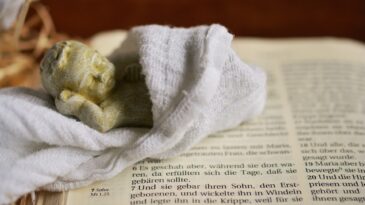
New Year's Reflections: Luke 2:22-40
I have often thought how nice it would be, how much more inclusive we would be, if some year we cast Anna and Simeon in the Christmas pageant along with all the children. Simeon and Anna remind us, with the kind of wisdom and eloquence that come with age, that even though the focus of Christmas is a child, Christmas is not only for children.
For after choruses of angels have lit up the night sky, and shepherds have scurried across fields of promise to see this thing that has happened, the magi have arrived bearing gifts from the nations, these senior adults enter the story when life is getting back to normal for the holy family. From the posture of long years waiting, they reveal to us how large and awesome this tiny baby really is.
Luke presents this chapter of the infancy narrative in the whispers and hushed tones of people who know how to make room for a baby, and of those who understand that their own future is somehow embraced by the child they behold. "Long ago," the Letter to the Hebrews begins, "God spoke to our ancestors in many and various ways by the prophets, but in these last days God has spoken to us by a Son." Somehow Simeon and Anna seem to know instinctively that the presentation of this baby in the Temple is God speaking. This child is the very Word of God whose tiny hands hold out salvation for the world.
So what happens when a pastor-theological-task-force-member tries to don a pastor-editor hat? Simple answer: It raises boundary issues.
I've spent two-plus decades quickly changing in the roles and tasks of the normally complicated pastoral ministry. Now I'm simultaneously wearing two particular hats: editor and theological task force member. Doing so raising questions about how to respect the integrity of each role.
In September of 2001, the Clear Lake Church Session and I prayed as we sought God's wisdom, regarding the possibility of my serving on the Theological Task Force on Peace, Unity and Purity of the Church. Together we concluded that God was calling me to serve as a minister-member of the TTFPUP. They believed God was calling them and the congregation to commission me to join with 19 others in search of better ways for Presbyterians to hold on to one another while holding on to their differing convictions.
In September of 2005, the Presbyterian Outlook Foundation board of directors and I prayed as we sought God's wisdom regarding the possibility of my serving at the Outlook. Together we concluded that God was calling me to serve as editor-in-chief. They believed God was calling them to commission me to join with thousands of readers in the Outlook community to help Presbyterians catch a fresh vision for dynamic ministry, strengthen efforts in cultural transformation, deepen spiritual vitality, and find better ways to hold on to one another while holding on to their differing convictions.
The Presbyterian Outlook has concluded its search for a new editor. Now it is time to affirm the value of an independent church press. It seems a small thing to wish for, in these days of denominational strife, theological conflict, and liturgical chaos. It only seems a small thing. A flourishing independent church press is essential, particularly in a time of strife and indecision.
Why is it so valuable?
The independent church press is not beholden to any particular part of the denomination's official establishment. Worthy PC(USA) magazines are valuable sources of church news and many good insights. Various editorial columns reflect independent views, but surely their mission is to promote the life and views of the national church. I am old enough to remember the Presbyterian Survey printed a picture of the procession for the funeral of Dr. Martin Luther King, showing the humble farm wagon used to carry his body to the church. I valued that cover, but many did not. It is my opinion that the Survey had to bend to the realities of reduced circulation for some time after that.
The independent church press offers alternatives to ordinary ways of thinking. In the days of Dr. Ernest Thompson's tenure as editor of the Outlook, such aspects of southern life as segregation were addressed, and alternatives suggested in his mild mannered style. Some of his theological views, however gently expressed, landed him in a heresy trial. Dr. Aubrey Brown and his brother worked hard for the reunification of Presbyterians who had split apart during the Civil War era. It took some courage to do that in the fifties and sixties. Dr. George Hunt continued the search for Presbyterian unity, and broadened the views of the Outlook. Dr. Robert Bullock, an irenic evangelical, encouraged the church, in a series of editorials, to reclaim its doctrinal center. On his watch, the controversial advertisement from the Friends of Sophia occupied a full page. Dr. Ben Sparks, as interim editor, in my view wished to modernize the magazine, to make it more attractive to readers, and to increase its subscription base.
It is also important to realize that the independent church press is not about money, wealth, power, or advantage. Jack Haberer, who has been tapped by The Presbyterian Outlook to don the ceremonial green eyeshade, sleeve bands and stiff cuff protectors will surely not be ordering the latest BMW on the prospect of great financial rewards.

When a mesquite tree buds out in the spring you can rest assured there is no danger of a killing frost. At..
To this point in history insufficient attention has been devoted to masculinist, or more precisely – fatherist, biblical exegesis. When this important field is better recognized, I will offer the following father's perspective on Luke 1:41: "When Elizabeth heard the greeting of Mary, the babe leaped in her womb." Obviously, as is the way with women, Elizabeth related this information to Mary who passed it on to Dr. Luke, who wrote it down.
Surely, our Presbyterian Church (U.S.A.) needs an answer. The net losses of 1,887,629 members and 1,985 churches, from the total of our two previous denominations in 1966, cry out for an answer. Lest you conclude that the answer would be to mount a major membership and church building drive, let me suggest that these dismal statistics, in reality, are the symptoms of a deeper malaise, the score card for a team in serious need of coming together for a common purpose.
The church universal, including our PC(USA) denomination, needs an answer. In this country, the church has lost its role of arbitrator/advocate for a moral and ethical society. The church is under attack by new age philosophies that challenge the church's basic doctrines of sin, repentance, forgiveness and submission to the will of God. Respect for and confidence in the church is daily challenged by widely repeated voices of atheism and agnosticism. In Europe, the church is a remnant of echo-filled cathedrals and dwindling faithful. The church needs an answer.
At present, in the PC(USA), there are deeply-concerned groups who feel the answer to the difficult issues before the church is to divide the church. Others have invested decades of time and effort seeking more ecclesiastical openness and understanding toward sexual orientation, while even more are convinced that without biblical parameters, this can cause great damage to our church.
We need an answer--an honest answer to the genuine fears and concerns of those who see no other course but to leave the church, an answer that will move us beyond investing our time and resources in peripheral issues, beyond majoring in minors. An answer that will temper those actions and statements of General Assembly meetings that often result in unrest and distrust in our local congregations and leave our local pastors as the focus of angry reactions. We need an answer that will allow the church to speak prophetically and with authority to the plagues of our time; war across this earth, murder in our streets and the hatred underlying terrorism. We need an answer that will encourage and be supportive of our fellow Presbyterians whose primary focus is personal piety, and equally for those who know the need for corporate acts of compassion.
All these things and more need a reliable answer.
It had been a hard year--members left, a building project stalled, gossip and rancor seemed to raise their heads at every corner. There was a strong sense though that our struggles weren't against "flesh and blood," so neither was the solution.
For 90 days this past summer, our congregation tried to carve out ten minutes a day to pray about their church. Using the acronym CAST, we sought to understand what the spiritual barriers were to our moving forward in Christ. "C" stood for Come, as every part of our family was encouraged to come to the Lord in prayer and invite God to come and meet us in our prayer time. "A" stood for Asking, we needed to be bold enough to ask God to reveal those things that where holding us back from being the congregation we were called to be. "S" was for the Holy Spirit, we would be relying on the Spirit of God to guide us, waiting for his leading and prompting. Finally, "T" meant that we would Trust that the One who loves us so much would in fact meet us, guide us and direct our ways.
For 90 days we encouraged and challenged each other to follow through, join in and become part of the discerning process regardless of our varying positions on issues. We all wanted to follow God's leading. At the end of those three months, people reported on what the Lord had put on their hearts. Together my Worship Director and I planned out a service that would focus on the major themes the congregation had discovered. It proved to be one of the most powerful, unifying, Spirit- filled services we've ever had. God was honored and the Body was blessed to now be able to confidently go forward in Christ -- together.
"Power corrupts. Absolute power corrupts absolutely." Clichés are clichés, and truisms are truisms. But Lord Acton's most famous cliché posits enough truth to cause any thinking American to tremble with fear.
When the Berlin Wall fell in 1989, most westerners rejoiced. This symbol of Soviet totalitarianism had crumbled, and freedom was singing a new song. However, a handful of those rejoicing also began to tremble. They asked, "What will become of America if it remains the lone superpower in the world? Will she muster sufficient character and courage to contain the corrosive effects of unchecked power in this new world?"
When the earlier Bush government felt compelled to send troops to Kuwait to defend its ally against the Iraqi invasion there, it achieved its basic goals. The military withdrew, encouraging the hope of other nations that we would not over-assert our power.
Then 911 happened. The appearance of invulnerability was shattered. Americans were taken hostage by fear of further attacks. Ends now could justify means, that is, if the ends in view included the preservation of American's freedoms. And what of those means? What about a second invasion of Iraq driven by a complicated mix of incomplete espionage regarding alleged weapons of mass destruction over there, alongside a hunger for justice (vengeance?) over here. Would dubious ends justify the means of a new war? What should we do with the resulting prisoners of war? Could we extract information from them that might avert more terror-caused carnage?
© Copyright 2026 The Presbyterian Outlook. All Rights Reserved. Privacy Statement. Website by Web Publisher PRO