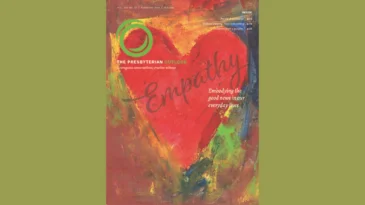


...America is at war.
Its volunteer army is easily recognizable here in southern Mississippi.
It is revealed in tapping sounds from inside a house
that most outsiders wouldn't see
as worth the effort to rebuild (but it has a family and stories!).
It gives itself away in ragged formations of matching T-shirts and
unmatched ages,
seen everywhere along the coast....
Which do you want first: the good news, the better news, or the bad news about e-mail newsletters?
Okay, the good news. An e-mail newsletter will save you a lot of money. No paper, no printing costs, no folding and stuffing, no postage, no competition in the mailbox with vendors who are sending mailers far more compelling than yours.
If that isn't enough inducement to drop the familiar printed-and-mailed newsletter, here's even better news: e-mail gets read. Most postal mail gets discarded before being read, including the church newsletter. Even though people are furious about spam, they do comb their e-mail for personal items. A well-designed e-mail newsletter can fit into that must-open niche.
Three major Presbyterian Church (U.S.A.) news reports fill the pages of this week's Outlook: the first ever national elders conference, the first ever national evangelism conference, and the resignation of Elenora Giddings Ivory.
Of course, we held an elders' conference! "Presbyter" means "elder" in biblical Greek, so it only stands to reason that elders would come together to learn how to "eld" better. It's just that we haven't gotten around to organizing such a conference for the past couple hundred years. In the meantime we have presented hundreds and hundreds of conferences for the ministers of Word and Sacrament. And we believe in parity?
We claim that those two offices have equal status. Don't kid yourself.
A few years back, I visited a prominent, moderate-to-progressive downtown church in Atlanta that shall go nameless. Now, at the time I was the pastor of a New Church Development, and the friend I was with introduced me as such to one of their elders.
"Well, welcome to our church. Is it different worshipping with us?" he wanted to know.
"Pardon me?" I said, with a confused look on my face.
"Is it different worshipping with Presbyterians?"
Editor's note: A regular feature of the Outlook's annual theological education issue is a report on seminary life from the president of one of the seminaries associated with the Presbyterian Church (U.S.A.). This year we bring you insights from the president of San Francisco Theological Seminary.
Leadership is receiving renewed attention these days in vigorous and creative discussions taking place across the Presbyterian Church (U.S.A.). Influential voices throughout the denomination are increasingly pointing out the urgent need for seminaries to help the church to develop more resourceful, radical, and responsive patterns of ministry formation.
Reformed and Presbyterian Christians have always been "big" on the doctrine of providence. This is the Christian view that God is involved with the world and has not simply created the world and stepped back, leaving it to run on its own or by pure randomness. As they used to put it, "God is not an absentee landlord!"
Reformed folks have seen God's providence as having three parts.
· Preservation: God upholds the creation;
· Cooperation: God works with all created beings;
· Government: God guides all things toward the ultimate divine purposes.
But I suspect it is the last two of these parts we focus on most, if we think of God's "providence."

"During such times as these, the Book of Confessions keeps the PC(USA) centered in Jesus Christ .... The question remains whether the PC(USA) will honor its own, confessional heritage, recover its identity, and vigorously confess the gospel in our time."
New members come to churches in many ways, but the most common by far is visiting on a Sunday morning. If you want your church to grow, you need to think through every detail of receiving visitors on Sunday.
Here is a checklist to guide your planning...
"We get sweaty palms every time we hear 'essential tenets.'" If ever a line begged for explanation it was that one. Can it be that Joe Small, the Director of the Office of Theology, Worship and Education for the Presbyterian Church (U.S.A.), doesn't believe in the core convictions of the church? Of what value could be the advice he gave to the Form of Government Task Force (as it met in Louisville on August 16-18), if he wouldn't state plainly our essentials?
Given that all ordinands -- elders, deacons, and ministers of Word and Sacrament -- declare that they "receive and adopt the essential tenets" of the church, it only stands to reason that we be able to articulate them.
Yet, the matter of defining and subscribing to essential tenets has been debated in our present and former denominations since the 18th century. Why has that been such a battleground for us? How can we vow to uphold the essential tenets yet refuse to delineate exactly which tenets are essential? And if we can't articulate clearly what we believe, how can we have any identity?
The Swearingen Compromise has collapsed, and the Presbyterian Church (U.S.A.) is struggling because of it.
When the General Assembly appointed the Swearingen Commission in 1925, it had been struggling with the Fundamentalist/Modernist Controversy for decades. After Harry Emerson Fosdick preached his "Shall the Fundamentalists Win?" sermon from the pulpit of First Presbyterian Church in New York City in 1922, the controversy came before the General Assembly in 1923 and 1924 in the form of a proposal that the General Assembly direct the Presbytery of New York City to require Fosdick to conform to the theological standards of the Presbyterian Church. Fosdick resigned from the church in 1925, but the same issue returned to the 1925 Assembly because New York Presbytery had licensed two candidates who did not believe in the Virgin Birth. The appointment of the Swearingen Commission helped that Assembly avoid a significant rift.
In recent years, many have felt that the conversations occurring within the Presbyterian Church (U.S.A.) have had a maze-like quality. Leaders in the church are operating in crisis mode. The issues are complex: restructuring, loss of members, conflicted congregations, sexual misconduct, New Wineskins, and mission funding, among others. Mission co-workers, pastors, elders, the elected and called leadership in Middle Governing Body work and at the General Assembly Council are all searching for answers.
However, at a typical meeting of the church, whether at General Assembly or at a presbytery, we do not have the time to discern answers to the questions we are asking. Decisions must be made, and the urgent presses us on. Doing the same thing and expecting different results means we will keep losing members and nothing will change. In a time like this, how can we create spiritual practices, ongoing conversations, and learning communities that allow church leaders to walk, listen, talk, and pray together?
In 18 years of parish ministry and twelve years of church consulting, I have yet to meet a pastor or lay leader who didn't want to be effective. They want to do the job right. They want to have healthy churches. So often, however, they haven't been shown where to start and how to proceed.
One sign of this is a basic and thoroughly flawed paradigm that seems active in many churches: clergy ought to provide what they want to provide. If they feel called to promote a certain activity or educational pursuit or liturgical focus or pastoral emphasis, they have a right to do so.
I was in the elevator at the hospital in Rockford, Ill., taking the commuter from fourth floor to first floor. I had completed my visit, prayed with my patient, and was now on my way to the next visit at the next hospital.
In the elevator was one other person, a woman with a weary and weathered face that indicated that much life had been packed into her forty-something years. I gazed mostly at the floor as you do when it's just two of you in the elevator. But I also noticed that she seemed agitated, rocking back and forth on her feet, glancing this way and that, mumbling to herself.
My pastor's radar picked up the signals: I can't stand it, can't stand it. I'm going to explode. I glanced up to see tears, not tears of sadness but of joy. "It's too much, too wonderful. It's incredible!" By now she was mumbling not only to herself, but to me.
Every once in a while competitors turn into allies. This seems to be one of those times.
Voices all around the church are calling for a change of subject. Most of them are proposing the same subject. Indeed, many heretofore opponents now believe that the answer to our denomination's woes is for us to become a "missional church."
Attendance (125) at the Presbyterian Coalition's Gathering X was dwarfed by that of the second conference of the Presbyterian Global Fellowship (800) -- and both groups seemed pleased about that (see pp. 8, 9). Could it be that the call to be missional is re-energizing conservative-evangelical-confessionalist Presbyterians?
The upcoming conference of the Witherspoon Society (Sept. 17-19) is dubbed as "A Witherspoon conference on global mission and justice." Could it be that the call to be missional is re-focusing progressive-liberal-activist Presbyterians?
Accurate measurements are critical to a congregation's wellbeing.
Numbers represent people. A change in membership count means the congregation is serving more or fewer people. A change in Sunday attendance means greater or lesser impact on people's lives. A change in non-Sunday participation means something is at home, or at work, or in how church matters to people.
In trying to understand such numbers, you are taking a big step in understanding your people and in understanding your congregation's effectiveness.
Editor's Note: A shortened version of this article appears in the September 3, 2007, print version of The Presbyterian Outlook.
Items in The Presbyterian Outlook over the past several months continue to suggest the need for a review of where we appear to be heading after the events of 2006 and some thoughts that might help to determine whether the Presbyterian Church (U.S.A.) is headed in the right direction. The latest item was Leslie Scanlon's report on the activities of the Form of Government (FOG) Task Force in the June 25/July 2 issue. Two other items were in the May 14 issue. The first (p.13) was a plaintive cry by Ross B. Jackson to encourage everyday Presbyterians to make what he called some "root" changes (Making Disciples - What Presbyterians NEED to Read.) The second (p.32) was a letter from Dawson Watkins suggesting that positions taken by Louisville be better supported with facts. These gentlemen are obviously as concerned as I am about the dearth of biblical evidence offered for positions taken by both officials and laymen and women of the PC(USA).
When's the last time you attended a presbytery meeting? I've attended about 30 in the past two years -- several for speaking engagements, several times to promote the Outlook. In the majority of cases, I've come away happily surprised.
The "feel" of such presbytery meetings has been more positive than I expected. Many of them exuded a spirit of collegiality and mutual support. For some, it has always been this way, but for others this is a new thing, a very new thing. What's going on?
Many a presbytery has transformed itself from a command-and-control regulatory body into a partnership-and-care missional body.
One mode of change has come as the role and, in some cases, the job title of the lead staff person was altered. After World War II, when churches were booming with growth, most presbyteries created the position of "Executive Presbyter," following the management model then used in corporations that also were booming. Recent decades have challenged the top-down model of corporate leadership, and presbyteries have been paying attention. The amended title, "General Presbyter", is now used in many presbyteries. Others have adopted more specific titles: "General missioner" (Tres Rios), "Teaching presbyter" (Lehigh), etc.
With or without the title change, many of these staff members are treating their role primarily as a calling to support ministers, elders, and churches entrusted to their care.
"The Church reformed, ever to be reformed"1 has been a motto of "Reformed" churches since the 16th century. It recognizes that the church in every age must bow afresh to Jesus Christ as Lord of the Church. In our day, I believe that the Spirit of God is calling us to reform once again and it will happen only as we give fresh attention to the Word of God.
God's Story
So we begin with God's story. What is God doing in the world? What is God's purpose for the church?
From the time of the Fall, it was clear that God was on a mission. God was passionately involved. God pursued humanity. God never gave up.
Along the way God invited his people to join that mission. Israel was blessed to be a blessing -- called to be a light to the Gentiles and a witness to the nations. But mostly they hoarded their blessing and walled themselves off.
In the fullness of time, God slipped into history. Jesus was sent to fulfill God's mission. He brought reconciliation to the alienated, compassion to the deprived, and justice to the oppressed. Jesus died to free people from the shame, the guilt, and the eternal consequences of their sin. And Jesus was raised from the dead to guarantee hope and to shape a new community of followers in the world.
Every denomination handles the content of spiritual formation differently. No less diverse are practices within denominations. We can find many ways to pray, many ways to worship, many ways to read Scripture and to make our peace with God.
Unfortunately, various schools of thought have tended to proclaim their ways the best, indeed the only, ways to approach God. From that assertion have flowed endless bloodshed and, even now, extreme intolerance.
If it's not one pope, it's another.
Pope John XXIII's ecumenical initiatives shook my young faith to the core. Pope Benedict XVI's faith initiatives are shaking my adult ecumenism to the core.
Sister Catherina -- my beloved first grade teacher who, if she had told me my blue eyes were actually green, I would have believed her -- had warned us about Protestants. She said they don't go to the true church, and, she added with tears, they're all going to hell.
One year after hearing her say that, Pope John XXIII -- whose picture had been on the front wall, above the chalkboard, near the crucifix in Sister Catherina's classroom -- launched the Second Vatican Council. Three years into their work, the Council announced that those "infidel" Protestants now ought to be considered "separated brethren."
Churches worry constantly about leadership.
So much energy has been devoted to church leadership, in fact, that two unfortunate messages have been communicated.
One misguided message is that clergy need to be "fixed." Better attitudes, better diets, better health, better teamwork skills, better preaching -- on and on it goes, often under the guise of "clergy wellness," but with the underlying theme that if the church just had better clergy, all would be well.
This article originally appeared in the Tucson Citizen and was used by permission.
"Drug-smugglers have a patron saint? That's unbelievable!" my wife exclaimed.
I had just returned from a day in the desert searching for migrants in distress.
My colleagues in No More Deaths had come across three migrants on the trail and had shared food and water.
But while hiking one canyon, we discovered a shrine hidden in a deep alcove in the canyon wall. Inside the dark alcove was a 3-foot-wide poster of Jesús Malverde. Below the poster were candles and prayer cards bearing his image. We had stumbled into a shrine of the narco-saint of the borderlands.
Congress did not produce new immigration legislation. What are we Christians to do now?
Now that the political points no longer need to be made, we do well to reconsider the facts on the ground. Toward that end, Barbie and I visited the Mexican border ourselves. We accepted the invitation of former GA moderators, John Fife and Rick Ufford-Chase, to explore the Tucson sector, a 60-mile, south-to-north area above a 240 miles-long stretch of the border.
Encountering migrants and the Christian volunteers seeking to serve them, we heard about the cycles of migration that have crossed the border for hundreds of years. Seasons of planting and harvest, periods of major construction and other rhythms of labor have driven breadwinners to seek employment wherever available, and family ties have drawn them back home as soon and as often as possible.
What does it mean to be a Presbyterian today? According to statistical probabilities, a person labeled Presbyterian is likely to be white and rich. Only the Episcopalians and Unitarians rival our spending power.
© Copyright 2026 The Presbyterian Outlook. All Rights Reserved. Privacy Statement. Website by Web Publisher PRO