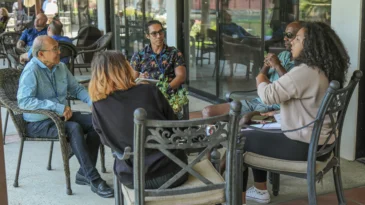


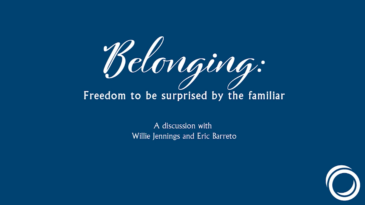
Eric Barretto and Willie James Jennings discuss how our knowledge of belonging resides in our bodies.

How one pastor’s investment in a theology of belonging has liberated him from resentment.

With the recent release of ChatGPT, anyone can use artificial intelligence to produce papers or sermons. What does this mean for the art of sermon writing and for the work of pastors, wonders RJ Kang?

In the face of death, chaplaincy intern Ashley Brown learns the gift of bearing witness.

We invite you to prayerfully reflect on the incarnation with a piece of original artwork by Sarah Scoggin.

A child in cowgirl boots heralds the coming of Easter for Andrew Taylor-Troutman.

Before we hear the stories of all “they” did to Jesus, we might stop and look at ourselves this Holy Week. That is what Lent calls for, isn’t it? — John Cleghorn

When we embrace visibility and vulnerability, we can find a God-given sense of belonging in the make-up aisle, at a civil protest, and – if we allow it – in the church, writes trans woman and pastor Lucinda Isaacs.

Barbara Wood Gray on opening the gate of the heart.

When Phillip Blackburn began as the director of the University of the Ozarks’ Thriving in Rural Ministry Program, he expected to serve small, dying churches. Instead, he has found livelihood and wisdom.

Karie Charlton writes about grief, dementia. and love.

Julie Raffety confesses her appreciation for "Dateline" and what it teaches her about how to comfort those who mourn.

During his days interning as a hospital chaplain, Eric Nolin found a new understanding of life in Christ, even though it felt like death to get there.

"Everyone else was grieving, but I was busy."

“Sadness can feel sky high. Yet, the Holy One, who stretched the heavens, walks with us.”

Walter Canter shares two poems and a micro essay on grief and the struggle of sorting out personal pain as a pastor.

After grieving the deaths of several students, college chaplain Maggie Alsup finds that Ash Wednesday offers a release for students.

"We have to pay attention to get to the new life that comes after a death, but it takes work and intention to get there."

It can be tempting to harden our hearts as protection. What would life look like if we lived like daffodils blooming in late winter? Like a middle schooler wearing a top hat and tails to a dance?
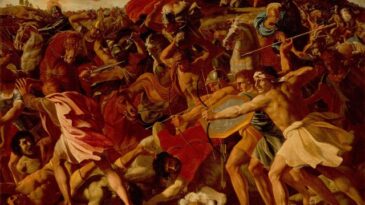
Old Testament Professor Eric A. Seibert encourages pastors and lay leaders to redeem violent Bible verses by using them responsibly in church.

By acknowledging and admitting the reality of death, we put our own lives into proper perspective, writes Aaron Neff.

Teaching children about justice is important for their faith, but it can feel like a daunting topic. Christian educator Sara Pantazes recommends three tips.

Elana Keppel Levy argues that Scripture is holy, but it needs to be applied wisely. And the January 2023 ordination exam was not the time, place or method to address the violent themes of Judges 19.

What's the difference between transition and transformation, wonders Katy Shevel?

Perhaps a habit for "highly effective people" can also call us into a deeper faith, writes Dave Coles.
© Copyright 2026 The Presbyterian Outlook. All Rights Reserved. Privacy Statement. Website by Web Publisher PRO