

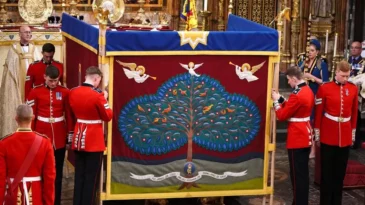
Episcopalian Jay Blossom wrestles with the holy symbols and contradictions displayed at the coronation of King Charles this past Saturday.
"I'm making you go through this because I went through it." What if we left this way of thinking behind to follow Jesus, Eric Barreto and Willie James Jennings ask?

The folks who are finding ways to do church differently — and in ways that might have a faithful impact.
How do we reckon with the systems that formed us? How do we move forward? Eric D. Barreto and Willie James Jennings discuss.

Attorney and professional parliamentarian Jim Slaughter shares a brief history of Robert's Rules of Order.

Art, says Juli Kalbaugh, can help us see how our lives are more than just the sum of our parts.

In the Pacific Northwest, Dustin Benac writes, is an American Christianity that’s decoupled from Christendom.
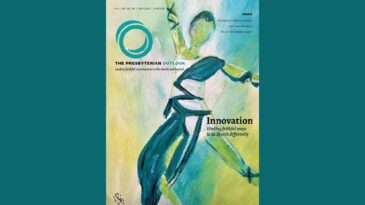
For Outlook's May 2023 issue, Editor/Publisher Teri McDowell Ott thinks about innovation.
Why Eric Barreto tells his Greek students to never say, "In the Greek, it says..." while preaching.

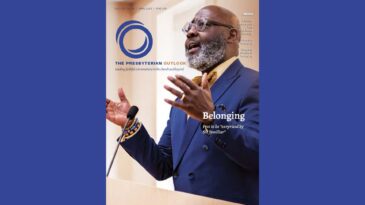
Sometimes, you won’t belong, writes recent seminary student Ashley Brown. And that’s ok.
How can we imagine theological education beyond the false goals of possession, mastery and control? Eric D. Barreto and Willie James Jennings offer their thoughts.
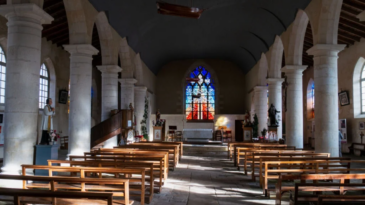
If clergy help to create a space of belonging for others, where do we find belonging ourselves, wonders Karie Charlton?

What one late friend taught Aaron Neff about belonging.

Margaret Alsup remembers the lessons she learned as a child in church.

In this poem, Barbara Wood Gray shares who she experiences God to be.

Rebecca Gresham remembers her time at Louisville Presbyterian Theological Seminary and the belonging she felt as a student, young mother and resident.
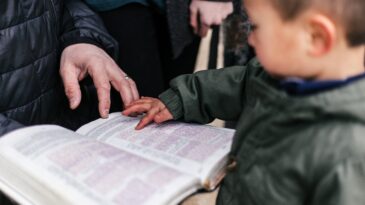
A child wearing brown loafers and no socks (just like his father), reading a Bible in Sunday worship (just like his father) — What can this boy teach us about belonging?
In each issue of the Outlook, we include a discussion guide to further reflect on the issue. We recommend using this guide in your Bible study, small group or book club. It's our invitation into a faithful conversation.

"I belonged to her. She belonged to me. Over the years, she belonged to others: students, her poetry pals, our family. But we remained a constellation of two stars."

A poem by Kathryn Lester-Bacon.

Grief has a way of pushing everyone away, writes Angela Williams Gorrell. But it’s when you are grieving that you need belonging the most.

"Missional confirmation inspires a missional identity and commissions young people to a missional way of life," writes Mark D. Hinds.
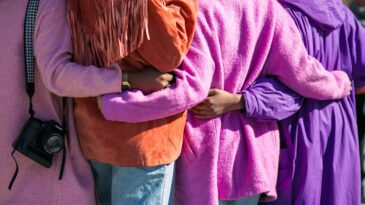
“Even in a room full of exhaustion, there is hope.” Shani McIlwain shares her experience at the Katie Geneva Cannon Center for Womanist Leadership’s spring conference.
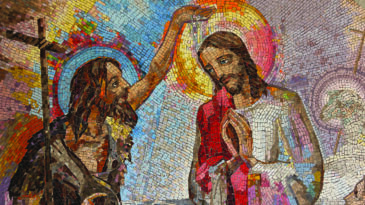
In the Korean Presbyterian church of her childhood, Mihee Kim-Kort learned the necessity of belonging.

Phillip Blackburn offers two tips for thinking about church vitality in rural settings.
© Copyright 2026 The Presbyterian Outlook. All Rights Reserved. Privacy Statement. Website by Web Publisher PRO