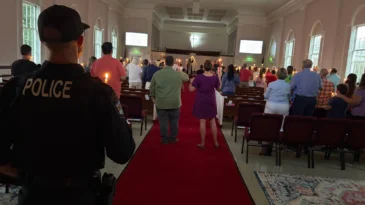



Do you know the cross can be interpreted through multiple lenses? If you find that Jesus’ crucifixion feels unapproachable, you may want to try a new perspective, writes Elana Keppel Levy.

A poem for gardeners, for springtime lovers, for the hopeful by Andrew Taylor-Troutman.
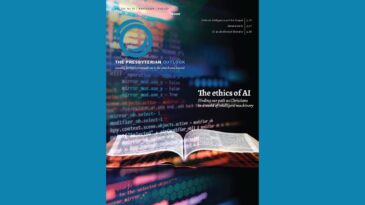
In each issue of the Outlook, we include a discussion guide to further reflect on the issue. We recommend using this guide in your Bible study, small group or book club. It's our invitation into a faithful conversation.

Mentioning AI on college campuses can earn you a monologue on academic integrity, but we can only move forward, writes college chaplain Maggie Alsup.

"I’ve never stepped into the mouth of an empty tomb, but I have walked into my grandmother’s one-bedroom apartment three days after she died," writes Lisle Gwynn Garrity.

I've never ... been this old before, worn a body like this before, known a mind like this before, lived a life like this before, writes J. Barrie Shepherd.

All students, not just Christians, come talk to me about class and life in general. — Lyn Pace
In this Faithful Conversation, Outlook’s Social Media Producer Jesy Littlejohn and Washington National Cathedral Pastor for Digital Ministry Jo Nygard Owens explore the uses and possibilities of digital ministry.

"We do not have to solve the world’s problems, but we do have to love our neighbor," writes Jay Blossom.

ChatGPT may be efficient, but pastors can't give up on specificity and authenticity, writes Jeremy Wilhelmi.

Artificial intelligence is as common as cell phones, but understanding it – even while using it – is another story, writes Dartinia Hull.

Historian Nathan Jérémie-Brink processes our modern displacement crises with the help of Ephrem the Syrian, a fourth-century refugee and theologian.

We have replaced our faith in God with faith in a candidate or political party, writes Joshua Gritter. Why?

When writing for the Outlook's March 2024 issue, Eric Nolin struggled to find women leaders in the Christian world working with AI. What does that say about the tech world? About the Christian world?

Eric Nolin speaks to people in ministry who are finding innovative ways to use AI faithfully in the Christian world.

Karie Charlton helps a colleague create a Jewish prayer shawl and reflects on interfaith friendship and lessons of kindness.

Lebanese American Pastor Christopher Tweel shares the racism and hope he finds in the church.

Elizabeth N.H. Link shares her journey with IVF in light of the Alabama Supreme Court’s ruling on “extrauterine children.”

AI is integrated into the work done in any administrative, research, or social role — including ministry, writes Kate Ott.
In my experience, teaching others is one of the best ways to learn, writes Teri McDowell Ott. With that in mind, what can we learn as we teach AI?
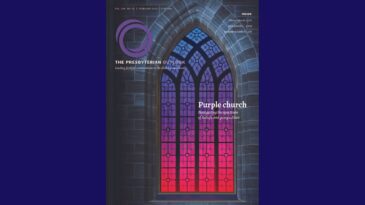
In each issue of the Outlook, we include a discussion guide to further reflect on the issue. We recommend using this guide in your Bible study, small group or book club. It's our invitation into a faithful conversation.

Jacob Alan Cook asks: Can we train artificial intelligence to coach us into deeper honesty so we can help others — whose lives it might know more intimately than we do?

From a shorter work week to deeper personal growth, the implications of artificial intelligence point toward profits that are beyond simply economic, writes Chris Burton.

Fred R. Anderson argues that predominate Christian understandings of atonement have been more influenced by culture than the Bible.
Fourth Presbyterian Church’s “Deep Listening Dinners” focus on strengthening relationships, developing conversational skills and practicing handling differences in a respectful manner.
© Copyright 2026 The Presbyterian Outlook. All Rights Reserved. Privacy Statement. Website by Web Publisher PRO