

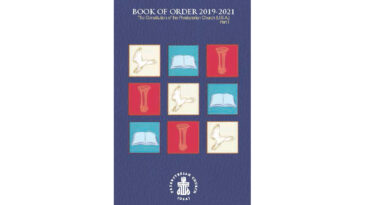
The Book of Order is a compendium of Presbyterian experience based on nearly three hundred years of practice, prayer and study of Scripture. Occasionally church officers get the mistaken opinion that it is a static document, forever fixed by someone in the presbytery or General Assembly.
The seminaries and their constituent congregations enjoy a deep and abiding relationship within the ethos of American Presbyterianism. In fact, in a time when much of our denominational ecosystem is under some degree of stress and decline, it is my observation that the seminaries and the great majority of our Presbyterian Church (U.S.A.) congregations remain its healthiest components.
With respect to our ten PC(USA) seminaries, I have already had ample opportunity in my three years of serving as a seminary president to get a good look at the complexion of theological education in North America, and I believe they are without peer. They represent the gold standard when it comes to the quality of education, the quality of faculty, the quality of clergy being sent out into the church, the value base still alive in our denomination for the stewardship of the mind, and their sheer institutional strength and stability.
It is also interesting to me, in terms of the relationship our seminaries have to the church, that over the last decade, when Presbyterian seminaries have chosen presidents, they have overwhelmingly chosen pastors and not academicians--persons who, even if they have a Ph.D., are coming straight from the parish where they have spent most of their ministry. That is a profound statement, I believe, that at a deep level the church and the seminary want to be in still closer conversation.
And maybe it's about time, the church and the seminary may be saying to one another. From the church's perspective, there is this sense--not always justifiable, in my humble opinion--that the seminaries are out of touch with the life of the church; that their faculties are not sufficiently engaged in the on-the-ground life of the church; and that the questions we pursue in seminary are not necessarily the questions that most concern the church.
What is the meaning of Reformed theological education for the life of the Presbyterian Church in these days of extreme diversity and conflict?"
These days, pastors and faithful disciples in the pews are wondering if the Presbyterian Church can hold together amidst all the tossing and turning. Some wonder why we don't just call a meeting, hire a good lawyer, get a divorce, split up the property, and move on. Seminary students wonder if there will be a church to serve after they graduate. We know it wouldn't be the first time the Church has divided, though concord after these divisions has lasted for only a short time. And we know from our constitution that Visible oneness, by which a diversity of persons, gifts, and understandings is brought together, is an important sign of the unity of God's people. It is also a means by which that unity is achieved. (Book of Order, G-4.0203).
In these days of extreme diversity and conflict, as we seek the peace, unity, and purity of the church, it seems as if we are walking a tight wire. The question becomes, "How shall we maintain our balance?" That's a question for Reformed theological education.
A few weeks ago, after Pittsburgh Seminary had announced that I would be its next President, the editor of The Presbyterian Outlook asked me, "Bill, why are you leaving the parish to return to the academy?" The short answer might be "the three great things about academia: June, July and August!", but real scholars know better. It never really slows down that much in the summer months with all the Hebrew and Greek courses, and all the continuing education events. Administrators and staff especially plow right on. Faculty members put the finishing touches on those tomes they have been trying to write all year.
Still, the editor's question hung in the air waiting to be answered.
Actually, there were two parts to the question: (a) Why are you leaving the church for the school and (b) What should the school be doing for the church these days?
Excerpts from an address at the Louisville Seminary Luncheon, 216th General Assembly, Presbyterian Church (U.S.A.) in Richmond, Va, June 30, 2004 and published in the fall 2004 issue of The Mosaic of Louisville Presbyterian Theological Seminary.
For more than 150 years, this precious schoolhouse of the church has specialized in training good pastors for the church -- good pastors who have been called to live and hope as expectant servants of Christ and stewards of the mysteries of God. ... Reverently and expectantly, I want our first conversation as family to focus on a vision about the good pastors we hope to continue to train in our community of the Word at Louisville Seminary.
First, I believe the good pastor is a passionate/compassionate believer of the Christian gospel. Our people in the pews long for pastors who passionately/ compassionately believe what they preach and teach. Indeed, from a parishioner's viewpoint, one of the most priceless affirmations a preacher can receive is: "I can tell you really believe what you preach." That is, our congregations deeply yearn to call good pastors who will articulate with passion the belief that Jesus Christ is incomparably the most significant event in the history of the human race; that Jesus is God's own heart of flesh who crawled into the cradle of Bethlehem and who climbed onto the cross of Golgotha; that Jesus, in the words of Joseph Sittler, "comes to us in the world where we are, where we have been, and where we are going...."; that Jesus is the risen Lord and Savior of all times and all places; that to know God now in Jesus Christ is to know God forever.
I was sitting in my office in mid-May, writing thank you letters to donors, when the phone rang.
"This is Jordana Hochman from Morning Edition. I was referred to you by the Association of Theological Schools."
"Well, what can I do for you?"
"I have a question. Depending on your answer, I may want to interview you."
"So?"
The essence of her question: "Well, since the mainstream churches are dying--declining, at least-- and not hiring new clergy, what are your graduates going to do?"
"First, our graduates will do what they have always done--the great majority will go and serve and lead as pastors, educators, and scholars for local churches, many of which by the way are thriving. God's Word and God's work are being faithfully proclaimed and engaged, just as in every generation since the resurrection of Jesus."
"Is there a disconnect between congregations and seminaries? Isn't your enrollment declining?" she asked.
"No. On both counts. Our faculty members are all deeply involved in local church life. Members of the faculty ordained as pastors who have joined us since 1994 when I arrived have an average of nine years of experience leading local congregations. That is more experience on average than when I was a student here in the mid-sixties!
"We will have 104 degrees received--that's more than average for the last score of years at least. I understand several of our partner seminaries in the Presbyterian Church have increased enrollments and graduations now, too."
I proceeded to tell her about some of the recent graduates and some of the congregations they serve. I spoke of the heavy requirements in this and many other Presbyterian seminaries--both Hebrew and Greek language, lots of Bible, theology, history, ethics, worship, mission, and focus on skills for ministry such as teaching, evangelism, leading worship, and giving pastoral care.
Herzliebster Jesu 11.11.11.5 ("Ah, Holy Jesus")
God of creation, We have seen the horror--
Great devastation, Overwhelming sorrow!
Hear now your people-- Homes and loved ones taken--
Feeling forsaken.
Christ of compassion, You who calmed the rough sea--
Hurricane crashing, We prayed for your mercy!
Comfort your people! Hold them close, now giving
Hope for their living.
Give to your children Food to end their hunger,
Clean water's blessing, News of those they long for!
And by your Spirit, Use our gifts and labors
To help our neighbors.
Biblical references: Genesis 1, Psalm 13, Matthew 8:23-27, 25:31-46; Luke 10:25-37
Tune: Johann Cruger, 1640
Text: Copyright © 2005 by Carolyn Winfrey Gillette. All rights reserved.
Carolyn Winfrey Gillette gives permission for the hymn's free use by churches that support the relief efforts of Presbyterian Disaster Assistance. Carolyn Winfrey Gillette and Bruce Gillette are pastors at Limestone Church in Wilmington, Del.
In 1984, along with twenty other people, I was appointed by J. Randolph Taylor, Moderator of the recently reunited Presbyterian Church (U.S.A.), to serve on the committee that drafted the Brief Statement of Faith as directed by the Plan of Reunion. Our experience together over the next five years mirrors in many ways that of the Task Force on Peace, Unity, and Purity. One of the chief reasons is that members of both groups were appointed to serve because they were representative of the diverse theological points of view and backgrounds reflected in the membership of the PCUSA.
One of my most vivid memories from that important time in the life of the church has to do with an informal conversation another committee member and I had one summer day during General Assembly week. As we stood chatting in the corridor of the vast Convention Center, a number of people came up to speak to my friend, who was and still is strongly identified with the conservative, evangelical wing of the denomination. I, on the other hand, have usually been identified with the more liberal part of the church. He graciously introduced me to them all. "My goodness," I finally said. "What is going on with all these people?" They had been very gracious to me, but I had never met any of them before.
He answered, "They want to meet you. My friends are always asking me what you really believe."
"What do you tell them?" I asked.
"I tell them that you love Jesus just as much as they do."
I am impressed by the report of the Theological Task Force on the Peace, Unity and Purity of the Church. Despite critique that I offer below, the care and thoughtfulness of its theology, the honesty and earnestness of its tone, the pastoral wisdom and balance of its approach, as well as the insight and reflection of its ecclesiology make strongly positive contributions. One does not need to agree with all its points to find in this report a great deal that is constructive and up-building to the body of Christ. It is a rich resource with content that seems judicious and affirming, instructive and fruitful. "The Task Force was not asked to resolve all the controversial issues in the church or to relieve the church of all conflict. The Task Force was asked to help the church deal with current and future conflicts more faithfully." I believe that at points they have given us some important help. Though a more detailed reflection on the report would take far more space and time than is allowed here, I will venture a few initial personal responses, following the order of the document itself.
I am grateful for the Theological Basis. The apparent consensus around an orthodox trinitarianism is its primary strength, and points to the central hope for any true "peace, unity, and purity" in our individual or common life. This is not to be taken for granted and is indispensable for our future, not least its affirmation of the uniqueness of Jesus Christ. Alongside all that is laudatory, unifying, and valuable in this section, two closely related points seemed especially lacking adequate development. First, I would have expected to find a more developed reflection on what it means that human beings are creatures made in God's image. Surely, it is true we are loved. But who is the "us" that God loves? The nature of our humanity, God's intentional relationship to us and purpose for us in love informs our lives and our biblical grasp of what our humanness means. Since our createdness grounds our ethics in meaning and purpose beyond mere naturalism, I wish this had been given more emphasis.
Readers of the OUTLOOK are familiar with the heated public controversy over the use of human embryos to harvest stem cells for medical research. What are called embryos are actually ova fertilized in a Petri dish. The zygotes are forced to undergo cell division, frozen and stored on a shelf for possible use later, usually for fertility treatment-- but never implanted in a human uterus. For that reason they are not really embryos, technically speaking. The point of interest is that they are currently the best source of "pluripotent stem cells," meaning cells that have the capacity to become any type of cell in the body when properly treated. These cells are needed to develop effective treatments for diseases that already include Alzheimer's, Parkinson's, juvenile diabetes, muscular dystrophy, and paralysis resulting from spinal cord injury.
The sticking point for those who object, including President George W. Bush, is that they believe these fertilized eggs possess the value of human beings and the process of extracting stem cells from them kills human life. Many scientists, on the other hand, have a hard time imagining how a still undifferentiated zygote that will never be implanted in a uterus qualifies as a human being. An estimated 400,000 fertilized ova or embryos are stored in U.S. freezers today, and most of them will be discarded.
Stem cell research is rapidly advancing in many other countries, notably the United Kingdom and South Korea, and in private U.S. labs that do not receive federal funding. Ironically, one of the effects of the Bush administration's ban on embryonic stem cell research funding is that the research is now barreling on outside the ethical guidelines established early in the game by the National Institutes of Health and approved by the Clinton administration. Those guidelines made it clear that only embryos could be used that were created for the purpose of fertility treatment and were in excess of clinical need. When stem cell research is removed from NIH oversight into the private sector, such ethical restrictions are not obligatory.
Is it time for a survey of the language of Presbyterian Christian Education?
I appreciate the conversation begun by Ben Sparks and pursued by Marge Shaw about the need to rediscover Christian education in our churches. It is not the first time in recent years that someone has asked, "Where has our denomination's historic emphasis on Christian education gone?"
As I look and listen for signs of a vital commitment to Christian education in our churches and the larger church, I am engaging in some interesting conversations. People in our churches and in the church are excited about a number of initiatives that sound a lot like Christian education to me, but when I ask about the difference, I am assured that they are talking about "more than Christian education." So what is going on here? What may be going on is that rather than losing our commitment to Christian education, we are now talking about it in different ways.

Sixty years ago in the blink of an eye an estimated 147,000 people were killed when atom bombs exploded over Hiroshima and Nagasaki, Japan. Beautiful cities were instantly turned into radioactive wastelands.
As is true in all wars most of the victims were women, children and the elderly. Those near the epicenter were the lucky ones. They were vaporized. Tens of thousands further from ground zero were burned alive, dying in excruciating pain and begging for water. Thousands more died in later months and years of a strange disease called radiation, and even today higher rates of cancer and leukemia prevail in the region. Survivors of the blasts, now in their seventies and eighties, carry monumental physical and psychological scars.
This August, on a peace pilgrimage, I returned to Japan, where I spent nine years (1965-1974) as a missionary. I attended the 60th anniversaries of two bombs that in the words of Einstein "... changed everything except the way we think, and we drift toward unparalleled catastrophes."
Visiting in an unfamiliar church is always interesting. I read over the bulletin in order to see how the service would flow. One word appeared repeatedly-- love; not a bad concept if a single theme was in order.
There was no doubt that these people liked the idea that God was love, that Christ was all about love, that the Holy Spirit brought love, and that love was pretty much the key to how things were supposed to get done. I took out my pen and circled the word wherever it appeared. It was probably the first time that "love" had been documented in that church.
What was missing? Well, holiness. I thought a little further. There is something to be said about the fear of the Lord in Scripture but it did not appear here. And it would have been unspeakable in that context to wonder about the wrath of God. Even the color of the walls and creature comforts in the fittings seemed designed to assure worshipers that all was well. The hymns did not distract from the message either. One was even about "partnership," a concept that had gone unnoticed by me in the history of Christian thought.
The Prayer of Confession held no problems. Its components slid through the mind with a minimum of friction. The major worry seemed to be insensitivity, and I am the first to agree that could be a problem. I gathered that I was to report in that I had not responded in love as I could have, a sort of callousness of the soul. And, my goodness, I did not want that to be the case. I mea culpa-ed my way through the environmental crisis and war and peace and felt a lot better for it.
Then I recapped my pen and thought it over. I had come to worship the Almighty in a Presbyterian setting, and I had found myself stuck in a liturgical boutique. There was plenty to buy, as long as you were looking for happy things and a chance to see that everyone had uplift. A kind of emotional branding had occurred, and I had not even recognized it.
I returned home feeling that my diet called for more basic stuff. Among other places that I searched, I settled on Psalm 119.
G.K. Chesterton believed that a little comic relief in a discussion or debate did no harm, no matter how serious the topic. In his own experience, the funniest things occurred during serious conversations and debates. It was little different with your own distinguished scientist, thinker and diplomat Benjamin Franklin. He was so renowned for delivering comic insights into serious matters that some believe the reason Thomas Jefferson rather than Franklin was asked to write the final draft of the Declaration of Independence was that some of the Founding Fathers suspected Franklin might include a touch of humour in this extremely serious document!
Lord Mackay, the Queen's representative to this year's General Assembly, was Scotland's former Lord Advocate. He later served as Lord Chancellor in John Major's government. Lord Mackay is in the Chesterton/Franklin mould. He has a brilliant mind and a mischievous sense of humour. He began his address to the Assembly by recalling how he had been present in the Assembly Hall in 1994 when I had been in the chair. "In his address to the Assembly that year," he said, "Dr Simpson recounted how his predecessor as Moderator had written an article making certain comments relating to the Virgin Birth. The article had evoked a large amount of correspondence. Dr Simpson then added that the most telling comment made to him about this theological controversy was also the shortest. 'I wish you Moderators would stick to politics!'" Lord Mackay went on to say, "While influencing public policy is part of the mission of the church, it is clear that her mission encompasses a great deal more than that." He recalled how at the coronation of the Queen, the Archbishop of Canterbury had said to Her Majesty, "To keep your Majesty ever mindful of the law and the Gospel of God as the rule for the whole life and government of Christian princes, we present you with this book, the most valuable thing that the world affords." The Church of Scotland Moderator then presented the Queen with a Bible, saying, "Here is wisdom; this is the Royal law; these are the lively oracles of God." The Bible was then placed reverently on the altar.
"Mission-Mission-Mission." I've said it hundreds of times as I go around the Presbyterian Church (U.S.A.), but until churches really get into it themselves, it's just words.
Once I visited a presbytery in Mississippi. Presbyterians there had just completed a mission trip to Mexico. Several of them rose and gave detailed reports of helping with construction, Bible school, and other projects. A young teenager was the last one to speak. He rose and quickly and simply said, "I found out while on this trip that Americans have too much stuff," and he sat down.
It was one of the best mission talks I ever heard.
If all Presbyterians could realize how fortunate and blessed we are compared to the rest of the world, it would change lives and priorities.
I grew up at the New Wilmington Missionary Conference. I came first at age two months; family members were commissioned as missionaries there. My husband and I first met as thirteen-year-olds at--where else--New Wilmington. As a missions volunteer in Ethiopia in 1971, I wept realizing I was missing the conference--the only one I have missed. Our four children were "Conference Kids" and then high school delegates at NWMC.
But years have passed. I am no longer a Western Pennsylvania teenager. I wouldn't label myself an evangelical conservative. Now I have grown up, I am old. And wise. I am smarter, much more savvy theologically, sophisticated. I have been to seminary. I believe there is a God, but all of this evangelical language about Jesus and your call, and what the Lord did this week is annoying. I am tired of the easy answers to the big questions. I am tired of inadequate or pompous answers given by individual people pretending to be God Himself talking. Cynical might be a good word for my mood.
Yeah, I'm cynical.
But here I am back at Conference and Conference starts to work its power on me. It happens every year.
Presbyterians, beware the Ides of September.
All right, technically the Ides of September falls on the 13th and I'm referring to the 15th. People from many sectors of the PC(USA) are waiting expectantly for that date, for the release of the report of the Theological Task Force on the Peace, Unity, and Purity of the church. The Presbyterian Outlook recently featured an editorial as well as several articles and letters on this topic:
Common Ground: Task Force, small groups seeking way forward for PC(USA)
Common Ground: Montreat meeting focuses Columbia Grads on future
September 15 (editorial, May 30 2005 issue)
Letters to the Editor response to 'September 15'.
Some groups like More Light Presbyterians have elected not to wait but to act peremptorily: https://www.mlp.org/resources/overturefaq.html . Many presbyteries have already begun softening the church in anticipation. I find I am a bit more inclined to proceed with extreme caution.
Last spring, Moderator Rick Ufford-Chase made an extended visit to the Democratic Republic of Congo to visit the churches and peoples of the two Presbyterian partner denominations of the PC(USA). As he traveled, he kept a running journal of his experiences and observations …

"The mystery of peace is located in the nature and quality of relationship developed with those most feared."
-- John Paul Lederach
The Moral Imagination
Conversations between Christians with diverse theologies and political circumstance have never been easy. Last year, for example, the Southern Baptist Convention decided to quit the Baptist World Alliance because its theologies were "too liberal" and its criticisms of the United States too many.
A different crisis of ecumenical relations occurred last October in the Presbyterian Church (U.S.A.). With help from its world mission headquarters in Louisville and the participation of its Advisory Committee on Social Witness Policy, it sent a fact-finding delegation to the Middle East. Among other local hosts in visits to six countries were the Middle East Council of Churches and the Synod of Lebanon, Syria. Leaders of the latter asked the delegation to undertake a conversation with representatives of the militant Muslim group Hezbollah. Back in Louisville, denominational executives had advised "caution" about having such a meeting, but they never forbade the delegation to undertake it. The upshot of the event was the firing of two General Assembly staff members for incompetence in permitting that meeting to take place and for failing to protect the church against negative media publicity.
As a longtime student of the ethics of forgiveness and repentance, I have had to ponder the complexity of Jesus' word to disciples that they are to "love your enemies and pray for those who persecute you" (Matthew 5:44). That word applies as much to conflicts inside the church as outside. As a Presbyterian, I am proud of its ecumenical and social justice traditions; and I believe that this internal denominational controversy needs to be judged against the background of twentieth century ecumenical history. Many issues in the incident transcend this one denomination.

“The mystery of peace is located in the nature and quality of relationship developed with those most feared.”
— John Paul Lederach
The Moral Imagination
Conversations between Christians with diverse theologies and political circumstance have never been easy.
With so many others across the church, I am waiting with curiosity and hope for the report of the Theological Task Force..
The goal of the Theological Task Force on Peace, Unity, and Purity of the Church is to "lead the PCUSA in spiritual..
When the Rev. Mark D. Roberts started his blog, he envisioned a small outreach to his community and parishioners at Irvine Presbyterian Church in Irvine, Calif.
A little more than a year later, the blog reaches far beyond that, drawing 1,500 visitors daily -- 2,000 on weekends.
"I have readers literally all over the world," says Roberts, pastor to a 750- member congregation. His review of Mel Gibson's "The Passion of the Christ" has drawn more than 25,000 visitors since the film's release, and it continues to draw readers by the hundreds.
It is but one small example of the growing reach of Christian bloggers going online to evangelize, mobilize and occasionally demonize. They marvel at the way blogs give them an opportunity to engage with a lively and diverse audience they could never attract on their own.
The term "blog" is short for "Web log" and refers to the online journals that have given a public voice to anyone with an Internet connection. Evangelicals, for instance, used blogs to get voters to the polls in November, becoming a big part of President George W. Bush's victory.
Text: John 16:16-33
One of the best commentaries on the Gospel of John is Dostoyevsky’s The Brothers Karamazov, a novel which also has a good deal to say about theological education. I want to begin by quoting at length a passage from that novel that has to do with a novice priest who has recently graduated from a theological school of sorts and who is struggling to discern the particular shape of God’s call upon his life.
“I can’t imagine anything better for our congregation than to hear from you.” With those words last fall, Rabbi Lucy H.F. Dinner of Raleigh’s Temple Beth Or responded to a letter from Arthur (Art) Ross III, pastor of Raleigh’s White Memorial Church.
© Copyright 2026 The Presbyterian Outlook. All Rights Reserved. Privacy Statement. Website by Web Publisher PRO